Digital Detox Retreat
Chakrata Digital Detox Retreat — November 2026
9 Nov – 13 Nov 2026
For a broader understanding of retreat formats, seasonal considerations, and how mountain programs differ across regions, see our complete guide to Himalayan Retreats in India.
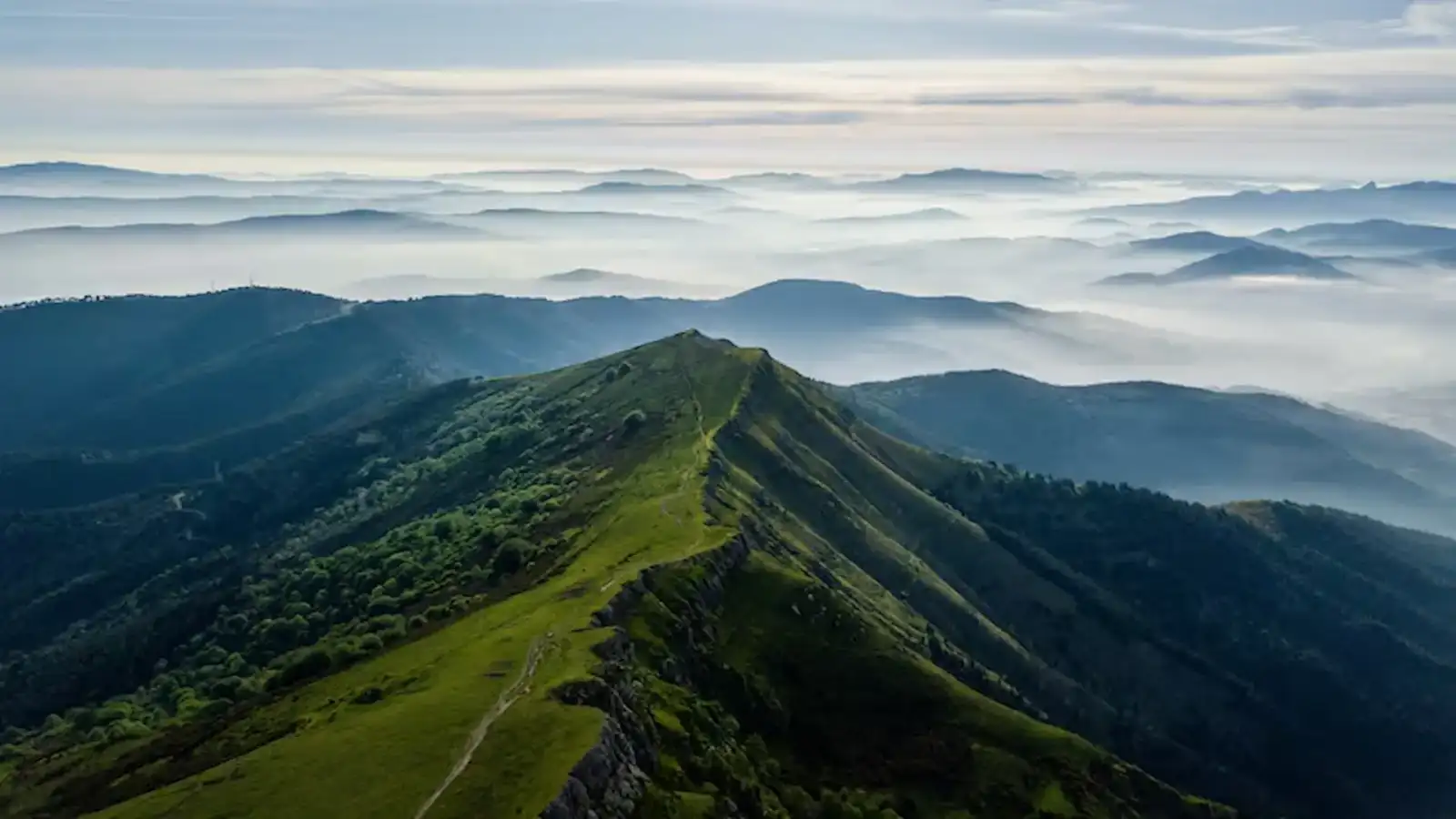
Permission to stop, for people who have been running too long.
Upcoming Fixed Dates
Choose a scheduled departure and reserve your place. We will confirm availability, stay details, inclusions, and the next booking step on WhatsApp.
Digital Detox Retreat
9 Nov – 13 Nov 2026
Talk with us directly — no forms, no commitment. Just a conversation about what you need.
Dates · Starting price · Fit guidance
This is not a wellness programme. There is no curriculum. No optimisation. No self-improvement framework. The retreat is designed around a single principle: remove everything that prevents your nervous system from settling, and let biology do what it already knows how to do.
There are no mandatory sessions, no wake-up calls, no meditation instructions unless you ask for them. You eat when hungry, sleep when tired, walk when moved to. This is deliberate — your nervous system needs to stop responding to external demands before it can begin to settle.
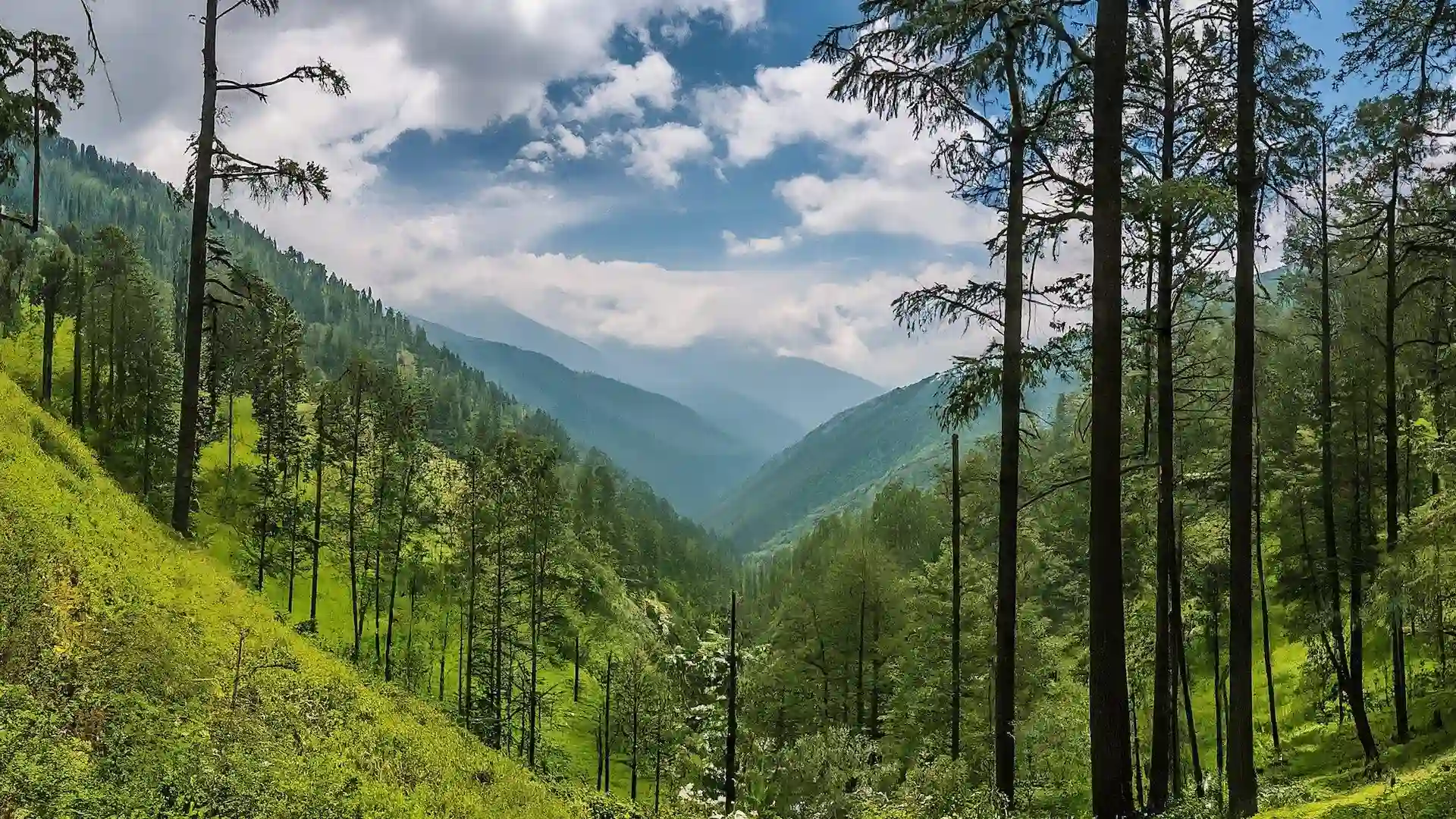
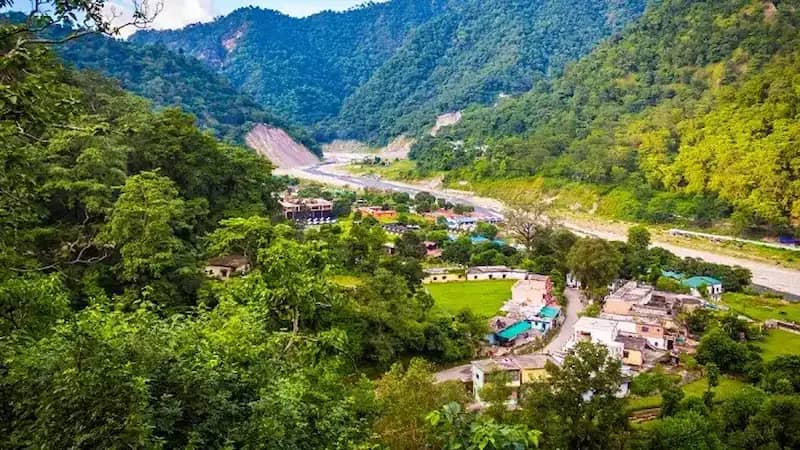
Chakrata's deodar forest at 2,200m is not "quiet" in the spa sense — it is geographically silent. No traffic, no construction, no tourists, no commercial noise. The silence is not manufactured; it is the natural state of the place. Your body responds to this within hours.
Peer-reviewed research shows that 72 hours of forest immersion measurably reduces cortisol, lowers blood pressure, and shifts the nervous system from sympathetic (fight-or-flight) to parasympathetic (rest-and-digest). This retreat is designed around that science.
There is nothing to achieve. No social performance, no networking, no sharing circles. If you want to sleep for 14 hours, that is valid. If you want to sit on the verandah for an entire day, that is valid. The absence of expectation is the point.
Simple Himalayan pahadi cuisine — dal, fresh sabzi, chapati, seasonal vegetables, chai. Meals are prepared with care and eaten slowly. The food is not a feature; it is part of the container. Nourishing without demanding attention.
Most participants haven't woken naturally in months — or years. In the mountain silence, without a phone alarm, your body returns to its own circadian rhythm. Many find they sleep 10–12 hours the first two nights. This is not laziness; it is your nervous system catching up.
Not hiking — walking. Slow, purposeless movement through deodar forest paths. You might walk for 20 minutes or 2 hours. You might sit on a rock for an hour and watch light move through the canopy. There is no destination. The walk is the point.
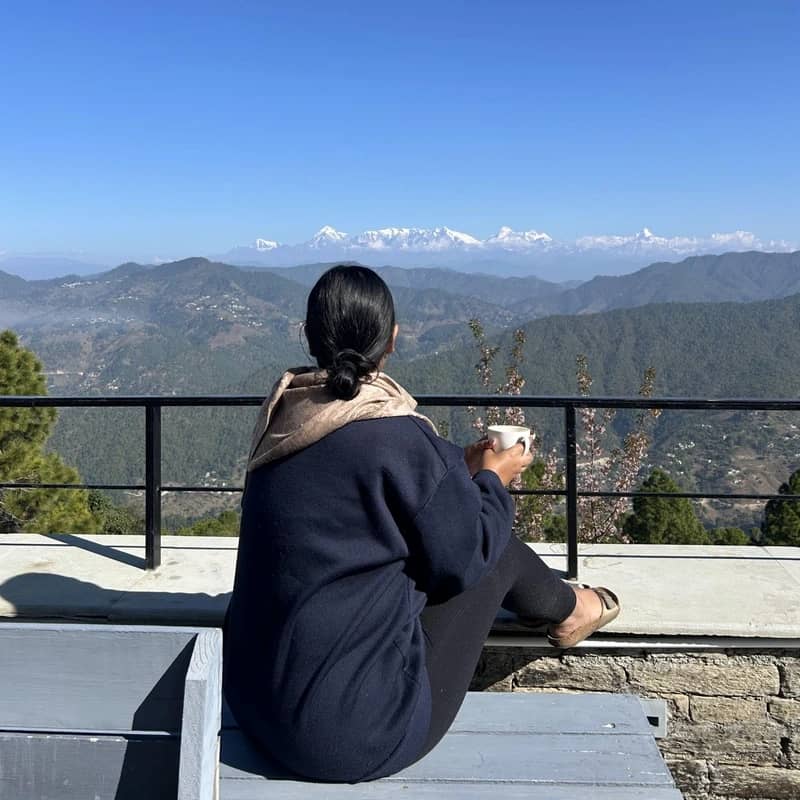
Long stretches on the open verandah with mountain views. Tea, a book if you want it, or nothing at all. This is where most of the real work happens — in the absence of demand, your nervous system begins its repair.
Three meals a day of traditional pahadi food — eaten without rush, without a phone beside the plate, without multitasking. Many participants say this is the first time in years they have actually tasted their food.
In the mountain quiet, without screens before bed, without the ambient anxiety of pending work, sleep transforms. By day three, most participants report the deepest, most restorative sleep they have experienced in years. Some say this alone is worth the retreat.
Evenings gather lightly. Dinner, conversation if you want it, or solitude if you don't. There might be the sound of wind through trees or distant birdsong. No entertainment, no programming. Just the natural close of a day lived without urgency.
Your primary resting space — open air, mountain views, a comfortable chair. This is where most participants find their rhythm. Hours pass without effort. The view does the work.
Gentle trails through deodar and oak forest surrounding the retreat property. No elevation gain, no fitness requirement. Walk barefoot if you like. The needle-covered ground is soft and the canopy filters the light beautifully.
Mountain streams where you can sit and listen to water over stone. The sound is a natural nervous system regulator — research shows that running water reduces cortisol faster than silence alone.
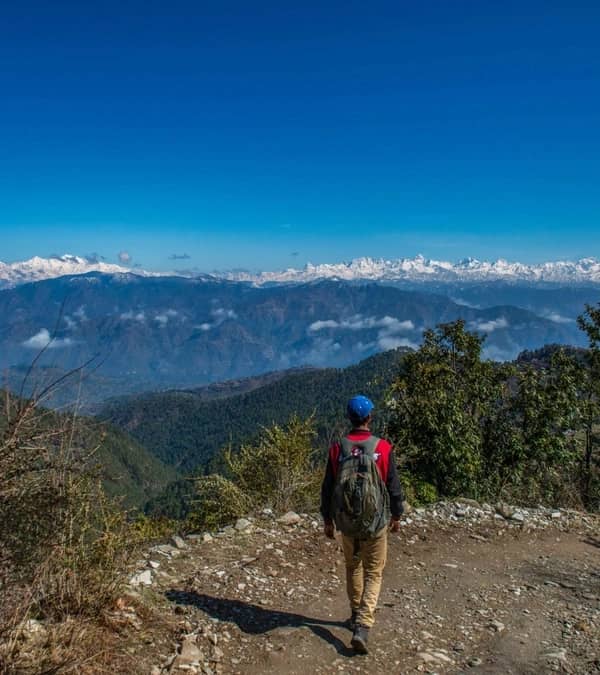
Optional short walks to ridge points with panoramic Himalayan views. Not mandatory — but many participants find that the visual vastness of mountains shifts something in their sense of scale and urgency.
Morning
Mornings arrive without demand. You wake when your body is ready — there is no alarm, no breakfast bell, no morning session. The forest is quiet. Chai and coffee are available on the verandah. Some people sit in silence. Some walk. Some go back to sleep. All of this is right.
Late morning brings a natural transition. The mountain light changes. This is your time — napping, reading, sitting by a stream, moving slowly through the forest if you feel drawn to. No itinerary. No check-ins. No one asks what you are doing.
Afternoons are spacious. Lunch is simple pahadi food — dal, sabzi, rice, chapati — eaten slowly. After eating, the day opens. Some people walk forest trails. Some lie in the grass. Some do nothing at all, and that is completely, genuinely okay. This is where the nervous system does its actual work — in the sustained absence of demand.
Evening
Evenings gather lightly. There is dinner. There is conversation if you want it and quiet if you don't. The mountain dark arrives early. Sleep comes naturally, deeply, without resistance.
By the third or fourth day, something shifts. Your body stops waiting for the next demand. Your mind stops planning tomorrow. You inhabit just this moment, and that moment feels like enough. This is the reset.
Primary location: chakrata
The deodar forest creates a natural cocoon for the nervous system. No tourist noise. Minimal signal. Just the profound quiet of ancient trees and clean altitude air. The isolation is not hostile — it is protective.
Also held in
Chakrata
Forest immersion at 2,200m becomes part of the healing. The silence is not empty — it is full of birdsong, wind, and the slow pulse of mountain life. This is the primary setting.
Mussoorie
Softer terrain for those needing gentleness first. More accessible, slightly more connected. The landscape meets you where you are without demanding you go further.
Rishikesh
Spiritual ground amplifies the inner turn. The Ganges river provides a natural sound object. Traditions of rest and contemplation have lived in this landscape for millennia.
Suggested Trek
Chakrata Weekend Trek
Guided Himalayan trek
If you recognise this tiredness — if the word "rest" feels like a distant memory, or if you have been telling yourself you will take a break "after this project, after this quarter, after this year" — come explore what stopping actually feels like. We will help you find the season, location, and depth that makes sense for your nervous system right now. You have earned this. And you do not need to earn it.
No forms, no checkout. Tell us what you're looking for — we'll take it from there.Custom pricing based on your plan.
A weekend mountain retreat designed to help you disconnect from constant work pressure and reconnect with nature, slow living, and meaningful rest.
Personal-practice Yoga retreats with asana, pranayama, and meditation; current dates and programme details are confirmed by enquiry.
Drop into the depth that silence reveals, with guidance and sanctuary.
Walk the Himalayas by day, paint what you see by evening — where trail meets canvas.
See how this retreat compares to other similar offerings.
Editorial scores across four dimensions. Higher values indicate greater emphasis, not quality.
Yes. There is no schedule, no mandatory sessions, no workshops, no yoga classes, no meditation instruction (unless you specifically ask). The retreat is designed around removing everything that demands a response from your nervous system. You eat, sleep, walk, sit, and let your body do what it already knows how to do when the pressure stops.
A hotel requires decisions: where to eat, what to do, when to check out. It comes with WiFi, room service menus, and the ambient expectation of being a "guest." This retreat removes all of that. Everything is taken care of — meals appear, silence surrounds you, no one expects anything. The absence of decisions is a core part of the nervous system reset.
Possibly, for the first day. Boredom is your nervous system's withdrawal symptom from constant stimulation. By day two, what felt like boredom transforms into something else — spaciousness, ease, a quiet kind of attention you haven't felt in a long time. This transition is a signal that the retreat is working.
A 3-day weekend gives you a genuine taste of rest and often shifts your sleep quality immediately. For a true nervous system reset — where the deep patterns of vigilance and hyperactivity begin to soften — we recommend 5–7 days. The transformation that happens after day 3 is qualitatively different from what comes before it.
You can, but we recommend keeping it off or in your bag. Phone signal in Chakrata is intermittent by geography, which helps. Most participants find that the initial discomfort of being unreachable passes within a few hours, replaced by a profound sense of relief. In genuine emergencies, connectivity is always available.
Not as part of the schedule. However, gentle morning yoga and meditation guidance are available if you request them. Some participants find that movement or sitting practice supports their rest. Others find that the best thing for their system is genuinely doing nothing. Both are honoured here.
Rest & Reset groups are deliberately small — maximum 8 participants. Most are professionals in their 30s–50s experiencing fatigue, overwork, or pre-burnout exhaustion. The atmosphere is quiet and respectful. You won't be asked to share your story, participate in group activities, or socialise beyond what feels natural.
Traditional Himalayan pahadi cuisine — dal, fresh sabzi, hand-rolled chapati, rice, seasonal vegetables, warming chai. Simple, nourishing food eaten slowly. Vegetarian by default; dietary preferences accommodated with advance notice. Many participants say the food is the most unexpectedly healing part of the retreat.
Primarily in Chakrata — a quiet forest town at 2,200m altitude in Uttarakhand, 3 hours from Dehradun. Ancient deodar trees, clean mountain air, no tourist infrastructure, no commercial noise. Also available in Mussoorie (gentler, more accessible) and Rishikesh (spiritual tradition). All locations include travel guidance from Dehradun.
We strongly recommend against it — the entire purpose of the retreat is to let your nervous system experience the genuine absence of work demands. If you truly cannot disconnect completely, let us know in advance and we can arrange limited connectivity windows. But in our experience, the people who most feel they "cannot" take 3 days off are exactly the people who most need to.