
Chakrata
Chakrata is not chosen for convenience. It is chosen for stillness, altitude, forest density, and silence. Two thousand meters above the plains, in a Himalayan forest where sound travels differently and time moves slower, this is where minds settle and hearts listen. Easily accessible from Dehradun — yet distant enough from human noise that the silence becomes thick.
Frequently asked questions
Retreats: Why Stillness & Movement Thrive in Chakrata
Chakrata is not only for silent retreat. The forest itself invites movement — walking, gentle hiking, embodied practice. The same forest density that creates stillness for meditation creates beauty for movement. Altitude that calms the thinking mind also grounds the body during yoga or tai chi. You can retreat into silence. Or you can retreat into motion through the land. The place holds both.
Retreats: Why Inner Work Succeeds in Chakrata
Altitude & Nervous System
The elevation shifts your physiology without extremity. Two-thousand meters creates a gentle oxygen reduction that calms the thinking mind, allowing deeper rest and true recovery.
Forest Silence
Chakrata sits within dense Himalayan forest — not bare peaks, but living woodland. This acoustic environment is non-commercial. No tourist noise, no vehicle sound. The forest itself creates the container for introspection.
Isolation Without Extremity
Close enough to Dehradun to be accessible. Remote enough that once you arrive, you have genuinely left. No hiking to reach comfort. No deprivation. Simply separation.
Cultural Quiet
Chakrata remains a working, lived-in town — not a pilgrimage site or tourism hub. Its rhythm is local, not visitor-oriented. This keeps the space grounded and unhurried.
Retreat Services Services
These retreat journeys align naturally with what Chakrata offers:
Burnout Recovery
A weekend mountain retreat designed to help you disconnect from constant work pressure.
Treks from Chakrata
Summit routes and mountain journeys. Choose by difficulty, duration, and season:
Chakrata Weekend Trek
2 Nights / 3 DaysChakrata weekend trek with forest trails, mountain views, camping, guided outdoor time, and Dehradun pickup and drop over 2 nights and 3 days.
Chakrata Tiger Fall Trek
2 Nights / 3 DaysTiger Fall trek near Chakrata with forest trails, waterfall views, nature immersion, and a 2-night 3-day guided route from Dehradun.
Chakrata Budher Caves Trek
2 Nights / 3 DaysBudher Caves trek in Chakrata with forest trails, ancient caves, mountain views, local heritage, and a 2-night 3-day guided route.
Chakrata Guided Treks
1-3 Days (flexible)Guided treks in Chakrata with scenic forest trails, local guides, nature interpretation, and flexible day-to-multi-day outdoor routes.
Places & Landscapes Chakrata
Sights, natural wonders, villages, and spaces that define Chakrata:
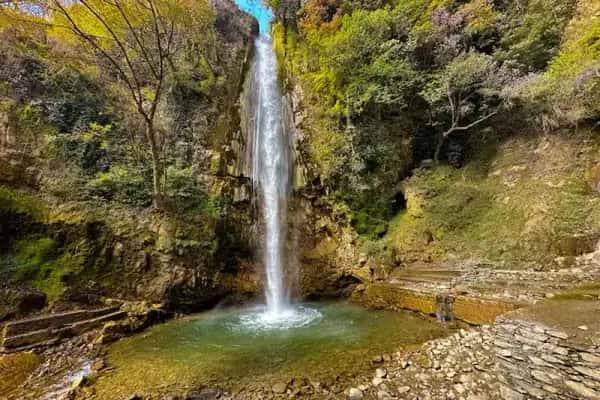
Tiger Fall
WaterfallBest Jun–OctA 20-meter cascade hidden in the forest.
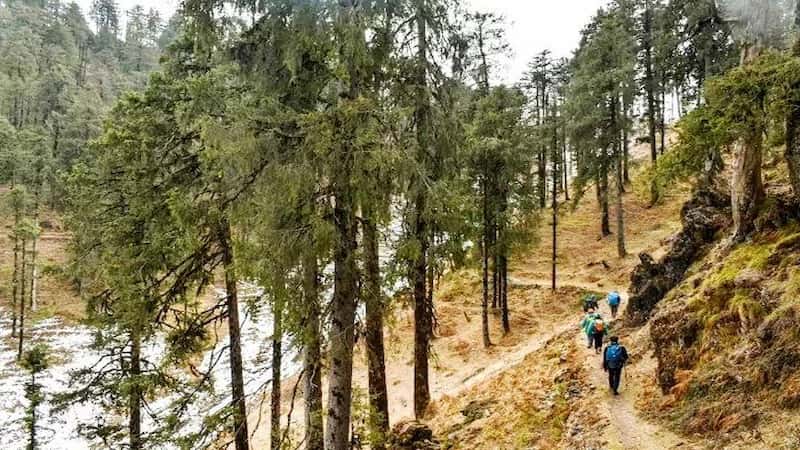
Deoban Meadows
Meadow · 2,300mApr–OctHigh meadows with views of distant snow peaks.
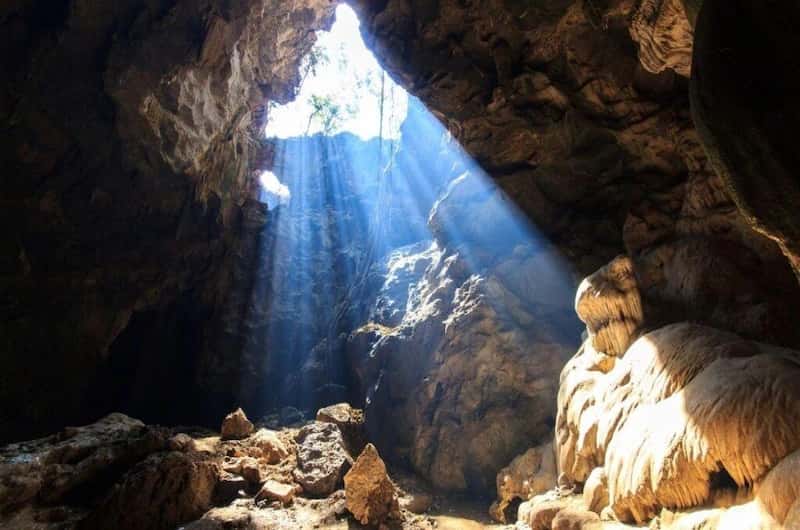
Budher Caves
Ancient CavesYear-roundRock caves believed to be ancient meditation sites.
Soft Experiences
Non-product ways to be: quiet walks, seasonal phenomena, cultural moments, simple presence.
Landscape Sketching Walk
A slow creative walk using the existing ridge paths, forest edges, and meadow viewpoints as places for observation, sketching, and visual journaling. The focus is on noticing light, trees, distance, and seasonal changes rather than covering ground quickly.
Forest Bathing (Shinrin-yoku)
Not hiking. Not trekking. Slow walking through dense woodland, no destination, full attention to trees, light, sound, smell, air on skin. The forest becomes medicine through presence, not exertion. Many find this alone justifies the journey.
Morning Cloud Walking
In monsoon, Chakrata wakes into clouds. Walking at dawn, you move through mist, emerging above it, then descending back in. The boundary between air and earth becomes textured and alive. This phenomenon lasts for just 3-4 months but transforms how you understand landscape.
Sitting with the Forest
Find a place — a rock, a meadow edge, a hollow beneath trees — and spend 30–60 minutes doing nothing. Watching. Listening. Feeling how the forest operates when you are not trying to do anything. This simple act is often when people understand why they came.
Local Rhythm Walking
Walk through the town at different hours — early morning when locals move through daily rhythms, midday when the place becomes yours, evening when rituals and cooking fires appear. You understand a place not by guidebook but by witnessing how people live in it.
Seasonal Phenomena
June rains arrive with sudden force. October brings unexpected snow. Spring flowers emerge in specific sequences. Rather than fight these changes, notice them. Become aware of how the land breathes in rhythm with seasons. This is slower science, but deeper knowledge.
Essential Information
Best Seasons
June–October (monsoon and post-monsoon). September–October is ideal for balanced clarity and comfort.
Accessibility
Closest to Dehradun (60 km, roughly 2.5 hours by car). Accessible without extreme hiking or preparation. Small town amenities, but not a resort destination.
Crowd Profile
Quiet. Not a tourism hub. Local community, not transient tourist atmosphere. You may not see another foreigner for days.
Not Ideal For
If you need entertainment, restaurants, or urban comforts — this is not the place. If you seek pilgrimage energy or spiritual tourism — this is too grounded, too ordinary. If you need connectivity (mobile signal is sporadic) — reconsider.
Timing & the Forest Rhythm
Spring brings life to the forest. Wildflowers appear, birds return. Energy is gently upward. Good for people seeking softness and new beginning, not deep rest.
Monsoon transforms Chakrata. Heavy cloud, frequent rain, mist in the mornings. The world contracts. This is peak season for silence-seeking and introspection. Also greenest and most alive.
Post-monsoon clear skies. Cooler temperatures. The land feels washed. Days are crisp, nights are deep. Excellent for reflection and gentle emotional work.
Winter silence. Forest is bare and quiet. Cold sharpens attention. Sky is often clear. This is when Chakrata feels most removed from the world — for those seeking true solitude.
Reading from This Land Chakrata
Stories, essays, and reflections that deepen understanding of Chakrata:
Discover Other Locations
Each land holds a different rhythm. If {location} is not your place, another might be.
Sankri
Sankri is not chosen easily. It is chosen for rawness, altitude, remoteness, and the particular medicine of mountain basecamp. Three thousand meters above the plains, at the convergence of trekking routes and Himalayan wilderness, this is where bodies are tested and minds become clear. Getting here requires intention. And that alone is part of the work.
Mussoorie
Mussoorie is chosen for accessibility wrapped in beauty. Two thousand meters above the plains, in rolling cloud-covered hills dotted with pines and deodar trees, this is where serious rest arrives without heroics. The mountains here are soft. The air is clear. The silence is real without being extreme. This is retreat for people who need permission to truly soften.
Munsiyari
Munsiyari is not chosen casually. It is chosen for transformation through terrain and altitude. Three thousand six hundred meters above sea level, in the high alpine meadows of the eastern Himalayas, this is where the body becomes clear and the mind strips down to what matters. The effort to reach here is part of the work. The altitude is not decoration — it is medicine.
Rishikesh
Rishikesh is chosen for its spiritual gravity. On the banks of the Ganges, in the yoga capital of India, this is where thousands of years of contemplative traditions are still alive in daily practice. This is not a place dressed up as spiritual — it is a place where spiritual life is lived. The river itself teaches. The ashrams around you remind you that you are part of something much older than yourself.
Zanskar
Zanskar is not chosen lightly. It is chosen because nowhere else on the subcontinent offers this particular combination — a high-altitude river valley sealed by mountains, monasteries older than most nations, and a silence so deep it becomes audible. At 3,500 meters in Ladakh, the air is thin, the sky is impossibly close, and the land demands that you arrive fully. Nothing here is convenient, and that is the point.
Chakrata is one of several Himalayan locations we work with — each chosen for different kinds of inner work. We return to Chakrata for people seeking accessible-yet-removed silence, forest immersion, and the particular medicine of this altitude and forest density. If you are seeking higher peaks, remote trekking, or raw wilderness, Sankri may be the location your retreat reaches for instead.
If this description resonates — if you recognize yourself in one of these intentions, or want to explore whether Chakrata is the right place for your retreat journey — reach out. We will help you decide whether this land is what you are seeking.
Start with a conversation
No forms, no checkout. Tell us what you're looking for — we'll take it from there.