For a broader understanding of retreat formats, seasonal considerations, and how mountain programs differ across regions, see our complete guide to Himalayan Retreats in India.

Sound Healing
Bathe your nervous system in resonance that restores and recalibrates.
Who Sound Healing is for
Want dates, price, and fit?
Talk with us directly — no forms, no commitment. Just a conversation about what you need.
Dates · Starting price · Fit guidance
Ideal fit for Sound Healing
- ✓You are experiencing chronic stress, insomnia, or anxiety and want a non-pharmaceutical approach to relief
- ✓You are drawn to healing modalities that don't require physical effort, mental concentration, or talking
- ✓You want to complement an existing meditation, yoga, or therapeutic practice with vibrational work
- ✓You have never tried sound healing and want to experience it in an immersive, multi-day format
- ✓You are seeking deep nervous system restoration in a setting where the natural environment amplifies healing
- ✓You want a retreat experience that is entirely receptive — where you receive rather than perform
What makes this retreat unique
Sound healing in a mountain forest is a fundamentally different experience from a studio session in the city. The absence of ambient noise, the natural acoustics of deodar forest, and the altitude itself create conditions where vibrational healing penetrates deeper and lasts longer.
Mountain Acoustics
Deodar forest at 2,200m creates a natural resonance chamber. Sound waves travel differently at altitude — they carry further and resonate longer. The complete absence of urban noise means healing frequencies arrive without interference.
Multi-Instrument Immersion
Sessions use Tibetan singing bowls, crystal bowls, gongs, chimes, and voice. Each instrument works on different energy centres and nervous system pathways. The multi-day format allows you to experience the full spectrum of vibrational healing.
Entirely Receptive
Unlike yoga or meditation, sound healing requires zero effort. You lie down and receive. For people exhausted from trying — from work, from self-improvement, from constant doing — this purely receptive modality is profoundly liberating.
Integration Through Silence
Between sessions, the mountain silence does its own work. The quiet allows your nervous system to integrate the frequencies without being pulled back into stimulus. This integration time is why a multi-day retreat is qualitatively different from a single session.
No Belief Required
Sound healing works through physics, not faith. Vibration affects your physical body regardless of what you believe about it. Whether you approach this scientifically or spiritually, the nervous system responds the same way.
Experiences during the retreat
Morning Sound Bath
The day opens with a 45-minute session of Tibetan singing bowls. You lie in a comfortable position as the bowls are played around and on your body. The frequencies are gentle — designed to open the day's receptivity. Many participants drift between waking and sleep. This threshold state is where deep healing happens.
Gong Ceremony
A full gong meditation — 60 minutes of continuous gong sound that moves through your body like waves. The gong produces overtones that your ear cannot consciously track but your nervous system responds to deeply. Participants consistently describe this as the most powerful healing experience of the retreat.
Crystal Bowl Resonance
Crystal singing bowls produce pure, sustained tones that resonate with specific energy centres. Sessions combine multiple bowls tuned to different frequencies, creating harmonic layers that the body tunes to. The clarity of crystal sound at mountain altitude is extraordinary.
Silent Integration Time
Between sound sessions, hours of mountain silence allow the healing to integrate. You might walk in the forest, sit on the verandah, nap, or simply lie still. This unstructured time is as important as the sessions themselves — it is where the body processes what the sound initiated.
Evening Sound Meditation
The day closes with a gentler session — often voice, chimes, or soft bowl work. The intention is settling: preparing the nervous system for deep, restorative sleep. Many participants report the most profound sleep of their lives during sound healing retreats.
Places we explore
Sound Healing Hall
A dedicated space designed for acoustic work — warm, draped, with thick mats and blankets. The room is oriented to capture natural mountain acoustics while maintaining warmth and comfort for extended lying sessions.
Forest Sound Sessions
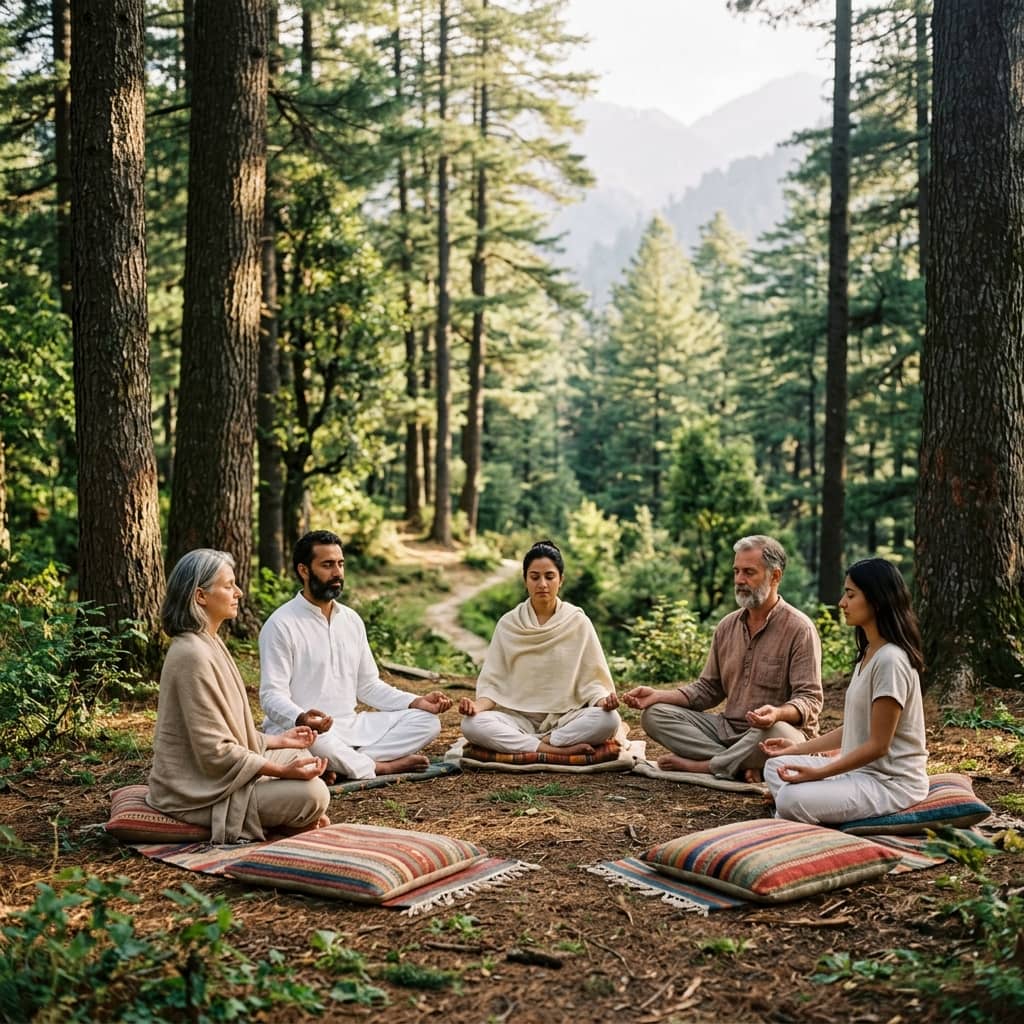
Weather permitting, outdoor sessions under deodar canopy. The forest's natural acoustics add another dimension — birdsong, wind, and tree sounds weave into the instrumental healing, creating a uniquely alive soundscape.
Walking Paths
Gentle forest trails used between sessions for integration and movement. Walking in silence after a sound bath creates a beautiful bridge — carrying the internal resonance into physical movement.
Mountain Verandah
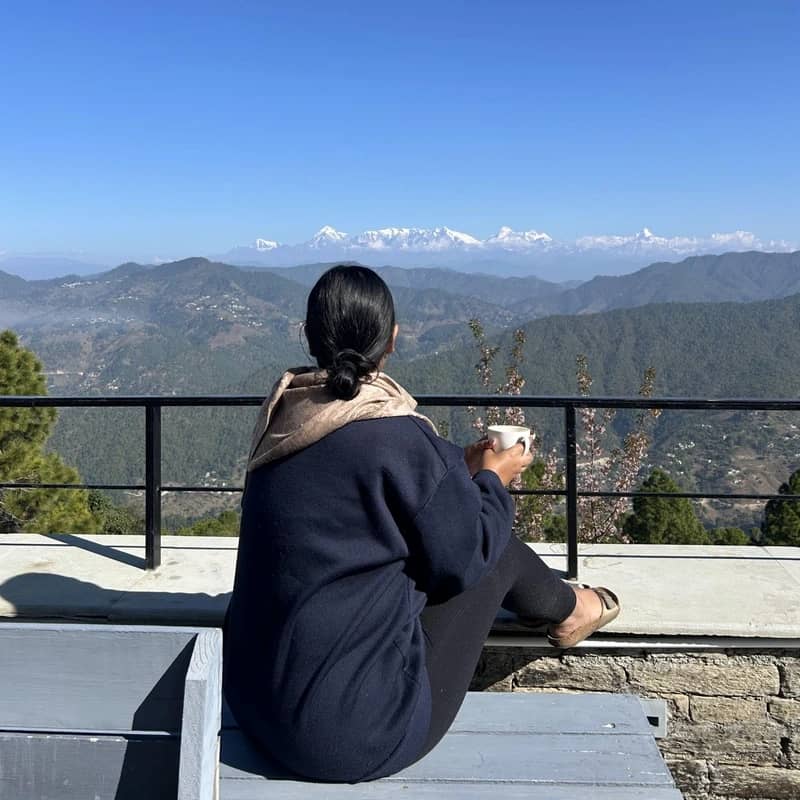
Open-air rest space with Himalayan views for integration time between sessions. Tea, stillness, and the gradual sense of your body recalibrating.
How it
Days are structured around sound sessions with generous integration time between them.
Morning
Morning sessions are gentle — singing bowls, softer frequencies, designed to open the body's receptivity for the day. You lie in comfortable position and simply receive. Sessions last 45–60 minutes.
Mid-morning brings free time. Walk the forest, sit with tea, rest, or continue in personal silence. This integration time is crucial — your nervous system processes the morning's frequencies during these quiet hours.
Afternoon brings another session — perhaps the full gong ceremony, crystal bowls, or a combined instrument sound bath. These afternoon sessions tend to go deeper as the body has already been opened by the morning work.
Evening
Evenings are quieter. A gentle sound meditation or complete silence, allowing the day's resonance to settle fully into your nervous system. Dinner is simple mountain food eaten slowly. Sleep comes naturally — deep, restorative, often dreamful.
Over multiple days, your nervous system begins to remember its natural frequency. Tension patterns stored in muscles and fascia begin to release. Sleep quality transforms. Many participants describe feeling physically lighter by day three.
Where this retreat works best
Primary location: rishikesh
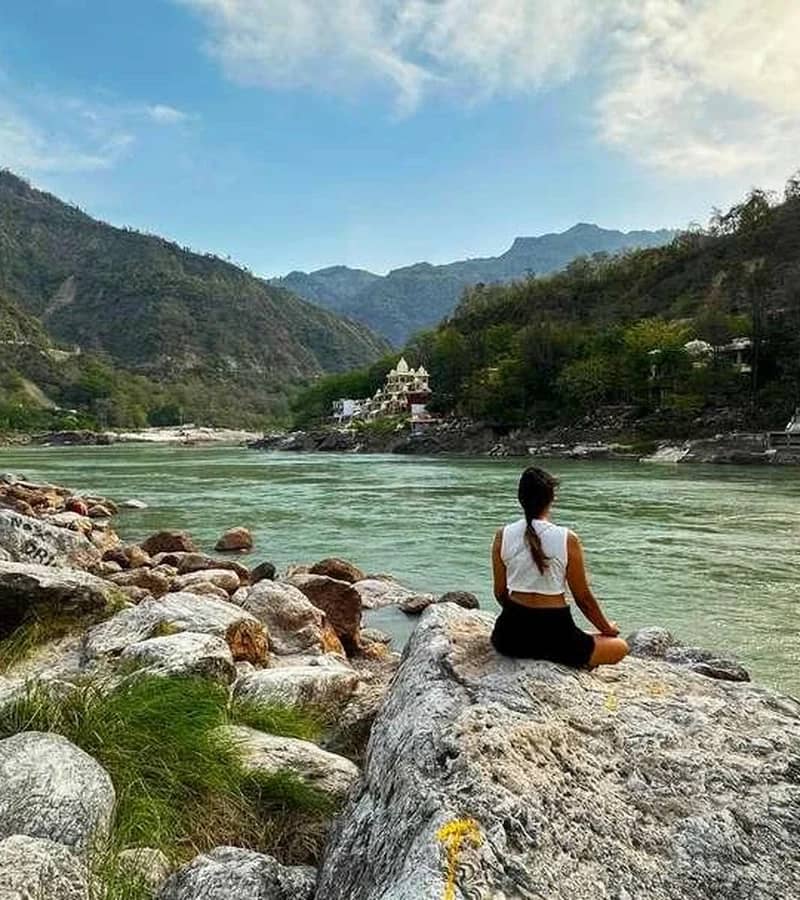
Rishikesh has a centuries-old tradition of sound work — chanting, kirtan, and nada yoga originated here. The spiritual ground amplifies the healing intention. Teachers with deep lineage in sound healing lead sessions here.
Also held in
Chakrata
Forest acoustics at 2,200m create natural amplification. The complete silence between the trees means sound travels with unusual clarity. The isolation ensures no external noise competes with healing frequencies.
Munsiyari
Alpine acoustics at Panchachuli's foot naturally amplify resonance. The mountain landscape itself becomes part of the sound field — echoes, wind, and altitude create a uniquely powerful container.
Rishikesh
Spiritual earth resonates with sound healing work. The Ganges river provides a natural drone — the continuous sound of water supports the opening process. Ancient tradition is deeply alive here.
How this adapts
The mountainsare waiting.Are you ready?
Let your body remember what resonance feels like. In the mountain silence, with nothing competing for your attention, sound becomes medicine. We provide the instruments, the space, and the expertise. Your nervous system does the healing. Come lie down and receive.
Start with a conversation
Pricing on enquiryNo forms, no checkout. Tell us what you're looking for — we'll take it from there.Custom pricing based on your plan.
You May Also Consider
- Weekend Retreat
A compressed reset for those who need mountain time but have limited availability.
- Yoga Retreats & Movement
Personal-practice Yoga retreats with asana, pranayama, and meditation; current dates and programme details are confirmed by enquiry.
- Rest & Reset
Permission to stop, for people who have been running too long.
- Burnout Recovery Retreat in the Himalayas
A weekend mountain retreat designed to help you disconnect from constant work pressure and reconnect with nature, slow living, and meaningful rest.
Compare This Retreat
See how this retreat compares to other similar offerings.
Program Profile
Editorial scores across four dimensions. Higher values indicate greater emphasis, not quality.
Frequently Asked Questions
Do I need previous sound healing experience?
No. Sound healing is entirely receptive — you lie down and the sound does the work. There is no technique to learn, no practice to master, no belief system required. Your nervous system responds to vibration automatically. Many of our participants have never experienced sound healing before and find it the most accessible healing modality they have tried.
What instruments are used?
Tibetan singing bowls (both antique and contemporary), crystal singing bowls, gongs (various sizes), chimes, tuning forks, and therapeutic voice. Each instrument works on different aspects of the nervous system. The multi-day format allows you to experience the full spectrum and discover which resonates most deeply with your body.
Is sound healing scientifically supported?
Yes. Research published in peer-reviewed journals shows that singing bowl meditation significantly reduces tension, anxiety, and depressive mood while increasing spiritual well-being. Studies also demonstrate measurable decreases in blood pressure and heart rate during and after sound healing sessions. The mechanism is physical: sound waves create vibration that affects cellular-level processes.
What does a sound bath actually feel like?
Most people describe deep relaxation within minutes — a warm, floating sensation, a sense that time has slowed or stopped. Physical tingling is common. Some people fall asleep; others remain in a lucid, dream-like state. Emotional release — tears, laughter, or simply a profound sense of relief — is normal and welcomed. Every person's experience is unique.
Can I combine sound healing with yoga or meditation?
Absolutely. Sound healing complements both practices beautifully. Many retreats combine morning yoga or meditation with afternoon sound sessions. The physical opening from yoga deepens the body's receptivity to sound. The mental stillness from meditation enhances vibrational awareness. We can design your retreat to include any combination.
Is this suitable for people with anxiety or insomnia?
Sound healing is particularly effective for anxiety and sleep issues. The low-frequency vibrations of gongs and bowls activate the parasympathetic nervous system — the body's rest-and-digest mode. Many participants with chronic insomnia report radically improved sleep by the second night of the retreat. If you have severe anxiety, let us know in advance so we can adjust the intensity.
Where is the sound healing retreat held?
Primarily in Rishikesh (spiritual tradition of sound work) and Chakrata (forest acoustics at 2,200m altitude). Both are in Uttarakhand, India. Rishikesh offers lineage connection and river sound; Chakrata offers complete silence and natural amplification. All locations include travel guidance from Dehradun.
What should I bring?
Comfortable, loose-fitting clothing. A shawl or blanket (the body cools during extended lying sessions). Personal items. We provide all instruments, mats, blankets, pillows, and equipment for sound sessions. Eye masks are provided but you may bring your own if preferred.
How many people are in a group session?
Maximum 10 participants for sound healing retreats — smaller than our other formats because the acoustic intimacy matters. Smaller groups receive more direct vibrational exposure and allow the practitioner to work individually with each participant during sessions.
How is this different from a sound healing class in the city?
Radically different. A city class is 60 minutes followed by returning to noise, screens, and traffic. This retreat is 72–168 hours of continuous support: sessions, silence, mountain air, and the complete absence of urban stimulus. The multi-day format allows your nervous system to progressively deepen its response — each session builds on the previous one. The mountain acoustics cannot be replicated in a studio.