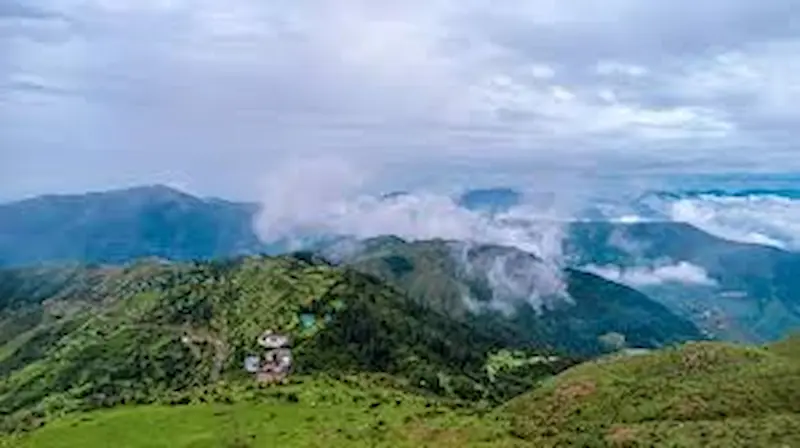
What the Chakrata Terrain Looks Like
Why Chakrata Is Uttarakhand’s Best-Kept Trekking Secret
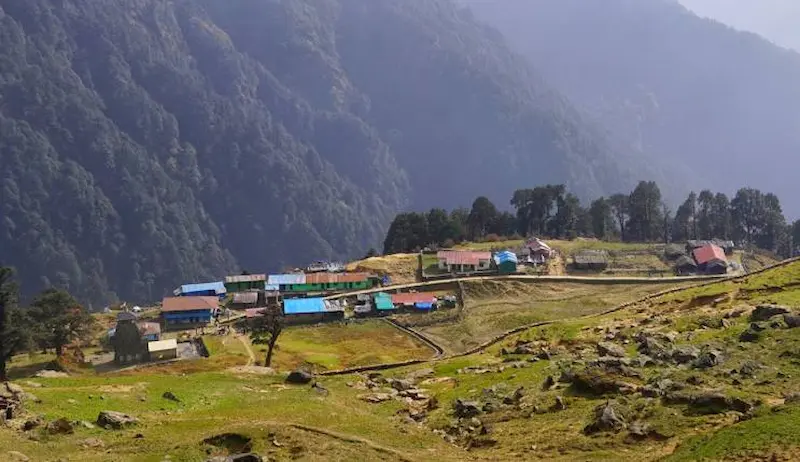
Chakrata sits at roughly 2,250 metres on a limestone ridge in the Jaunsar-Bawar region of Uttarakhand, just 90 km from Dehradun. Unlike the crowded hill stations along the Mussoorie–Nainital corridor, Chakrata remains a cantonment town with restricted commercial development — no mall road, no tourist bazaar, no honking traffic jams. What you get instead is an unhurried mountain settlement surrounded by dense deodar and oak forests, open meadows, and a network of forest trails that most visitors never discover.
The terrain here is fundamentally different from the high-alpine zones around Sankri or Munsiyari. Chakrata\u2019s trails wind through mid-altitude forests between 1,800 and 2,400 metres — no glacier crossings, no snow-line scrambles, no altitude sickness concerns. The landscape is defined by limestone geology: ancient cave systems like Budher Caves, seasonal waterfalls fed by underground springs, and ridge walks along forested escarpments with views stretching to the snow-capped Bandarpoonch range on clear days.
This makes Chakrata uniquely positioned for weekend trekkers, first-time Himalayan visitors, and anyone seeking genuine mountain immersion without the physical intensity of a high-altitude expedition. It is the Himalayas at walking pace.
Best Time to Trek in Chakrata
Spring (February\u2013April): The premier trekking window. Daytime temperatures hover around 15\u201322\u00b0C, forests are alive with birdsong, and rhododendrons bloom at higher elevations. Trails are dry and well-defined. This is the ideal season for the Budher Caves trek and guided forest walks.
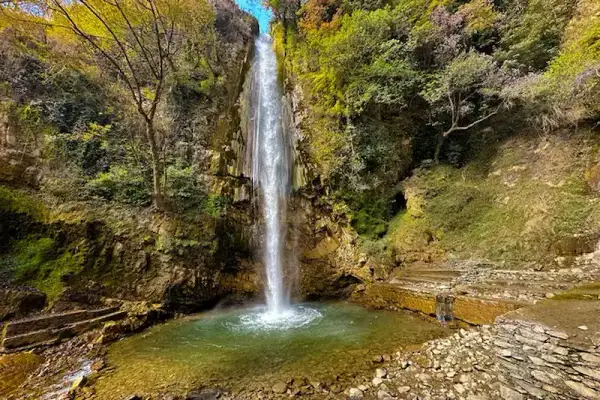
Monsoon (July\u2013August): Chakrata receives moderate monsoon rainfall, which transforms Tiger Fall into a thundering cascade — its most spectacular state. Forest trails become lush but slippery. The Tiger Fall trek is best attempted during or just after the monsoon when water volume peaks. Leeches are present on forest floors.
Autumn (September\u2013November): Clear skies, crisp mornings, and excellent visibility. The forests begin their colour shift, and the air carries a sharpness that makes ridge walks particularly rewarding. This is arguably the most comfortable season for multi-day guided treks and weekend camping.
Winter (December\u2013January): Chakrata receives occasional snowfall, blanketing the deodar forests in white. Trails at higher elevations may be icy. It\u2019s quieter than any other season — good for solitude seekers, though not ideal for first-time trekkers unfamiliar with cold-weather hiking.
For a detailed seasonal breakdown covering both treks and retreats, see our guide: Best Time for a Retreat in Chakrata.
Popular Treks in Chakrata
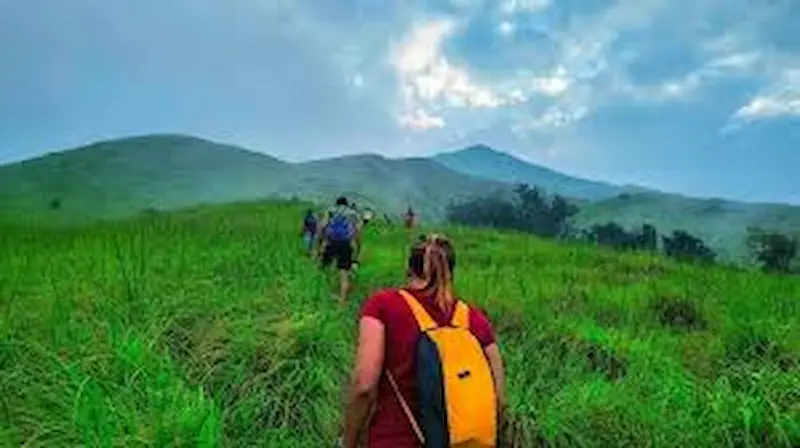
The Chakrata Weekend Trek is the most accessible route — a 2-night, 3-day itinerary covering 8 km of forest trails, grassland meadows, and ridge campsites at around 2,100 metres. It requires no prior trekking experience and is designed for professionals, couples, and families looking for a genuine outdoor weekend without extreme physical demands. Pickup and drop from Dehradun makes it logistically effortless.
The Tiger Fall Trek leads to one of the highest direct waterfalls in the region. The 12 km route passes through dense forest before reaching the falls, where a natural pool allows swimming in the right season. This is a moderate trek best done in the monsoon and post-monsoon months (July\u2013October) when water volume is at its peak.
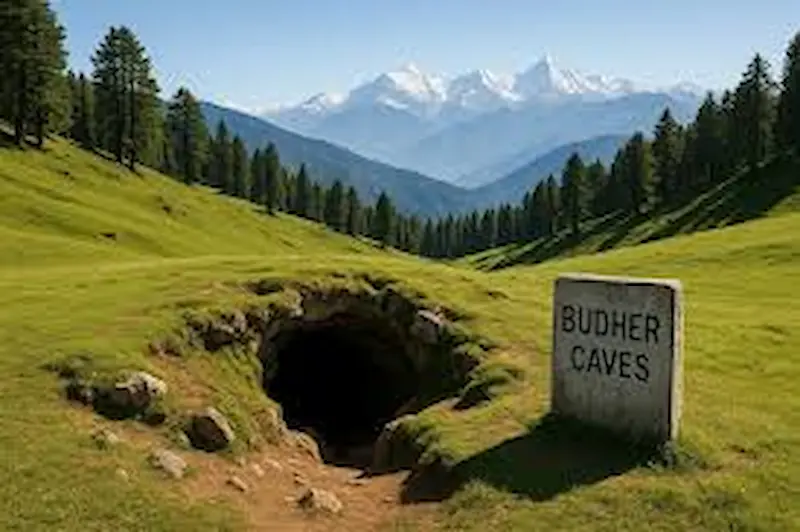
The Budher Caves Trek is Chakrata\u2019s most distinctive offering — a 10 km trail through oak forest to a network of ancient limestone caves. The caves hold local historical significance and offer a rare combination of trekking and underground exploration. Moderate difficulty, best in spring and autumn when cave conditions are dry.
For those wanting a curated experience with local ecological interpretation, the Chakrata Guided Treks programme offers flexible 1\u20133 day itineraries with expert naturalists who know every trail, viewpoint, and bird call in the region.
Difficulty & Terrain Overview
Chakrata treks range from easy to moderate — there is nothing here that demands mountaineering skill or high-altitude acclimatisation. The terrain character is distinctly different from the alpine zones of Sankri or the glacial approaches of Kumaon:
Forest trails (1,800\u20132,200 m): Well-shaded paths through deodar, oak, and pine forest. The canopy cover makes these trails comfortable even in warm months. The understorey is rich with ferns, moss, and wildflowers — the forest floor is the attraction, not just the destination.
Ridge walks (2,200\u20132,400 m): Chakrata\u2019s defining terrain. The limestone ridge offers exposed viewpoints with panoramic sightlines to the Greater Himalayan range. Wind can be brisk at ridge level, but the walking is on firm, undulating ground with minimal scrambling.
Cave systems: The Budher Caves require basic agility — ducking through low passages, navigating uneven rock floors. No climbing gear is needed, but a headlamp and comfort in enclosed spaces are essential. Guides provide safety briefings and light sources.
Waterfall approaches: The final descent to Tiger Fall involves steep, sometimes slippery terrain, especially in wet conditions. Trekking poles and proper footwear with grip are recommended. River crossings on this route are minor compared to the glacier-fed rivers of higher-altitude treks.
Need help choosing between Chakrata treks?
Get a Free Recommendation →Expert advice · 2-minute response · No obligation
How to Reach Chakrata
From Delhi: Drive or take a bus to Dehradun (250 km, 5\u20136 hours). From Dehradun, Chakrata is just 90 km — approximately 3 to 3.5 hours on a winding mountain road via Mussoorie bypass and Dhaula Kuan. This is Chakrata\u2019s single biggest advantage over remote bases like Sankri: you can leave Delhi on Friday evening and be on a forest trail by Saturday morning.
From Dehradun: The road climbs steadily through Vikasnagar and into the Jaunsar hills. Road quality is good until the final 20 km, which is narrow but paved. No mountain passes or high-altitude road sections — the drive itself is gentle compared to routes deeper into Garhwal.
Weekend logistics: Our guided treks include Dehradun pickup and drop, which means you don\u2019t need to arrange mountain transport separately. For self-drivers, parking is available at the cantonment. The last reliable fuel stop is Vikasnagar — fill up before the climb.
Permits: No forest permits are required for standard treks around Chakrata. The Budher Caves area may require a nominal entry fee at the forest check-post, handled by guides as part of the trek package.
Chakrata vs Sankri: Different Mountains, Different Journeys
Visitors frequently compare Chakrata and Sankri since both are Uttarakhand trekking destinations accessible from Dehradun. But they serve fundamentally different needs, and choosing between them is not about which is better — it\u2019s about what you\u2019re looking for.
Elevation and intensity: Sankri treks reach 3,500\u20133,800 metres with genuine alpine exposure — snow, wind, altitude. Chakrata\u2019s highest point is around 2,400 metres. There is no overlap in difficulty. Chakrata is gentle; Sankri demands preparation.
Duration: Chakrata is a weekend destination — leave Friday, return Sunday. Sankri requires a minimum 5\u20137 day commitment including travel. If your window is 2\u20133 days, Chakrata is the only viable option.
Character: Sankri is a remote basecamp village in the Tons Valley, launching point for expedition-style treks. Chakrata is a forested ridge town with trails radiating out from the settlement itself. Sankri gives you wilderness; Chakrata gives you a gentler communion with mountains.
Who should choose Chakrata: First-time trekkers, families with children, professionals wanting a weekend reset, anyone combining a trek with a wellness retreat. Explore our detailed Chakrata vs Sankri comparison for the full breakdown.
Who should choose Sankri: Experienced trekkers seeking snow summits, multi-day wilderness immersion, or classic Himalayan expeditions like Kedarkantha and Har Ki Dun.
Frequently Asked Questions
Is Chakrata good for first-time trekkers? It is one of the best places in India to start Himalayan trekking. Easy-to-moderate terrain, low altitude, short durations, and proximity to Dehradun make it ideal for beginners. No prior mountain experience is needed for the weekend trek.
Can I visit Chakrata for just a weekend? Absolutely — that\u2019s exactly what Chakrata is built for. A Friday-to-Sunday itinerary gives you a full trek day, a campsite night, and forest walking. Our weekend trek packages include Dehradun transfers.
Is Chakrata safe for families and children? Yes. The trails are forested and sheltered, altitude is manageable, and there are no technical sections. Children aged 8 and above can comfortably complete the weekend trek with guided supervision.
What should I pack? Layered clothing (temperatures drop after sunset even in spring), sturdy shoes with ankle support, a headlamp for the Budher Caves, rain jacket for monsoon treks, and sun protection for ridge walks. Full gear lists are provided in trek booking confirmations.
Can I combine a trek with a retreat? This is one of Chakrata\u2019s strongest offerings. A 2-day trek followed by a 2-day wellness retreat gives you both adventure and recovery in a single long weekend. It\u2019s a combination that isn\u2019t practical at more remote bases like Sankri.
Why Chakrata Is a Premier Trekking Destination
Chakrata has become one of the most popular trekking bases in Uttarakhand because of its unique combination of accessibility, varied terrain, and transformative mountain experiences. Whether you are looking for your first Himalayan trek or a challenging multi-day expedition, Chakrata offers routes suitable for all fitness levels and ambitions.
Combine your trek with a retreat
Chakrata is one of the few Himalayan destinations where trek and retreat operate from the same base. A 2-day trek followed by a 3-day retreat is our most popular combination — no additional travel needed.
Weekend Retreat
2 nights / 3 days. Forest stay, guided sessions, bonfire. Ideal after a trek.
Learn More →Meditation Retreat
Guided meditation, breathwork, silent walks. Deepen the stillness from your trek.
Learn More →Yoga Retreat
Asana, pranayama, and forest living. Recover and stretch after mountain trails.
Learn More →All Chakrata Retreats
Browse burnout recovery, digital detox, and more retreat formats in Chakrata.
Learn More →Talk to a Chakrata Local Expert
Not sure which Chakrata trek is right for you? Our local team can help you choose the best route based on your fitness, schedule, and previous experience.
Free consultation · No spam · Local team