Art Retreat vs Art Class: Which Will Actually Get You Creating Again?
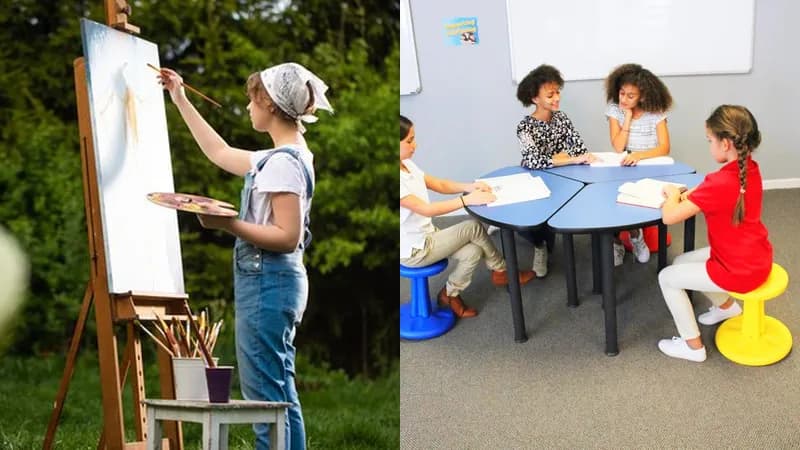
You want to create again. The question is how. Two options dominate: sign up for a weekly art class, or commit to an art retreat. They sound similar but produce fundamentally different outcomes.
What an Art Class Gives You
Art classes are excellent for learning technique. Brush control, colour theory, perspective, anatomy. A good teacher demonstrates, you practice, they correct. Over 8–12 weeks, your technical skill improves.
Art classes work well when:
- You have a specific skill gap you want to close
- You enjoy weekly structure and social accountability
- You can reliably attend without cancelling
- Your goal is technical improvement
Art classes struggle when:
- You cancel more often than you attend
- The commute and time slot feel like another obligation
- You want creative freedom but get assignments
- You leave class feeling more critical of your work, not less
What an Art Retreat Gives You
An art retreat does not teach technique the way a class does. It creates conditions for creative immersion. Seven days, away from home, where the only agenda is creation.
The transformation is not about learning watercolour technique. It is about proving to yourself that you can sustain creative focus. That you have ideas. That the inner critic can be managed. That creating is not reserved for "real artists."
Art retreats work well when:
- You have lost touch with your creative self
- Perfectionism stops you before you start
- You need permission and protected time
- You want to explore without judgment
- You are burned out and need creative recovery
Art retreats struggle when:
- You want structured progressive skill training
- You are preparing for an exhibition or portfolio
- You prefer urban convenience over travel
The Core Difference
An art class improves your skill. An art retreat changes your relationship with creating.
Most people who enrol in art classes and drop out do not lack discipline — they lack the belief that their creative practice matters enough to protect. A retreat addresses that belief directly. When you spend a week doing nothing but creating, the message is clear: this matters.
The Inner Critic Factor
In a weekly class, the inner critic has a week between sessions to build its case. "That was not very good." "Everyone else is better." "You should spend this time on something productive."
In a retreat, the critic gets exhausted by day three. There is nowhere else to be. No other obligation competing for the time. The critic runs out of ammunition, and what remains is the quiet impulse to pick up a brush and see what happens.
Cost Comparison
A 12-week art class in a city might cost ₹15,000–25,000. A 7-day art retreat costs ₹30,000–35,000 including accommodation, meals, and materials. The retreat is more expensive per-day, but the outcome is different. You are not paying for instruction — you are paying for transformation.
The Honest Recommendation
If you are a practising artist who wants to refine specific techniques, take the class. If you are someone who used to create, or always wanted to, and cannot seem to start or sustain a practice — the retreat is more likely to shift the pattern. The class teaches you how to paint. The retreat teaches you that you can.
If you are ready for the shift, explore the Creative Healing Retreat — emotional healing through art and yoga in the Himalayas. If an immersive mountain experience is what you are looking for, compare the available Himalayan art retreats.