How Nature Inspires Creative Practice: The Science and the Experience
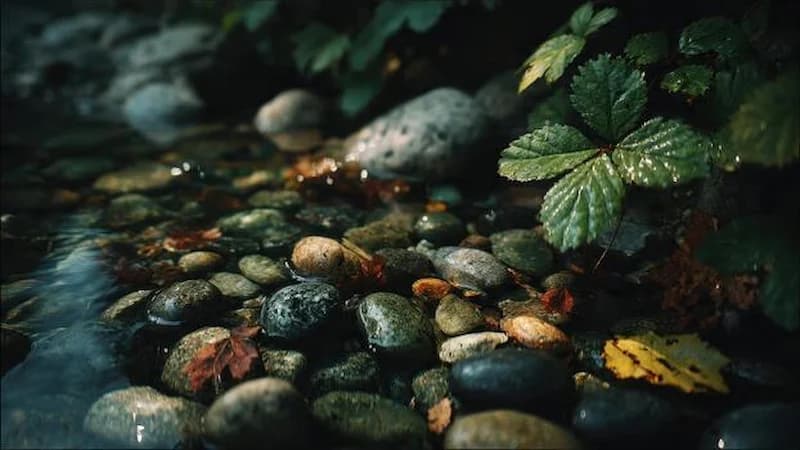
Every artist knows that nature inspires creativity. But "inspiration" is vague. What actually happens in the brain when you move from a city apartment to a Himalayan forest? And why does creative output change so dramatically in natural environments?
The answers come from attention restoration theory, default mode network research, and decades of observational evidence from artists working in nature.
Attention Restoration Theory
Developed by Rachel and Stephen Kaplan in the 1980s, attention restoration theory explains why nature restores cognitive function. In cities, directed attention — the effortful focus required for work — is constantly depleted by stimuli that demand involuntary attention: traffic, advertising, notifications, crowds.
Nature provides "soft fascination" — stimulation interesting enough to engage the mind (moving water, rustling leaves, birdsong, changing light) but not demanding enough to deplete directed attention. In this state, the cognitive resources that were exhausted by urban life begin to regenerate.
For creative practice, this is crucial. Creativity requires both directed attention (to execute) and diffuse attention (to generate ideas). Nature restores the first and activates the second simultaneously.
The Default Mode Network
When you are not focused on a specific task, the brain's default mode network (DMN) activates. This network is responsible for mind-wandering, autobiographical memory, future simulation, and — critically — creative association. The DMN is where ideas connect, patterns emerge, and novel combinations form.
In urban environments saturated with stimuli, the DMN rarely gets to operate. Every moment is filled: phone, podcast, email, conversation. The associative process that produces creative ideas is starved of runtime.
In nature — particularly after a few days of immersion — the DMN activates powerfully. The research from Atchley et al. (2012) showed a 50% improvement in creative problem-solving after four days of nature immersion. The mechanism: removing attentional demands and allowing the DMN to run freely.
This is why day three of an art retreat is often when the creative shift occurs. By then, the DMN has had enough uninterrupted runtime to generate the associations and impulses that become artwork.
Fractal Patterns and Visual Complexity
Natural environments contain fractal patterns — self-similar structures at different scales. Tree branching, river systems, mountain ridges, cloud formations — all exhibit fractal geometry. Research by Richard Taylor has shown that viewing fractal patterns reduces stress by up to 60% and activates the brain's visual processing centres in ways that simple geometric patterns do not.
For artists, this is significant. The visual complexity of natural fractals provides endless compositional interest without the cognitive overload of urban complexity. A forest canopy is visually rich but not visually aggressive. It feeds the creative eye without exhausting it.
Practical Implications for Creative Practice
Start the day outside
Even 20 minutes of morning exposure to natural environment — a walk, sitting with tea in a garden, watching the light change — restores attentional resources before you begin creating. This is why art retreats in the Himalayas start with morning yoga or nature walks, not studio time.
Work in natural light
Artificial lighting is static. Natural light changes constantly — colour temperature, intensity, direction, quality. These changes keep the visual system engaged and responsive. Studio work next to a window changes quality throughout the day as the light shifts.
Use natural materials
Clay, charcoal, natural pigments, handmade paper — these materials carry tactile information that synthetic materials do not. The irregularity of natural materials breaks perfectionism. A charcoal stick does not produce a perfect line. That imperfection is the material's invitation to loosen up.
Let us help you plan
Not sure which retreat fits your experience level? Speak with our experts and we'll craft the perfect journey for you.
Explore RetreatsLet the environment enter the work
Stop trying to reproduce nature accurately. Instead, let the environment influence the work indirectly. Paint after a forest walk without looking at reference photos. The walk shaped your perception — trust that. Let the colours, rhythms, and scale of what you saw enter the brushwork unconsciously.
The Mountain Amplifier
Mountains amplify every effect described above. Higher altitude means thinner atmosphere, more UV, more saturated colours. Mountain silence is more complete than rural silence. The scale of mountain landscapes overwhelms the ego and its perfectionism. The difficulty of breathing at altitude forces slower, more deliberate work.
Artists who work in the Himalayas consistently report a shift in their relationship with creative practice. Not improvement in technique — a shift in approach. Less controlling. More responsive. More willing to be surprised by what emerges.
This shift does not require mountains. But mountains make it harder to avoid. Explore the Himalayan art retreats if you want to experience this relationship between nature and creative practice directly.