What to Expect at an Art Retreat: A Day-by-Day Honest Guide
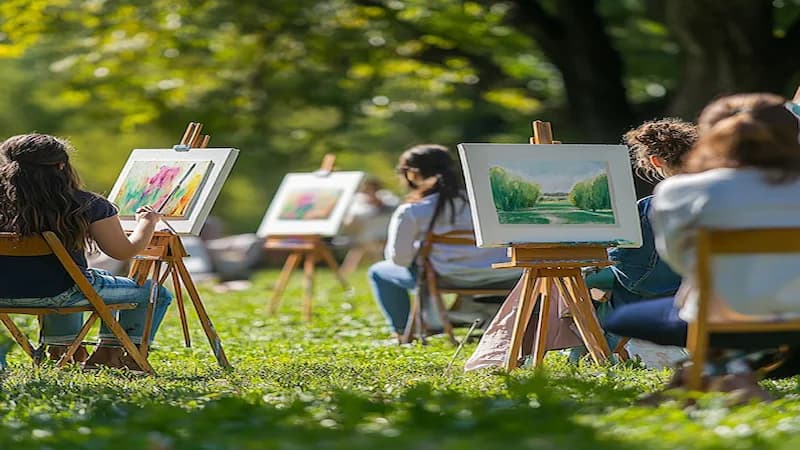
You have booked an art retreat — or you are considering it. Either way, the question is the same: what actually happens?
Marketing materials show gorgeous mountain views and people painting peacefully. That is true, but incomplete. Here is what a 7-day art retreat in the Himalayas actually looks like, day by day.
Day 1: Arrival and Uncertainty
You arrive in the afternoon. The retreat house is simpler than a hotel — clean, comfortable, but not luxurious. Your room overlooks a valley. The silence is noticeable.
The evening begins with a creative warm-up. Something disarming: blind contour drawing, or painting with your non-dominant hand. The facilitator explains that the week is about process, not product. You are sceptical. The person next to you admits they have not drawn since school. You feel slightly better.
What you feel: Nervous. Out of your element. Wondering if this was a mistake.
Day 2: The Inner Critic Arrives
Your first full day with materials. The facilitator introduces your chosen medium — watercolour, ink, clay, collage. The morning is guided. The afternoon is nature sketching outdoors.
This is when the inner critic shows up with full force. "That doesn't look right." "The person across the table is better." "This was a waste of money."
The facilitator expects this. The exercises are designed so that "looking right" is impossible. You are drawing trees in 60 seconds. Nobody's 60-second tree looks like a tree.
What you feel: Frustrated. Self-conscious. Occasionally surprised by something you made.
Day 3: The Shift Begins
Day three is often described as the hardest and most important day. The facilitator runs exercises specifically targeting perfectionism: timed drawings, collaborative pieces, working with constraints.
Somewhere during the morning, something loosens. Maybe it is the 30-second drawing that accidentally looks beautiful. Maybe it is the collaborative piece where your mark and a stranger's mark create something neither of you expected. The inner critic does not disappear — it just gets quieter when it realises the rules have changed.
What you feel: A mix of frustration and excitement. The first glimpse of flow.
Day 4: Emotional Depth
The morning session invites emotional expression through art. Not art therapy — creation. The facilitator offers a prompt: "Paint something you cannot say in words." This is where the retreat becomes personal.
Some people paint grief. Some paint anger. Some paint something they cannot name. Extended studio time in the afternoon. The room is quiet. People are absorbed.
What you feel: Vulnerable. Surprised by what emerged. A sense that this matters more than you expected.
Day 5: Nature as Medium
Creation moves outdoors. Plein air painting, land art with natural materials, nature journalling. The landscape of the Himalayas is not just scenery — it becomes material. Bark textures, leaf patterns, light on water, cloud formations. The facilitator is available but less directive. You know what you need to do today.
What you feel: Confidence you did not have on day one. A sense of collaboration with the landscape.
Day 6: Reflection and Future Practice
The morning is gentler. The facilitator guides a review of the week's work. Not critique — reflection. What surprised you? What patterns do you notice? What did you avoid?
The afternoon session addresses the practical question: how do you maintain a creative practice at home? Specific strategies — time protection, materials access, inner critic management, creative rituals.
What you feel: A mix of sadness (the week is ending) and clarity (you know something now that you didn't before).
Day 7: The Gallery Walk
A final morning session. Create one piece that captures what the week held. Optional gallery walk — participants display their work on tables or walls. No critiques. No grades. Only witnessing.
This is often the most emotional part of the retreat. Seeing your week's work assembled. Seeing what others created. Recognising that everyone in the room fought the same inner battles and created anyway.
Closing circle. Lunch. Departure with everything you made.
What you feel: Full. Quietly proud. Changed in a way you cannot yet articulate.
What You Take Home
- 15–30 pieces of work (most of which surprised you)
- Techniques for bypassing perfectionism
- A clear understanding of your creative preferences
- Evidence that you can sustain creative focus
- A plan for continuing at home
- The quiet knowledge that you made something that mattered to you
What You Should Know Before Booking
- You do not need experience. Most participants are beginners or lapsed creators.
- The facilitator works across multiple mediums. You can try watercolour one day and clay the next.
- All materials are provided. Bring your own if you have a preferred medium.
- The retreat is not art therapy. It is facilitated creative practice. If you need therapeutic support, that is a different offering.
- The discomfort of days 1–3 is normal and expected. It is the creative block loosening. Ready to compare formats and locations? Start with our Himalayan art retreats.