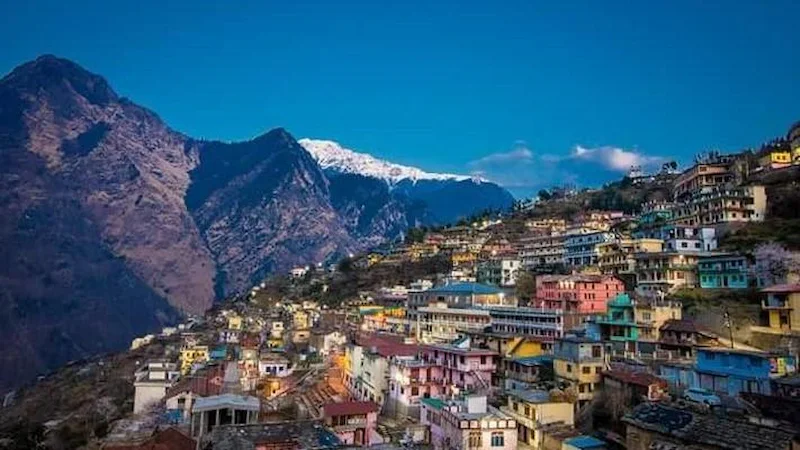
Joshimath
Historic mountain town and launchpad for Kuari Pass, Pangarchulla, and the Nanda Devi region.
“Joshimath is an ancient and vital gateway. Perched precariously at 1,890 metres above the confluence of the Alaknanda and Dhauliganga rivers, it is a town of immense spiritual weight and rugged mountaineering history. It acts as the final major outpost before the Garhwal Himalayas give way to raw, high-altitude alpine zones and the Indo-Tibetan borderlands.”
Joshimath Between Pilgrimage and Expedition
Joshimath is unique because it serves two entirely different types of seekers: the spiritual pilgrims heading to the Badrinath temple, and the hardcore mountaineers preparing for Nanda Devi, Kuari Pass, or Pangarchulla. This duality creates a town where deep spirituality meets serious physical endurance.
Why Base Your Journey in Joshimath
The Gateway to the Nanda Devi Biosphere
It is the launchpad for treks entering some of the most protected, biodiverse, and visually stunning high-altitude sanctuaries in the world.
Crucial Supply Outpost
As a major military and civilian hub, Joshimath is incredibly well-equipped. It is the last place to buy specialized gear, withdraw cash, or address medical needs before ascending.
Spiritual Acclimatization
With ancient monasteries (Maths) established by Adi Shankaracharya in the 8th century, the town offers profound spaces for contemplation before entering the harsh physical realities of the trek.
Places & Sights
Jyotirmath (Shankaracharya Math)
One of the four cardinal institutions established by Adi Shankara in the 8th century. A place of deep, ancient silence amidst the town's bustle.
Best time: Year-round
Auli Ropeway
The highest and longest ropeway in Asia, connecting Joshimath to the ski resort of Auli, offering panoramic views of Nanda Devi.
Best time: Best in Winter and Spring
Tapovan Hot Springs
Natural thermal springs located near the Dhauliganga river, historically used by trekkers and pilgrims to soothe weary muscles.
Best time: Year-round
Soft Experiences
Monastery Observations
Sitting quietly in the courtyards of the Jyotirmath, observing the daily rituals and feeling the weight of centuries of spiritual practice.
Last-minute Provisioning
Navigating the steep, chaotic markets to procure final supplies, engaging with local mountain outfitters, and preparing mentally for the climb.
Who is Drawn to Joshimath
This is not a town for a relaxed weekend getaway. It is a town of transit, preparation, and anticipation. It attracts those with serious mountain objectives.
Mountaineers and Trekkers
Those aiming for Pangarchulla Peak, Kuari Pass, or the Valley of Flowers.
The Spiritual Explorer
Seekers looking to visit the Jyotirmath or those tracing the ancient pilgrimage routes of the Himalayas.
Skiers and Winter Sports Enthusiasts
Those using the town as the base for the Auli ski slopes via the famous ropeway.
The Geological Fragility of Joshimath
It is impossible to speak of Joshimath without acknowledging its complex relationship with the very mountains it sits upon. The town is built on an ancient landslide material—a moraine—rather than solid bedrock. In recent years, this geological reality, combined with heavy infrastructure development, has caused significant land subsidence (sinking) in parts of the town.
As a visitor and trekker, this demands a specific kind of respect. Sustainable tourism is not a buzzword here; it is a necessity. By choosing responsible trekking operators who minimize their footprint, practicing 'Leave No Trace' principles, and avoiding heavy strain on local water and waste systems, you participate in preserving this critical gateway for future generations.
Curtain Raiser: The Nanda Devi Biosphere
Joshimath is the threshold to the Nanda Devi Biosphere Reserve, a UNESCO World Heritage site. This is not just another mountain range; it is one of the most rugged and inaccessible high-altitude regions on the planet.
When you trek Kuari Pass or Pangarchulla from Joshimath, the constant backdrop is the Nanda Devi massif (7,816m) and its surrounding peaks, including Kamet, Dronagiri, and Trishul. Lord Curzon, who explored Kuari Pass, and Eric Shipton, who famously mapped the Nanda Devi sanctuary, both staged their expeditions from this exact region. You are walking in the footsteps of mountaineering royalty.
Treks from Joshimath
Kuari Pass Trek (3,876m) – The Lord Curzon Trail
Kuari Pass trek from Joshimath on the Lord Curzon Trail, with Nanda Devi, Dronagiri, and Chaukhamba views on a 5-day moderate route.…
Explore Trek →Pangarchulla Peak Trek (4,700m) – The Ultimate Spring Summit
Pangarchulla Peak trek from Joshimath, a challenging 6-day spring summit route with snow sections, alpine starts, and big Garhwal views.…
Explore Trek →Navigating the Logistics
Best Seasons
Spring (Apr-Jun) and Autumn (Sep-Nov) for trekking. July-August specifically for the Valley of Flowers.
Accessibility
A challenging 9-11 hour drive from Dehradun or Rishikesh (approx 250-290 km) along the winding Alaknanda river valley.
Crowd Profile
Extremely busy during the summer pilgrimage (Chardham yatra) season. Quieter and dominated by trekkers in autumn and winter.
Not For
Not for those expecting a pristine, quiet mountain village. It is a bustling, sometimes chaotic, transit town.
The Seasons of the Gateway
Winter (Dec - Feb) — Frozen and Focused
The town is freezing. Pilgrims have left, and the town is dominated by winter trekkers and skiers heading to Auli. The surrounding peaks are completely white.
Spring (Mar - May) — Awakening and Clear
The snow begins to melt on the lower trails. The air is crisp, and the views of Nanda Devi are often spectacular and unobstructed.
Summer/Monsoon (Jul - Aug) — Lush and Precarious
The region turns incredibly green, and this is the only time the Valley of Flowers is accessible. However, heavy rains make the roads to Joshimath highly unpredictable.
Autumn (Sep - Nov) — Golden and Perfect
The finest trekking season. The post-monsoon skies are razor-clear, the temperature is moderate, and the high passes are fully accessible.
Excellent connectivity. All major networks (Jio, Airtel, BSNL) work efficiently, and 4G is widely available. This is your last chance for reliable digital connectivity.
Use Joshimath as your launchpad into the great Garhwal trekking routes.