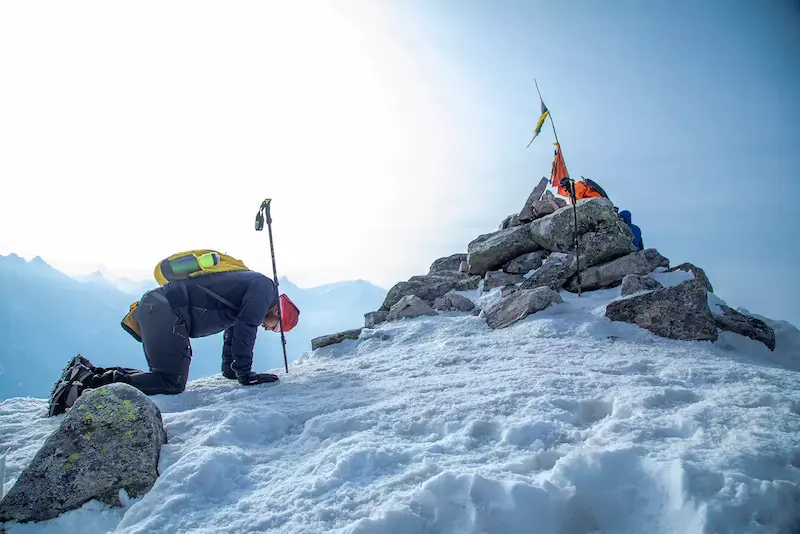
Pangarchulla Peak trek from Joshimath, a challenging 6-day spring summit route with snow sections, alpine starts, and big Garhwal views. Frequently listed among the best treks in the Uttarakhand Himalayas.
Pangarchulla Peak Trek (4,700m) – The Ultimate Spring Summit is one of the most searched and recommended treks in Uttarakhand due to its unique landscape, accessibility, and the transformative experience it offers. This trek combines physical challenge with memorable views, making it a top choice for trekkers seeking both adventure and natural beauty in the Indian Himalayas.
Why Choose Pangarchulla Peak Trek
Pangarchulla Peak, towering at 4,700 metres (15,419 ft), is widely considered the ultimate springboard for trekkers who wish to graduate from high-altitude hiking into the world of technical mountaineering. Located in the deeply rugged Nanda Devi Biosphere Reserve, the expedition begins from Joshimath and shares its initial route with the famous Lord Curzon Trail (Kuari Pass). However, while Kuari Pass gently meanders across a ridge, Pangarchulla forces you upwards, confronting you with aggressive snow slopes, boulder moraines, and knife-edge ridges.
The expedition is defined by its dramatic dual nature. The first three days are relatively forgiving. You walk through incredibly dense, silent forests of oak and rhododendron, emerging onto vast, sprawling alpine meadows like Gorson Bugyal and Khullara. You acclimatize slowly, enjoying massive views of Mount Dronagiri. But on Day 5, the trek transforms violently. The summit push demands an "alpine start"—waking up at 2:00 AM, donning microspikes, and climbing 1,200 vertical metres in the freezing darkness to ensure you cross the treacherous snow bridges before the morning sun melts them.
This trek is absolutely not for beginners. Trekkers must possess exceptional cardiovascular fitness, sheer mental grit, and prior experience hiking above 12,000 feet. For those who brave the physical punishment, the reward is an uncompromised, 360-degree amphitheatre of the greatest mountains in the Indian Himalayas, starring Mount Nanda Devi, Chaukhamba, Kamet, and Hathi Parbat. Pangarchulla is uniquely seasonal; it is almost exclusively attempted in the spring (April and May) when the snow is deep and consolidated enough for safe climbing.
Quick Facts
- Price: ₹12,500 - ₹16,000
- Duration: 6 Days / 5 Nights
- Difficulty: Challenging
- Max Altitude: 4,700 m (15,419 ft)
- Group Size: 8-12 Trekkers
How to Reach
- By Air: The Jolly Grant Airport in Dehradun is the closest airport, roughly 270 km from Joshimath.
- By Train: Yog Nagari Rishikesh or Haridwar railway stations are the primary arrive points. Extremely well connected to Delhi.
- By Road to Joshimath: The journey from Rishikesh to Joshimath covers over 250 km and takes 9-10 hours. We arrange highly reliable shared 4x4 pickups early in the morning from Rishikesh.
Permits & Safety
Permits: Access to Pangarchulla and the Kuari Pass region is strictly regulated by the Uttarakhand Forest Department to protect the Nanda Devi Biosphere. Mandatory forest permits are processed by our team at Joshimath. You must carry a valid, original Government Photo ID (Aadhaar Card, Passport) and a printed photocopy. Foreign nationals require a valid Passport and an active Indian Visa.
Roopkund Trek Cost
The typical cost for the Roopkund trek is ₹12,500 - ₹16,000. This includes most meals, camping, guides, permits, and support staff. See inclusions and exclusions below for details.
Best Time to Do This Trek
Why Pangarchulla is the perfect introductory summit expedition
There is a massive difference between a high-altitude "trek" and a true "summit climb". Pangarchulla is the latter. While routes like Kuari Pass or Brahmatal challenge you with altitude, Pangarchulla demands technical resilience. The final summit push requires a brutal alpine start at 2:00 AM, strapping on microspikes and gaiters, and ascending a 70-degree incline of deep snow in freezing darkness.
But the reward is absolute. Reaching the narrow summit ridge at 4,700m places you at the exact height of many European peaks, giving you an undisputed, 360-degree view of India's highest mountains—specifically Nanda Devi, Chaukhamba, and Dronagiri. If you are an experienced trekker looking to transition from basic hiking into serious, technical snow climbing without undertaking a 15-day mountaineering expedition, Pangarchulla is the absolute best stepping stone in the Garhwal Himalayas.
Moments you won't forget
A True Alpine Start
Wake up at 2:00 AM in the freezing cold. Turn on your headlamp, rope up with your team, and begin the grueling, silent climb up a steep wall of fresh snow.
The 360-Degree Panorama
Summiting places you on a commanding, narrow ledge. You are literally surrounded by a wall of 7,000-metre giants, including the legendary Nanda Devi sanctuary.
Technical Snow Climbing
You do not just walk on this trek; you climb. You will learn to properly use microspikes, gaiters, and occasionally ropes to navigate the aggressive 70-degree snow inclines.
The Lord Curzon Trail
Before the brutal summit push, you spend three days walking the deeply enchanting Lord Curzon Trail, moving through ancient oak forests and the sprawling meadows of Kuari Pass.
- ✓A legitimate summit expedition challenging trekkers to conquer a 4,700 m (15,419 ft) peak.
- ✓Executing a thrilling, true "Alpine Start" at 2:00 AM, climbing steep snow slopes by headlamp.
- ✓Learning to aggressively utilize microspikes, gaiters, and potentially ropes on 70-degree inclines.
- ✓Unobstructed, jaw-dropping 360-degree views of the Nanda Devi Sanctuary and Chaukhamba massif.
- ✓Combining the incredibly lush, forested Lord Curzon Trail with a brutal, barren glacial summit push.
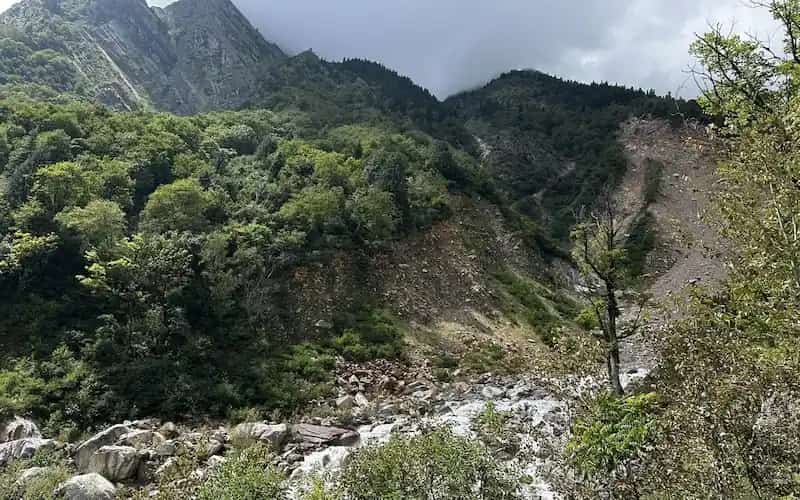
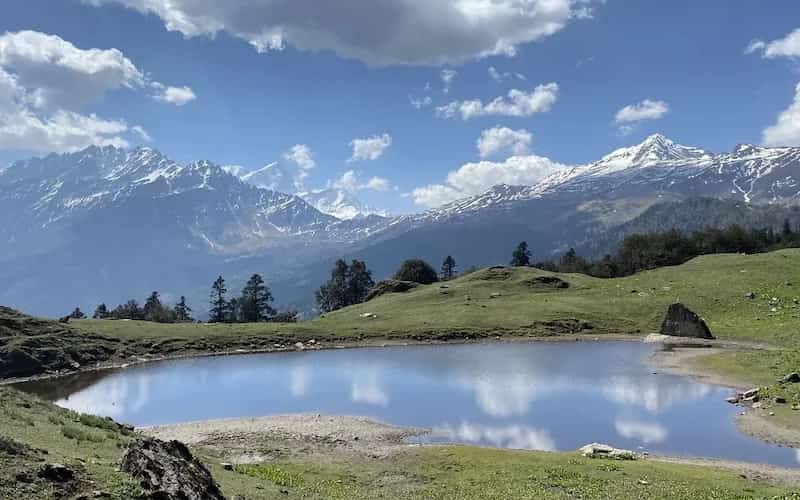
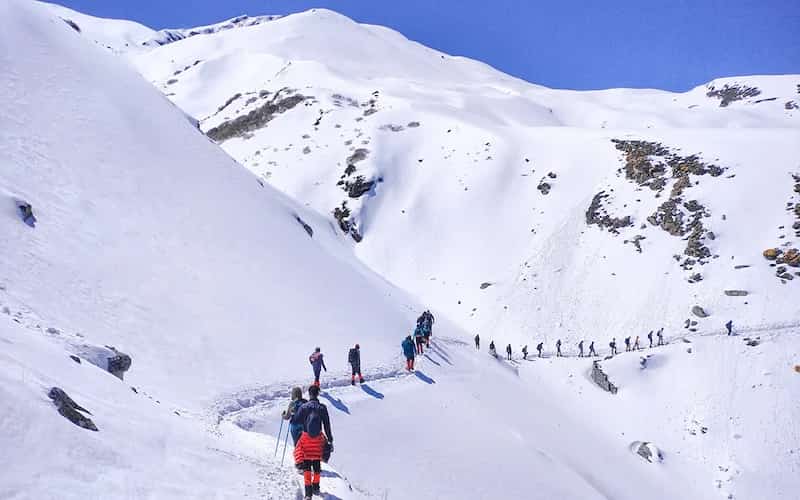
A visual walk-through of the trail
Route Overview
Day 1: Drive from Rishikesh to Joshimath (1,890 m) · 250 km · 9-10 Hours Drive The expedition begins in Rishikesh. You board a shared vehicle for a deeply scenic 10-hour drive cutting through the heart of the Garhwal Himalayas. The road follows the turquoise Alaknanda River, passing through vital confluences like Devprayag and Karnaprayag. You arrive by evening at the mountain town of Joshimath. Here, you will check into a guesthouse, meet your highly experienced Summit Leader, undergo mandatory health checks, and finalize the rental of critical high-altitude gear (thick down jackets, trek poles) before resting.

Day 2: Drive to Dhak, Trek to Gulling (2,800 m) · 6 km Trek · 4 Hours A short 45-minute drive takes you to the dusty trailhead at Dhak village. The trek begins with a steady, moderate climb through traditional step-farmed villages. Escaping the sun, the trail soon dives entirely into a beautiful, dense forest of oak, maple, and blooming rhododendron (in spring). The ascent here is incredibly rewarding and gentle, allowing your body to start acclimating to the altitude. You will reach Gulling, a beautiful forest clearing offering the first sharp views of Mount Dronagiri, and pitch your tents for the night.

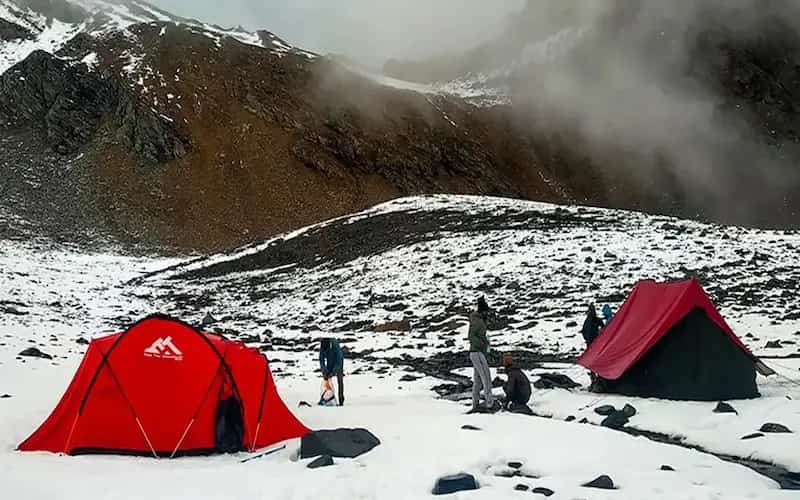
Day 3: Trek from Gulling to Khullara Basecamp (3,350 m) · 6 km · 5 Hours You leave Gulling and resume climbing through the forest canopy. The trees gradually thin out until you suddenly break the treeline, stepping out onto the sprawling, vast alpine meadows of Khullara. The landscape violently opens up, revealing a massive, uninterrupted panorama of the surrounding 7,000m peaks. Khullara is an expansive green (or snowy) bowl and serves as your basecamp for the summit attempt. The afternoon is spent strictly resting, hydrating, and taking a short acclimatization walk higher up the ridge to prepare your lungs.

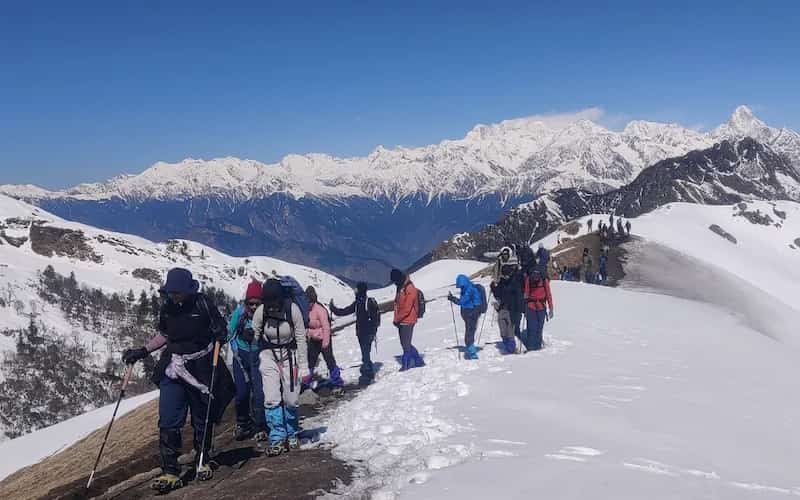
Day 4: Acclimatization Day and Kuari Pass Hike (3,876 m) · 8 km · 6 Hours To ensure summit success, today focuses on active acclimatization. You will hike up to the famous Kuari Pass (Lord Curzon Trail) at 3,876 metres. The trail is an exhilarating traverse across high-altitude meadows. Reaching the pass, you are rewarded with an amphitheatre of giants—Nanda Devi, Kamet, and Chaukhamba. After spending time at the pass, you descend back down to the Khullara Basecamp. The evening is serious; your Expedition Leader will teach you how to properly strap on microspikes and gaiters, followed by an extremely early dinner and bed by 7:00 PM.

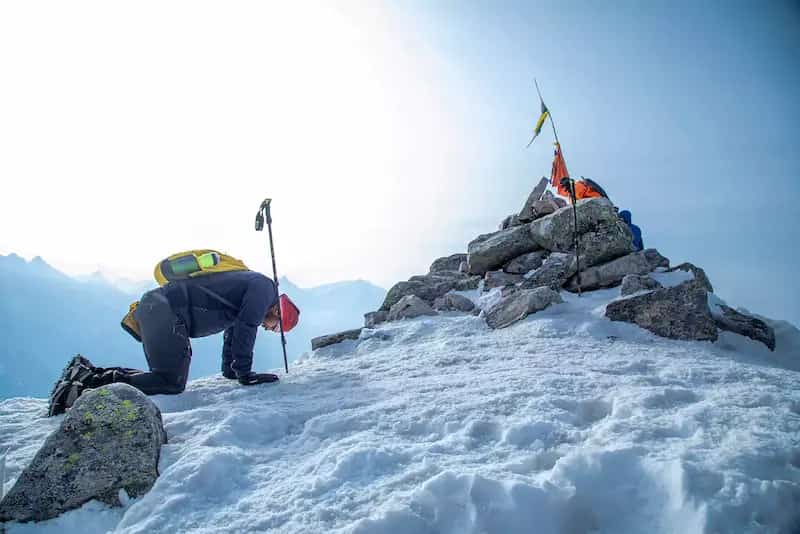
Day 5: Summit Day! Khullara to Pangarchulla Peak (4,700 m) and back to Khullara · 12 km · 12-14 Hours The most punishing and rewarding day of your life. You wake up at 2:00 AM, eat a quick meal, and begin climbing in pitch darkness with headlamps. The initial ascent is a brutal, unrelenting zig-zag up a steep moraine ridge. By dawn, you hit the snowline. You strap on your microspikes. The final 500 metres to the summit are unimaginably steep—often a 70-degree incline of deep snow. Breathing is incredibly laborious. Reaching the razor-sharp summit ridge feels triumphant. You have a completely 360-degree view of the Himalayas. After roughly 20 minutes at the top, the grueling, knee-jarring descent back to Khullara begins before the midday sun melts the snow.

Day 6: Khullara to Auli, Drive to Joshimath · 10 km Trek · 6 Hours The final day is an incredibly beautiful descent through the sprawling Gorson Bugyal meadows. You walk across massive grassy plains with Nanda Devi proudly visible on one side, eventually entering deep pine forests that lead to the famous Auli ski resort. The trek formally concludes here. You board vehicles for the short drive back down to Joshimath, celebrating your summit success with a hot shower and a massive dinner before driving back to Rishikesh the following morning.

Upcoming Pangarchulla Peak Trek (4,700m) – The Ultimate Spring Summit Departures
See upcoming pangarchulla peak trek (4,700m) – the ultimate spring summit departures for all available dates.
| Date | Duration | Price | Seats | Action |
|---|---|---|---|---|
| 15 Mar 2026 | 4D/3N | ₹9,500 | 6 left | |
| 22 Mar 2026 | 4D/3N | ₹9,500 | 8 left | |
| 05 Apr 2026 | 4D/3N | ₹10,200 | 10 left |
Small group size (max 12 trekkers). Seats fill quickly during winter departures.
Overall: Challenging
Four independent axes. Use this to compare honestly against other Himalayan routes you've done.
- Physical Demandcardio + stamina
- Technical Skillrope / exposure
- Altitude ChallengeAMS risk
- Weather Exposurecold / wind / snow
Difficulty & Preparation
This trek is rated Challenging. Maximum elevation reaches 4,700 m (15,419 ft). Total route distance is approximately 38 km. The trek duration is 6 Days / 5 Nights from Rishikesh / Joshimath.
Best seasons: March, April, May. Plan your trip around these months for the safest conditions and best visibility.
This is a demanding route. Prior multi-day Himalayan trekking experience is recommended. Ensure you have adequate cardiovascular fitness, are comfortable with sustained daily walking over rough terrain, and have experience at altitudes above 3,000 metres. Consult a physician before committing if you have any altitude-related health concerns.
Why trekkers trust us for Pangarchulla Peak Trek (4,700m) – The Ultimate Spring Summit
"The Pangarchulla Peak Trek (4,700m) – The Ultimate Spring Summit experience was flawless. From the quality of the microspikes provided to the deep knowledge of our guide, I never felt unsafe even when the snow was knee-deep. The food at 10,000 feet was unbelievably good!"
NIM-Certified Leaders
Every trek leader holds an Advanced Mountaineering qualification and Wilderness First Responder certification.
Satellite Connectivity
Connected via Garmin InReach/sat-phone beyond the tree line for immediate emergency response.
Oxygen & Oximeters
Mandatory twice-daily oxygen saturation checks. Emergency oxygen cylinders carried on every batch.
Ready for the mountains?
Limited upcoming batches available for the Pangarchulla Peak Trek (4,700m) – The Ultimate Spring Summit. Small groups of 12 max. Secure your spot before dates sell out.
Book Your Pangarchulla Peak Trek (4,700m) – The Ultimate Spring Summit NowFree cancellation up to 7 days before departure.
Challenging · March–May
Best Time to Trek
The recommended months are March, April, May. These windows offer the most stable weather, safest trail conditions, and best mountain visibility.
Pre-monsoon (May–June): Clear skies, warming temperatures, and wildflower meadows at higher elevations. Snow may persist above 3,500 metres in early May, adding alpine character. This is typically the busiest trekking window.
Spring (March–April): Retreating snow, blooming rhododendrons, and lengthening days. A transitional season with mild conditions at lower elevations and lingering snow higher up.
Month-by-Month Conditions
March: The absolute best time for hardcore snow climbing. The entire upper ridge and summit cone are buried under deep, beautifully consolidated snow. This makes the use of microspikes and crampons highly effective. However, the days are short, and the temperatures are brutally cold, frequently plunging below -10°C at Khullara basecamp.
April: Considered the prime window for peak summit success. The weather becomes significantly warmer and more stable. The rhododendrons in the lower forests bloom violently red. The summit push still has excellent snow cover, but the chilling winds are more manageable (-5°C at night). Most trekkers choose April.
May: Late spring. The snow line recedes aggressively. The summit approach often becomes a mix of patchy snow and exposed, highly loose boulder scree—which can actually make climbing more exhausting than pure snow. Early May is excellent, but late May introduces heavy afternoon clouds and the risk of pre-monsoon squalls.
Safety & Precautions
Pangarchulla is a technical, high-risk expedition requiring absolute physical discipline. Approaching 4,700 metres places trekkers in a critical danger zone for Acute Mountain Sickness (AMS), High Altitude Pulmonary Edema (HAPE), and Cerebral Edema (HACE). Our safety protocol is militaristic. Our Summit Leaders check every trekker’s oxygen saturation and heart rate twice daily. We carry comprehensive high-altitude med-kits (Nifedipine, Dexamethasone) and emergency oxygen cylinders. The summit push features extremely steep snow slopes that can become highly unstable after midday. Our leaders enforce a strict "Alpine Start" to ensure the snow is hard and consolidated for safe climbing. If weather conditions deteriorate, or if avalanche risk is deemed too high by the leader, a non-negotiable turnaround protocol is executed immediately. Absolute safety overrides the summit.
Permits & Documentation
Access to Pangarchulla and the Kuari Pass region is strictly regulated by the Uttarakhand Forest Department to protect the Nanda Devi Biosphere. Mandatory forest permits are processed by our team at Joshimath. You must carry a valid, original Government Photo ID (Aadhaar Card, Passport) and a printed photocopy. Foreign nationals require a valid Passport and an active Indian Visa.
Who Should Reconsider
Pangarchulla is strictly NOT recommended for beginners. If you have not successfully completed at least one 12,000+ ft trek (like Kedarkantha or Brahmatal), you will not be permitted to join. Individuals with asthma, severe knee issues (the 1,200m descent is merciless), or cardiovascular conditions must absolutely avoid this expedition. You must be able to confidently run 5 kilometres in 25 to 30 minutes to endure the grueling 12-hour summit day.
Getting There & Local Info
Joshimath serves as your massive, highly-equipped basecamp. You can easily rent premium trekking boots, heavy -15°C jackets, waterproof gloves, and trekking poles from numerous shops here. We strongly advise finalizing all gear rentals on Day 1 evening with your Trek Leader. There are multiple ATMs in Joshimath (SBI is the most reliable), but you should withdraw enough cash in Rishikesh to avoid mountain outages. Network connectivity is robust in Joshimath (Jio, Airtel, BSNL) but completely dies once you ascend past Gulling on Day 2. You will be entirely off the grid for 4 consecutive days.
Included
- ✓Accommodation in premium guesthouses at Joshimath (Day 1) and specialized four-season high-altitude tents during the trek.
- ✓All calorie-dense, highly nutritious vegetarian meals from dinner on Day 1 to Breakfast on Day 7.
- ✓Expert, mountaineering-certified Summit Leader, high-altitude assistant guides, and a dedicated kitchen team.
- ✓Advanced climbing and safety gear including microspikes, heavy-duty gaiters, climbing ropes, and pulse oximeters.
- ✓All essential forest permits, entry fees, and camping charges required by the Nanda Devi Biosphere Reserve.
Not Included
- —Transport from Rishikesh to Joshimath and back (can be arranged on a shared-cost basis).
- —Offloading of personal heavy rucksacks (available at an extra daily charge for mules or porters).
- —Personal high-altitude trekking gear such as -15°C down jackets, waterproof climbing boots, or trekking poles.
- —Any meals taken during the highway transit between Rishikesh and Joshimath.
- —Mandatory high-altitude trekking insurance and emergency medical helicopter evacuation costs.
Frequently Asked Questions
Is Pangarchulla Trek suitable for beginners?
No. Pangarchulla is a High-Altitude, Technical Summit expedition. You must have prior experience trekking to at least 3,500m to understand how your body reacts to altitude. The 14-hour summit day is physically devastating compared to average treks.
Do I need prior mountaineering experience?
Prior technical mountaineering experience (like ice climbing) is not required, as our Summit Leaders will train you on how to use microspikes and ropes at the basecamp. However, you must have an incredibly high level of cardiovascular fitness.
Why do we start the summit climb at 2:00 AM?
This is called an "Alpine Start". We must climb the steep 70-degree snow slopes while the snow is frozen hard as ice, allowing microspikes to grip. Once the sun rises, the snow softens, making the ascent impossible and triggering avalanche risks.
What is the temperature at the summit?
During the 2:00 AM alpine start in April, temperatures can feel like -10°C to -15°C with wind chill. As the sun rises near the summit around 7:00 AM, it warms up slightly, but you will always require high-quality, specialized winter layering.
Can I do Kuari Pass and Pangarchulla together?
Yes! The Pangarchulla basecamps are the exact same ones used for Kuari Pass. Day 4 of this itinerary actively includes the Kuari Pass traverse for acclimatization, so you essentially get to conquer both routes in one expedition.
Looking for another challenging Garhwal trek? Consider the Roopkund Trek.
Explore more treks around Joshimath.
Not sure which trek to choose?
Compare Roopkund vs Pangarchulla →Trekking in Joshimath
Joshimath is one of the most popular trekking regions in Uttarakhand, offering world-class Himalayan experiences. The region provides diverse routes including Pangarchulla Peak Trek (4,700m) – The Ultimate Spring Summit and other renowned peak treks, snow treks, and valley expeditions. Whether you're a beginner or an experienced trekker, Joshimath has routes suitable for all levels of experience and fitness.
Pangarchulla Peak Trek (4,700m) – The Ultimate Spring Summit — Complete Trek Guide
This comprehensive guide to Pangarchulla Peak Trek (4,700m) – The Ultimate Spring Summit covers everything you need to know: trek cost, detailed itinerary, difficulty assessment, best time to visit, complete packing list, and insider tips. Learn about the altitude profile, permits required, how to reach the trailhead, acclimatization strategies, and what to expect on the trail. Whether you're researching, planning, or preparing for Pangarchulla Peak Trek (4,700m) – The Ultimate Spring Summit, this guide provides all the essential information and local insights to help you prepare for a successful Himalayan trekking experience.
Explore All Treks in Joshimath
Joshimath offers diverse trekking experiences with multiple routes suiting all fitness levels. Discover other peaks, valley treks, and scenic routes in the Joshimath region for your next Himalayan adventure.
View All Treks in Joshimath →