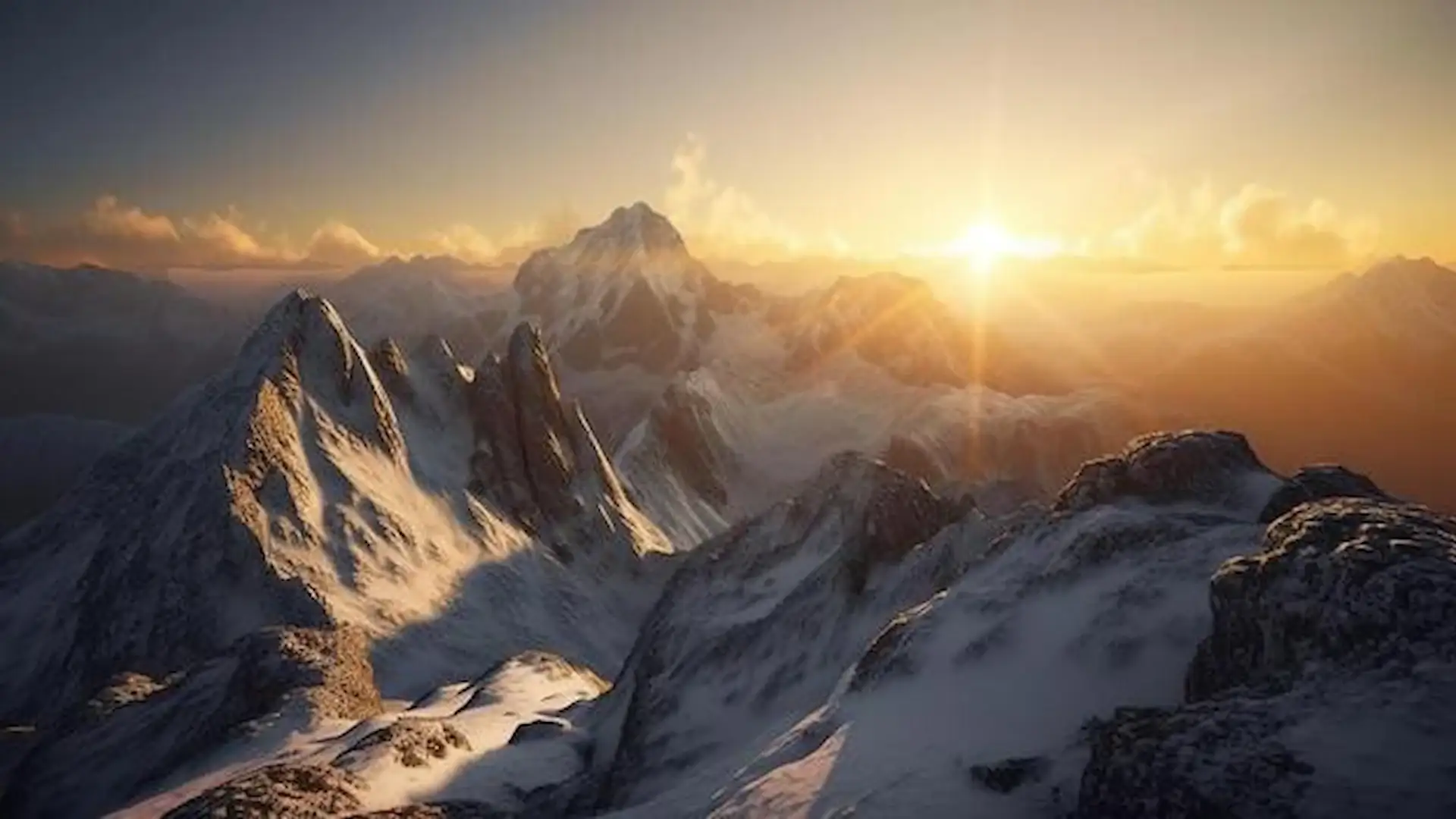
Kedarkantha vs Har Ki Dun
Both treks start from the same place — Sankri trek base, the primary trek base in Uttarakhand's Tons Valley. Both are among the most popular Himalayan treks in India. But the experience they deliver is fundamentally different: the Kedarkantha Trek is a snow summit, while the Har Ki Dun Trek is a green valley journey.
Kedarkantha Trek — 3,800 m summit with 360° Himalayan panorama. First-time snow trekkers.
Har Ki Dun Trek — Glacial valley, ancient villages, wildflower meadows. Sustained summer walking.
One is a four-day sprint to a peak, the other is a six-day walk through a glacial corridor. Choosing between them is not about which is better — it is about which is right for you. Both are featured in our top trekking routes in Uttarakhand.
Kedarkantha vs Har Ki Dun Quick Comparison
| Factor | Kedarkantha | Har Ki Dun |
|---|---|---|
| Type | Summit trek | Valley trek |
| Duration | 4–5 days | 6–7 days |
| Max Altitude | ~3,800 m | ~3,600 m |
| Best Season | Winter (Dec–Mar) | Summer (May–Jun) |
| Difficulty | Moderate-beginner | Moderate |
| Landscape | Snow summit + forest | River valley + meadows |
| Base | Sankri | Sankri |
Landscape & Experience
Kedarkantha
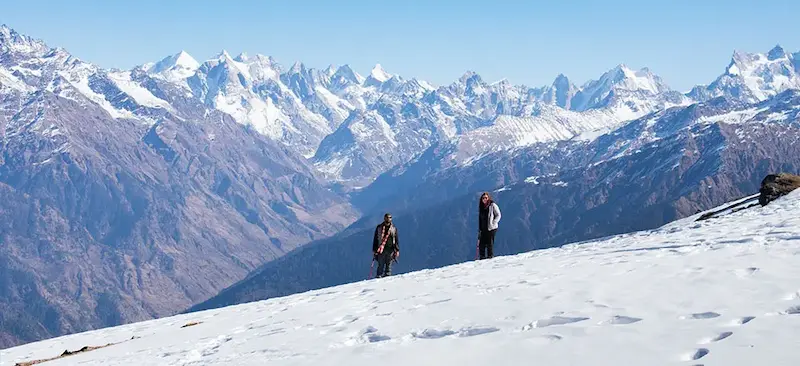
A concentrated experience that builds to a single defining moment. The Kedarkantha Trek rises through dense pine and oak forest — silent and snow-covered in winter — crosses open alpine meadows, and ascends a final ridge to a 3,800-metre summit.
The panorama from the top spans Swargarohini, Bandarpoonch, Black Peak, and the Gangotri group. On a clear winter morning, that summit view is the single most spectacular sight available on any beginner trek in India.
Har Ki Dun
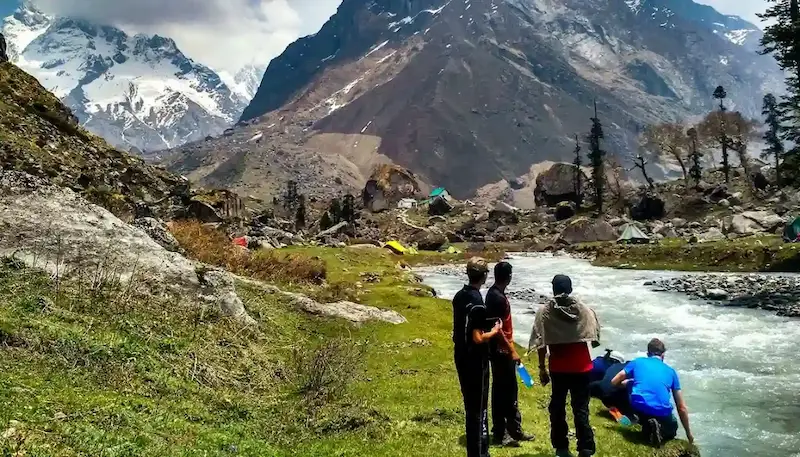
A sustained experience that deepens over five to six days. The Har Ki Dun Trek follows the ancient Tons Valley through traditional Himalayan villages, across wooden bridges over glacial rivers, through dense forest and open meadow.
The beauty accumulates — each day's landscape is different from the last, and the valley itself, when you finally reach it, feels earned. If Kedarkantha is a photograph, Har Ki Dun is a film.
Difficulty & Fitness Level
Kedarkantha — Burst Effort
Kedarkantha demands burst effort. Three days of moderate forest walking (5 to 6 km per day) followed by a summit push — a steep 800-metre ascent in snow conditions, typically starting before dawn. The summit day is the hardest single day on either trek. But the overall commitment is shorter: four days total.
Har Ki Dun — Sustained Endurance
Har Ki Dun demands sustained endurance. Daily distances average 7 to 8 km over six days. No single day is as intense as Kedarkantha's summit push, but the cumulative load is higher. The terrain is gentler — no steep summit ascent, no snow gear in summer — but the duration tests a different kind of fitness.
Both are accessible to beginner treks in Uttarakhand. The preparation is the same: two to three weeks of daily cardio. The difference is what kind of challenge you prefer. Short and sharp, or long and steady.
Best Season — Winter vs Summer
This is the deciding factor for many trekkers. The two treks occupy opposite seasonal windows — and each is at its best in that window.
This is a winter treks in Uttarakhand. The trail is snow-covered, the forest is silent and white, and the summit panorama is sharpest in cold, clear winter air. If you are choosing Kedarkantha, choose December to February for the definitive version.
This is a summer treks in Uttarakhand. The valley is green, wildflowers blanket the meadows, the river runs clear, and the trail is dry and comfortable. Summer is when Har Ki Dun is most accessible and most beautiful.
Who Should Choose Which?
Choose Kedarkantha if:
- You want to stand on a Himalayan summit
- You want a snow trek experience
- You have 4 to 5 days available
- You are a first-time snow trekker seeking a guided format
- You prefer concentrated intensity over sustained walking
- You are trekking between December and March
Choose Har Ki Dun if:
- You prefer valleys, rivers, and meadows over summit views
- You enjoy longer, immersive walks through changing landscape
- You want summer greenery and wildflowers
- You dislike extreme cold or snow conditions
- You have 6 to 7 days available
- You are trekking between April and June or September and November
Do both. If you have the time, the strongest recommendation is to do both — Kedarkantha in winter, Har Ki Dun in summer. They are complementary experiences from the same base, and together they give you the full range of what Himalayan trekking offers.
Kedarkantha — The Classic Winter Summit
Deep snow, 360° Himalayan views, and a summit push that rewards. 4 days, moderate difficulty, no technical skills.
Frequently asked questions
Which trek is easier — Kedarkantha or Har Ki Dun?
Kedarkantha is easier on a per-day basis. Daily distances are shorter (5 to 6 km), the total duration is four days, and the only physically demanding section is the summit push on day three. Har Ki Dun is easier in terms of altitude and terrain — no summit, no steep ascent — but the total distance is longer (40 km over six days). If you define "easier" as less total effort, Kedarkantha wins. If you define it as less intense on any single day, Har Ki Dun wins.
Is Kedarkantha better in winter?
Yes. Kedarkantha is specifically a winter trek. The trail is at its most spectacular from December to March when snow covers the forest, meadows, and summit ridge. The panorama from the 3,800-metre peak is sharpest in winter due to cold, clear air. Summer Kedarkantha (May) offers a hybrid green-and-snow experience but lacks the full snow immersion that defines the trek. If you are choosing Kedarkantha, choose it in winter.
Is Har Ki Dun suitable for beginners?
Yes, with moderate fitness. Har Ki Dun requires the ability to walk six to eight kilometres per day for five to six consecutive days on uneven terrain. There are no technical sections, no summit push, and no altitude concerns (maximum 3,600 metres). The challenge is sustained effort over multiple days rather than single-day intensity. If you can walk comfortably for five to six hours per day with a daypack, you have the fitness for Har Ki Dun.
Which trek is more scenic?
Both are exceptionally scenic but in different ways. Kedarkantha delivers concentrated drama — snow-laden forest, alpine meadows, and a 360-degree summit panorama across six Himalayan ranges. It peaks on summit morning and that single view is unforgettable. Har Ki Dun delivers sustained beauty — five days of changing landscape from forest to village to meadow to glacial valley. The scenery builds progressively and the Har Ki Dun valley itself is one of the most spectacular natural amphitheatres in the Himalayas. Kedarkantha for one defining moment. Har Ki Dun for a week of visual richness.
Can both treks be done by first-time trekkers?
Yes. Both are classified as beginner-to-moderate and are regularly completed by first-time Himalayan trekkers. Kedarkantha is the more common first trek — shorter duration, structured progression, and the summit reward is highly motivating. Har Ki Dun requires more sustained fitness but no technical skill. For a first trek, Kedarkantha is the stronger recommendation due to its shorter commitment and clearer objective. For a second trek, Har Ki Dun is the natural follow-up.