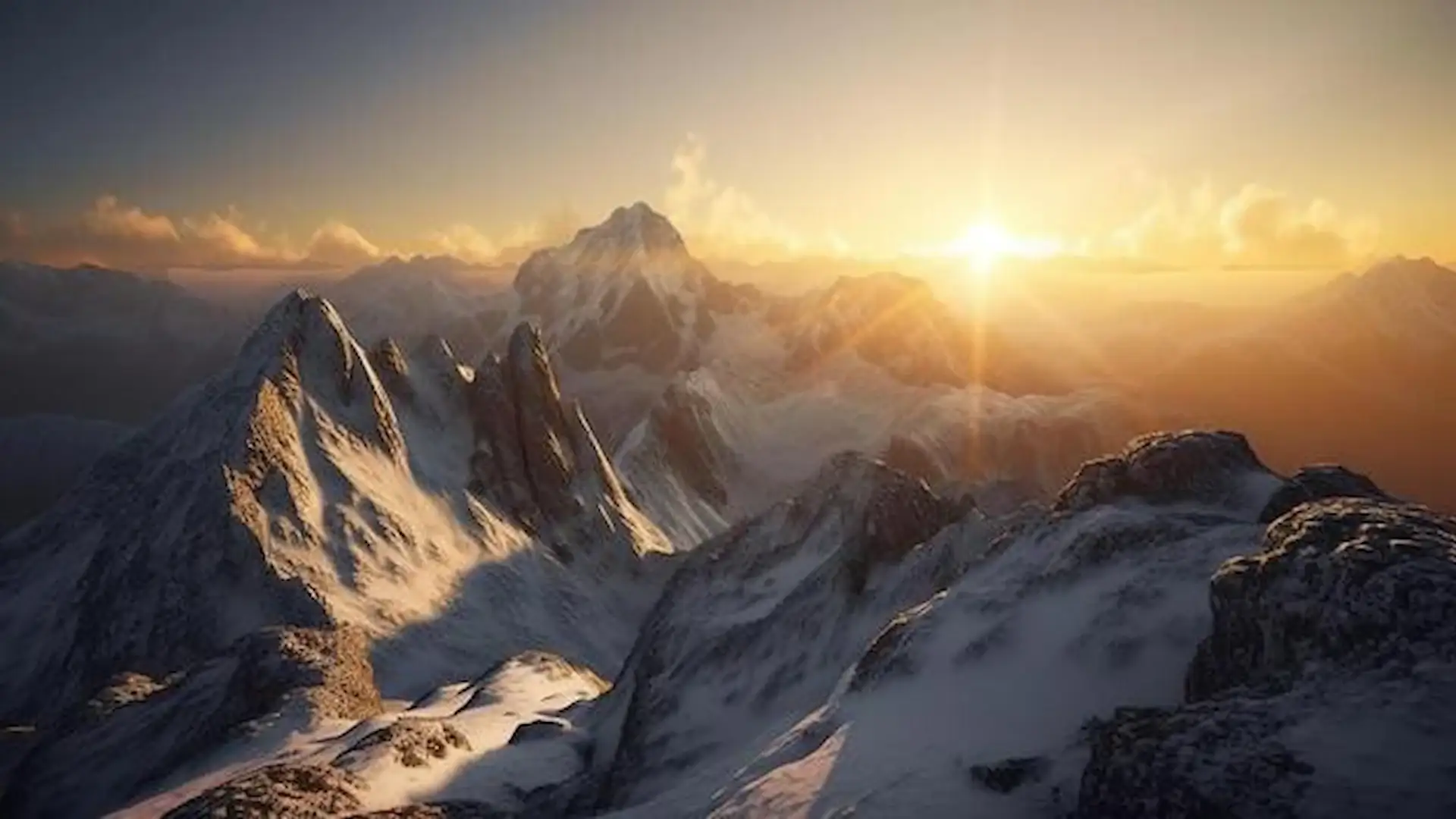
Best Snow Treks in Uttarakhand
Winter transforms the Uttarakhand Himalaya — frozen lakes, snow-laden conifer forests, and summit ridges under continuous white. The snow trekking season runs December to March, with January and February delivering peak conditions.
First snow trek? Choose Brahmatal — frozen lake, snow ridges, moderate difficulty. No crampons needed.
Want a summit? Choose Kedarkantha — deep-snow summit views across six Himalayan ranges.
These routes are drawn from our complete ranking of the 10 best treks in Uttarakhand. For non-winter routes, see the beginner treks and high-altitude treks filter pages.
Three Routes, Three Winter Experiences
Each of these treks offers a distinctly different winter experience — from a gentle frozen-lake walk to a proper summit push through deep snow.
Brahmatal — The Ideal First Snow Trek
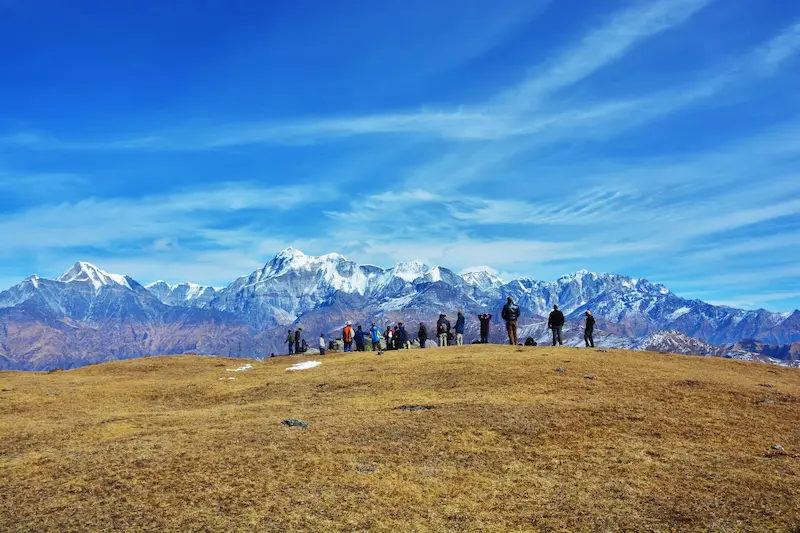
Brahmatal is the snow trek most often recommended for first-time winter trekkers — and for good reason. A 4-day route from Lohajung through snow-covered rhododendron forest to a frozen alpine lake at 3,850 m, with continuous Trishul and Nanda Ghunti views from the upper ridges. No technical sections, no exposed scrambles, no crampons needed.
Snow conditions: Above 3,000 m, expect 1–3 feet of packed snow from mid-December. The trail through snow-covered forest is visually stunning and the frozen lake itself — with mountain reflections visible through ice — is the signature moment. January and February offer the deepest snow.
Kedarkantha — The Quintessential Winter Summit
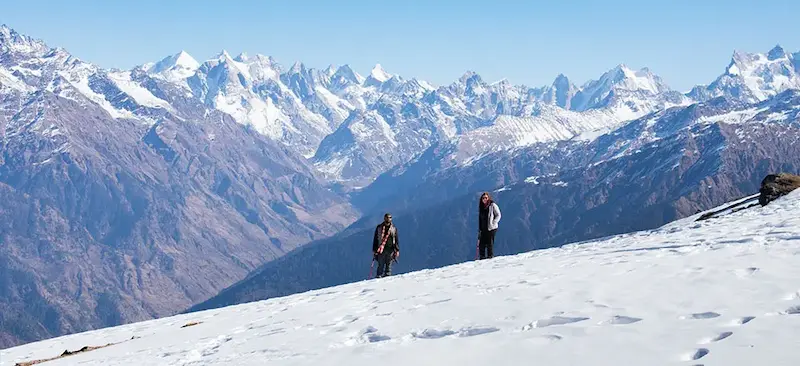
Kedarkantha is the most popular winter trek in India — the definitive first summit experience in deep snow. A 5-day route from Sankri with a final summit push that gains 1,500 feet through knee-deep snow to a 3,810 m peak offering 360-degree views across six Himalayan ranges.
Snow conditions: Deep snow above 3,200 m from December. The summit push is the centrepiece — a steep, sustained climb through snow that requires microspikes and genuine effort. Sunrise from the snow-covered peak is the most photographed moment in Indian winter trekking.
Kuari Pass (March) — Snow Meets Spring
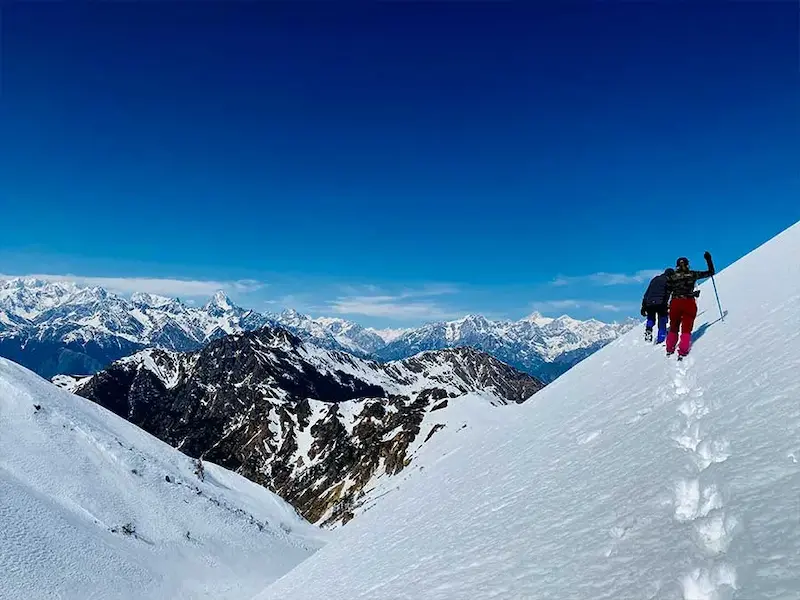
Kuari Pass in early March sits at the intersection of winter and spring — significant snow remains on the upper sections while rhododendrons begin blooming on the lower trail. Not a pure deep-snow trek like Kedarkantha, but the combination of lingering snow, spring colour, and the famous Curzon Trail ridge walk creates the most photogenic window of any featured route.
Snow conditions: Upper sections (above 3,400 m) retain 1–2 feet of snow through mid-March. Lower trail transitions from snow to mud to dry trail as spring advances. The ridge walk with snow underfoot and Nanda Devi views is the highlight.
Choosing between Kedarkantha and Har Ki Dun from Sankri? Both leave from the same base town but deliver opposite experiences. See the full Kedarkantha vs Har Ki Dun comparison →
Snow Treks at a Glance
| Trek | Altitude | Difficulty | Days | Peak Snow |
|---|---|---|---|---|
| Brahmatal | 3,850 m | Moderate | 4 | Jan–Feb |
| Kedarkantha | 3,810 m | Moderate–Challenging | 5 | Dec–Feb |
| Kuari Pass | 3,876 m | Moderate | 5 | Mar (lingering) |
Brahmatal — The Ideal First Snow Trek
Frozen lake, snow-covered ridges, and Himalayan views. 4 days, moderate difficulty, no technical sections.
Winter Gear Essentials
Snow trekking demands specific gear beyond standard 3-season equipment. Here's what you need to stay safe and comfortable.
Layering System
Base layer, insulation, fleece, and waterproof shell. A -15°C sleeping bag is essential for cold nights.
Snow Gear
Gaiters to keep snow out of boots. Microspikes for icy sections. Trek operators typically provide microspikes if needed.
Cold Weather
Insulated gloves with waterproof outers. Thermal socks. Neck warmer. Night temperatures drop to -5°C to -15°C.
Our print-ready packing checklist includes a winter-specific section covering all snow trek gear. For fitness preparation targeting winter conditions, see the 8-week fitness guide.
Frequently asked questions
When is the best time for snow treks in Uttarakhand?
December to March offers the best snow conditions. January and February deliver peak snow depth — Kedarkantha and Brahmatal trails are fully snow-covered above 3,000 m. Early December and late March can have patchy snow at lower elevations.
Which snow trek is easiest for first-timers?
Brahmatal is the easiest snow trek. At 4 days duration with moderate difficulty and no technical sections, it provides a complete snow trekking experience (frozen lake, snow ridges, summit views) without the steep summit push required on Kedarkantha.
Do I need crampons or ice axes for snow treks?
Microspikes or basic crampons are recommended for Kedarkantha summit day (steep snow above 3,500 m). Brahmatal can be done with gaiters and good trekking boots. Kuari Pass in March needs gaiters for upper snow sections. Trek operators typically provide microspikes if needed.
How cold does it get on winter treks in Uttarakhand?
Night temperatures at camp drop to -5°C to -15°C depending on altitude and month. January is coldest. Daytime on trail with sun is typically 0°C to 5°C. A proper 4-layer system (base, insulation, fleece, shell) plus a -15°C sleeping bag is essential.