Art and Yoga Retreat in the Himalayas: Where Movement Meets Creation
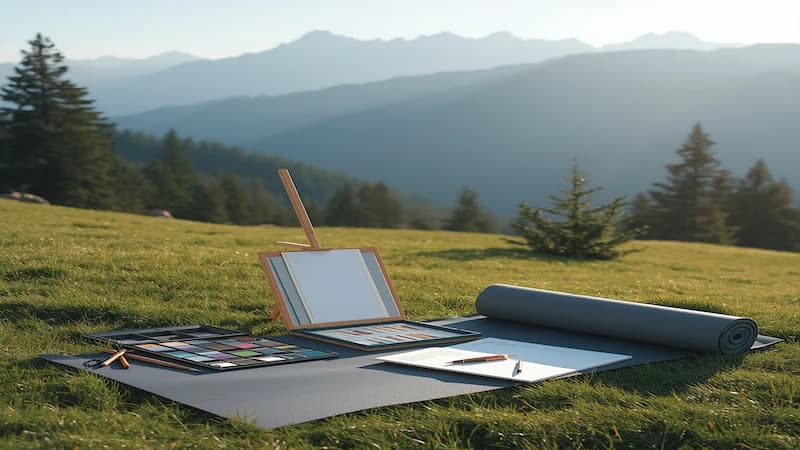
The combination of art and yoga is not marketing. It is a natural pairing that practitioners have understood for centuries: move the body first, then create. The body awareness that yoga develops translates directly into creative sensitivity.
Why Yoga Before Art
Yoga — specifically the morning practice included in art retreats — serves a specific function. It is not intensive training. It is 45–60 minutes of gentle movement, breathwork, and body awareness. The purpose is to arrive in the body before picking up a brush.
Creative work that comes from body awareness has a different quality than creative work that comes from the head alone. The brushstrokes are more intuitive. The colour choices more felt than analysed. The compositions more organic.
In Rishikesh, this combination has particular resonance. The city is built on yoga. The morning practice happens against the sound of temple bells and the Ganges. When you move from the yoga mat to the studio, the transition is seamless — the meditative quality carries.
A Typical Combined Day
6:30 AM — Yoga — Gentle vinyasa or hatha on a terrace overlooking the valley. Not performance yoga. Awareness yoga. Breathwork closes the session, settling the nervous system.
7:30 AM — Breakfast — Simple, vegetarian, unhurried. No phone at the table. The conversations that happen over retreat breakfast are unusually honest.
9:00 AM — Facilitated Art Session — Today's focus might be watercolour landscapes, or emotional expression through colour, or collaborative collage. The facilitator introduces the prompt and demonstrates technique. Then you work.
11:00 AM — Tea and Reflection — A pause. Look at what you made. Notice what emerged without commentary.
11:30 AM — Outdoor Sketching — Nature journalling or plein air work. In the Himalayas, the subject matter is endless: terraced hills, temple architecture, wildflowers, river patterns, cloud formations.
12:30 PM — Lunch — Rest follows.
2:00 PM — Open Studio — Unstructured creation time. The facilitator is available but not directive. You work on yesterday's piece, start something new, or experiment with a different medium. This unstructured time is where the real breakthroughs happen.
4:30 PM — Tea — by now, your hands have paint on them and you have stopped caring.
5:00 PM — Optional Sharing — Show and tell, or solo reflection for those who prefer solitude.
6:30 PM — Dinner — Conversation about what emerged. Or silence. Both are fine.
8:00 PM — Journalling — What did the body know that the mind did not? What did you create that surprised you?
The Himalayan Factor
Mountains change the scale of creative work. In the city, you paint on a canvas. In the Himalayas, the canvas is surrounded by a landscape that dwarfs every human creation. This is healthy for the ego. It reminds you that art is play, not performance.
The specific locations matter:
Rishikesh — Cultural richness, river energy, yoga heritage. Best for people who want stimulation alongside creation.
Chakrata — Forest silence, ridge-top isolation, deodar canopy. Best for people who need quiet to access their creative self.
Mussoorie — Colonial architecture, valley views, accessible beauty. Best for plein air work and landscape painting.
Who This Combination Serves
The yoga-plus-art format works particularly well for:
- People recovering from burnout who need both physical and creative reset
- Yoga practitioners who want to add creative expression to their practice
- Artists who feel disconnected from their body and want to work more intuitively
- Anyone who likes the idea of a creative retreat but worries about sitting still all day
The yoga is not a separate offering bolted onto the art retreat. It is the warm-up — the way you prepare the instrument (your body and attention) for the creative work that follows. When done well, the entire day becomes one continuous practice. If you want to compare creative formats before enquiring, visit our Himalayan art retreats.