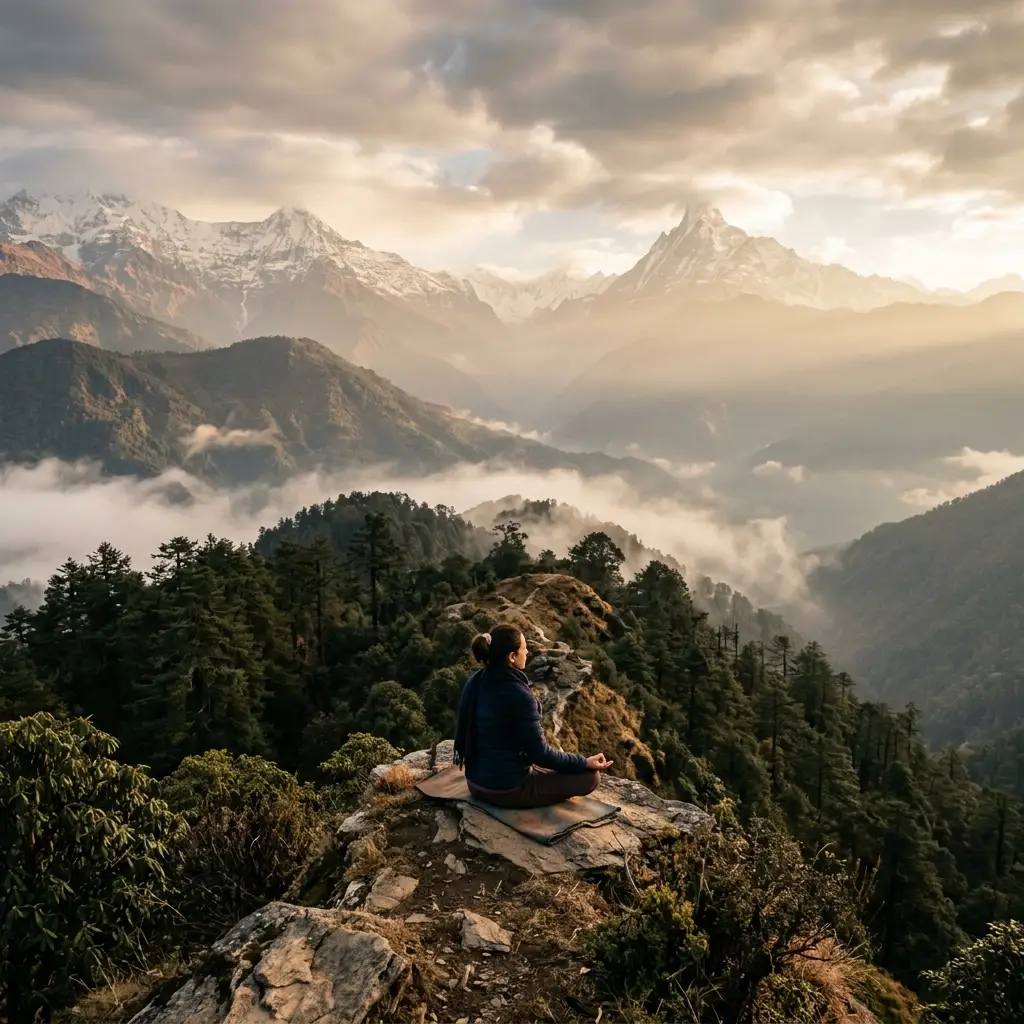
Nervous system reset
A quieter environment gives the body space to come down from constant stimulation.
Restored attention
Reduced inputs help attention settle and become available again.
Deeper silence
Retreat conditions make silence easier to experience than daily practice alone.
What actually changes on retreat
The benefit of a meditation retreat is not only that you meditate more. It is that the entire environment stops pulling your nervous system, attention, and emotions back into old patterns.
Nervous system reset
Chronic stress locks the nervous system in sympathetic fight-or-flight mode. Daily meditation helps, but the environment keeps re-triggering the stress response. On retreat, the triggers are removed. In a Himalayan forest environment like Chakrata, the nervous system gets space to move toward rest, recovery, and physiological recalibration.
Restored attention
Your attention is a finite resource that daily life depletes. Screens, notifications, decisions, and social interactions draw from the same well. On retreat, the demands on attention drop. The mind refills, and many people notice sharper focus, clearer thoughts, and a steadier relationship with distraction.
Emotional processing
When external stimulation is removed, emotions that have been suppressed can surface. This can feel uncomfortable, but it is often part of the retreat process. With fewer distractions available, grief, anger, sadness, or anxiety can move through the body instead of being pushed back down.
Relationship with silence
Most people have never experienced genuine silence. Not quiet — silence. A meditation retreat introduces you to this quality of stillness, and once you know it exists, you carry that reference point back into daily life. See what happens at a silent retreat.
Not sure what kind of reset you need? Compare retreat durations and choose the format that fits your stress level, schedule, and comfort with silence.
How long should a meditation retreat be?
Different retreat lengths create different kinds of benefit. A 3-day retreat can interrupt stress and restore attention, while longer retreats create more space for silence, emotional processing, and deeper practice.
Initial reset
A 3-day meditation retreat is enough for the body to slow down, the mind to settle, and attention to begin recovering from daily stimulation.
Deeper recalibration
A 7-day retreat gives more time for emotional processing, silence, and genuine insight because the first few days are often spent simply arriving.
Sustained silence
A 10-day retreat supports deeper immersion, stronger habit interruption, and a more complete break from digital and social stimulation.
Practical guide: choose 3 days if you want a reset, 7 days if you want depth, and 10 days if you want sustained silence and a stronger break from routine.
Not sure how long your meditation retreat should be?
Tell us what you are seeking — stress relief, silence, emotional space, deeper practice, or a complete reset. We can help you choose the right retreat duration and location.
Meditation retreat questions
Clear answers for people comparing retreat benefits, duration, home practice, and whether a meditation retreat is the right next step.
Are the benefits of a meditation retreat permanent?
The acute effects — reduced cortisol, restored attention, emotional clarity — begin to fade within weeks if not maintained. But the deeper shifts — in perspective, in your relationship with your own mind, in your understanding of silence — tend to persist. Many retreatants report that even months later, they can access a quality of stillness they discovered on retreat. Regular follow-up practice (even 10 minutes daily) maintains the benefits.
Can I get the same benefits from meditating at home?
Daily meditation provides incremental benefits. A retreat provides a quantum shift. The difference is environmental: at home, you meditate for 20 minutes then return to stimulation. On retreat, meditation is sustained over days in an environment that supports it. The depth achieved in 7 days of retreat meditation typically takes months or years of daily practice to reach. Both have value — they are complementary, not interchangeable.
How soon do the benefits start during a retreat?
Physiological changes (reduced cortisol, lower blood pressure) begin within 24–48 hours. Attentional benefits (improved focus, reduced reactivity) typically emerge by day 2–3. Deeper psychological benefits (emotional processing, perspective shifts, insight) usually arrive from day 4 onwards. This is why we recommend at least 3 days for a meaningful first retreat.
Do you need to be spiritual to benefit from a meditation retreat?
No. The physiological and psychological benefits of sustained meditation are well-documented and do not require spiritual belief. Reduced stress hormones, improved attention, better sleep, and emotional regulation occur regardless of worldview. If you are spiritual, the retreat may deepen that dimension. If you are not, the benefits are still substantial.
Continue planning your meditation retreat
These guides help you compare retreat styles, understand whether a retreat is worth it, and choose the right meditation retreat for your needs.