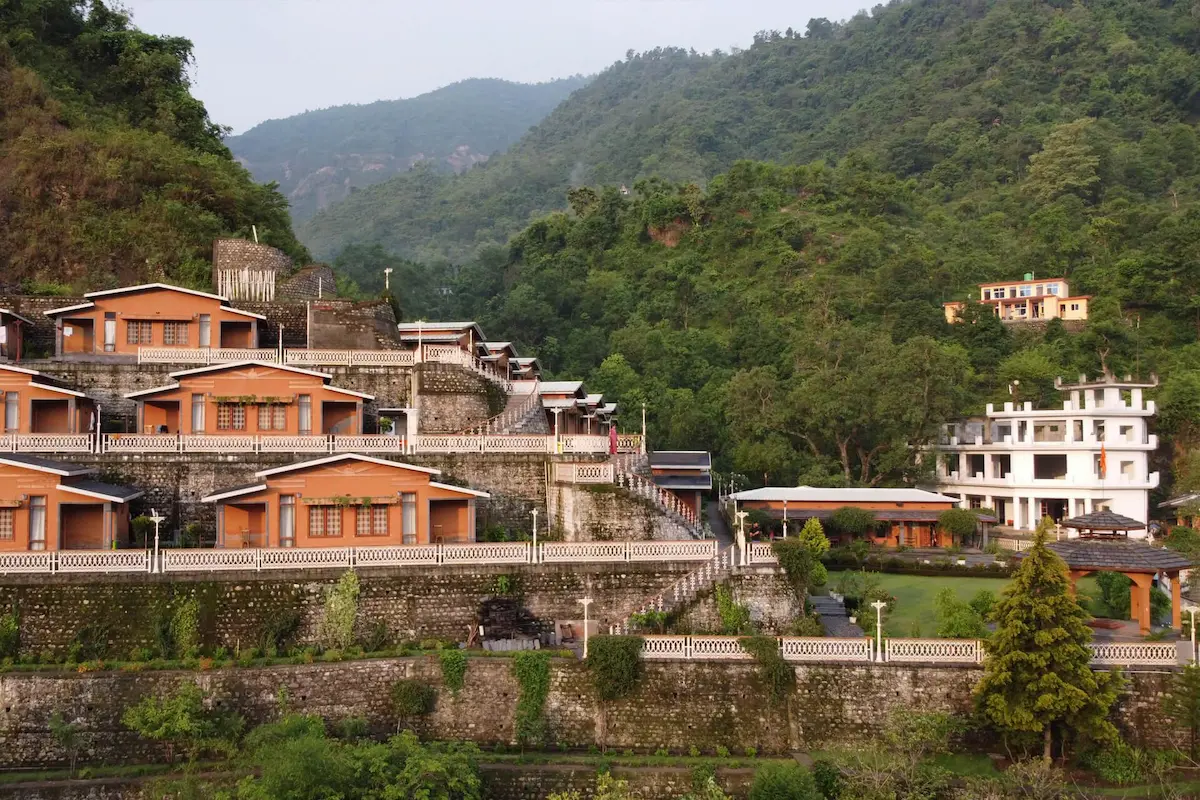
Meditation Retreats in the Himalayas
Where altitude quiets the mind, forest absorbs distraction, and centuries of practice hold the space. Small groups. Experienced guidance. 3–10 day programs.
What is a meditation retreat?
A meditation retreat is a structured period — typically three to ten days — spent in deliberate silence, daily practice, and guided instruction, away from the routines of ordinary life. Unlike a meditation class, a retreat creates a continuous container where practice deepens through sustained immersion.
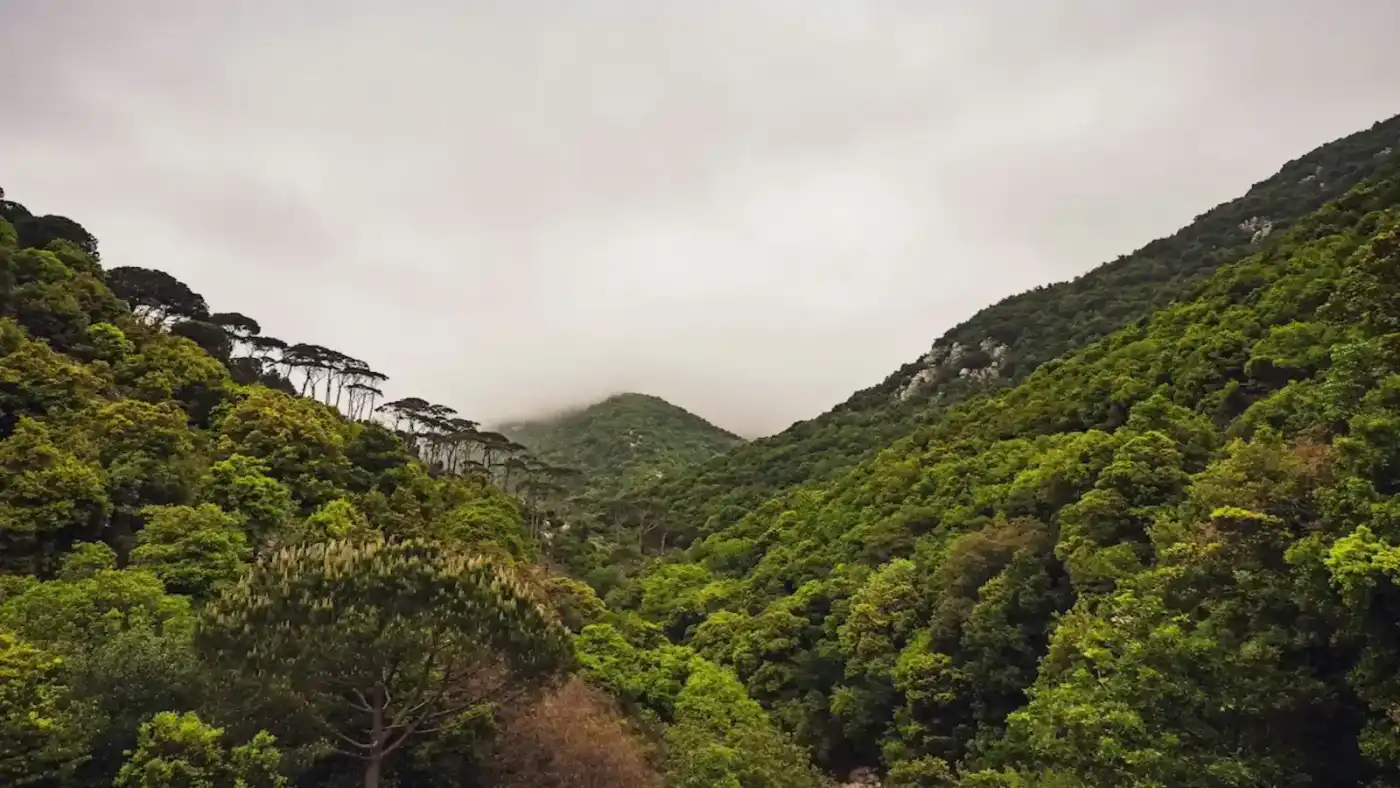
In the Himalayas, meditation retreats carry a different weight. At 2,000–3,500 metres, reduced oxygen naturally slows the thinking mind. Dense forests absorb distraction. The contemplative tradition stretching back millennia holds the space before you arrive.
What surprises most first-time retreatants is how much happens beneath the surface. The first day is often restless. By the third day, something shifts — habitual thought patterns weaken, sensory awareness sharpens, and a deeper quality of attention emerges.
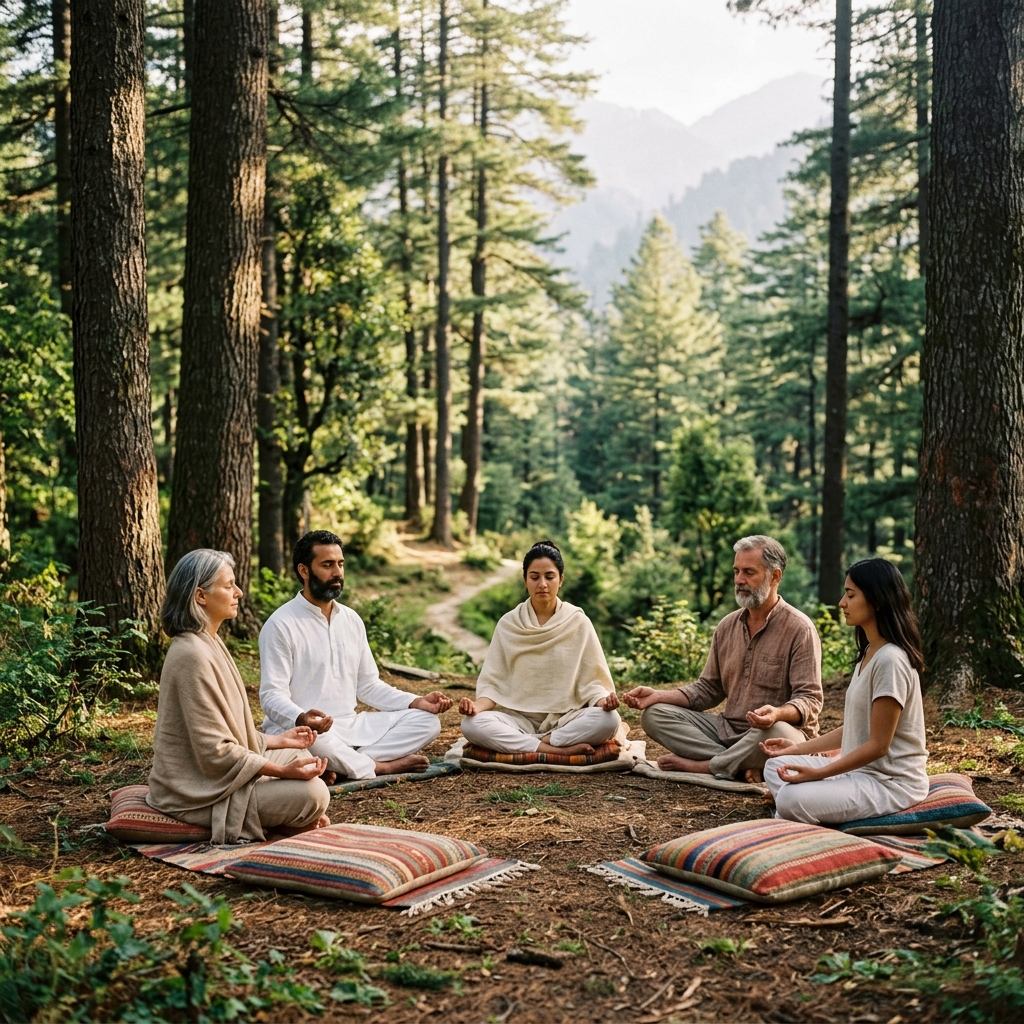
Why Himalayan meditation is different
The Himalayas have been the geography of contemplative practice for thousands of years — not because of marketing, but because the environment itself supports the work of meditation in ways that cannot be replicated elsewhere.
Altitude & Awareness
At 2,000–3,500m, reduced oxygen naturally slows cognitive processing. The thinking mind — planning, worrying, narrating — becomes quieter with less effort.
Acoustic Isolation
Mountain valleys and dense forest absorb sound. The silence is not absence of noise — it is a positive quality, thick and alive, that supports practice.
Contemplative Tradition
From Zanskar's Buddhist monasteries to Rishikesh's yoga ashrams, the infrastructure and teachers for meditation are deeply established across millennia.
Separation from Habit
Remote mountain locations physically remove you from habitual cues — notifications, commutes, obligations. This strategic disruption allows new patterns to emerge.
Types of meditation retreats
Not all meditation retreats are the same. Choose the format that matches your experience level and intention.
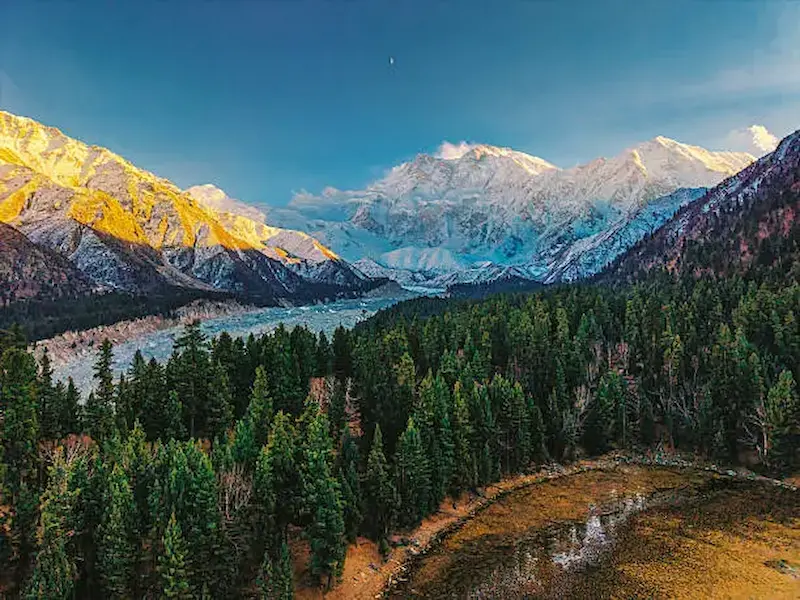 3–10 Days
Silent Meditation Retreat
Noble silence throughout — no conversation, no devices, no reading. The deepest form of retreat for those ready to meet their own mind without distraction.
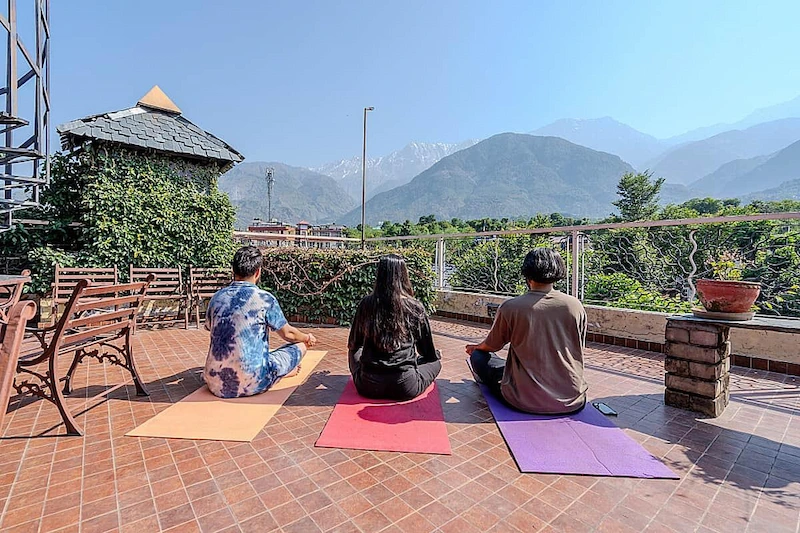 3–7 Days
Guided Meditation Retreat
Regular instruction, dharma talks, and teacher interaction. Silence maintained during practice, broken during teaching. Ideal for beginners.
 5–10 Days
Trek & Meditation Retreat
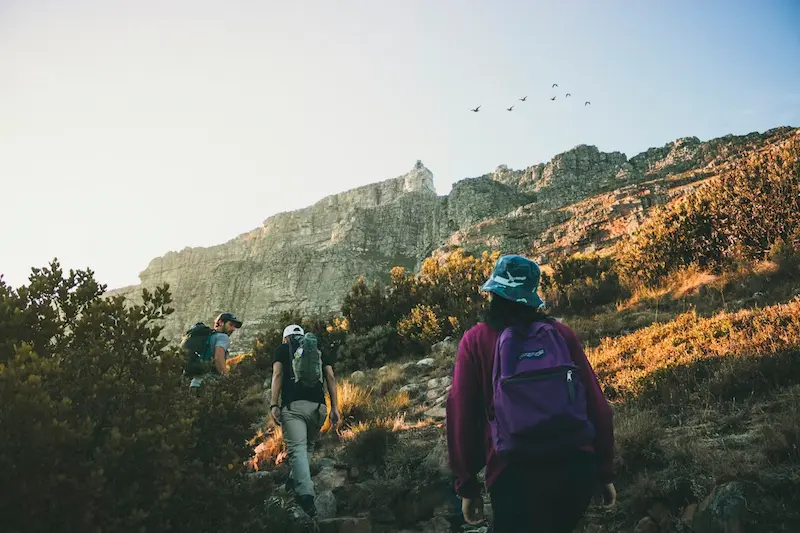
Multi-day Himalayan trekking combined with meditation sessions at camp. Physical exertion becomes preparation for stillness.
Who meditation retreats are for
Perfect if you are
- Seeking to establish or deepen a meditation practice
- Recovering from overstimulation, decision fatigue, or mental overwhelm
- An experienced practitioner wanting extended silence in a supported setting
- Curious about contemplative practice in a mountain environment
- Looking for a structured break that goes deeper than a holiday
- Ready for a genuine encounter with your own mind
Not the right fit if you want
- A spa or wellness resort experience
- Entertainment-driven holiday with meditation as add-on
- Large group meditation with 50+ participants
- Quick-fix mindfulness without commitment
Three Himalayan settings for meditation
Each location offers different conditions for practice. Choose based on your experience level, desired depth, and relationship with remoteness.
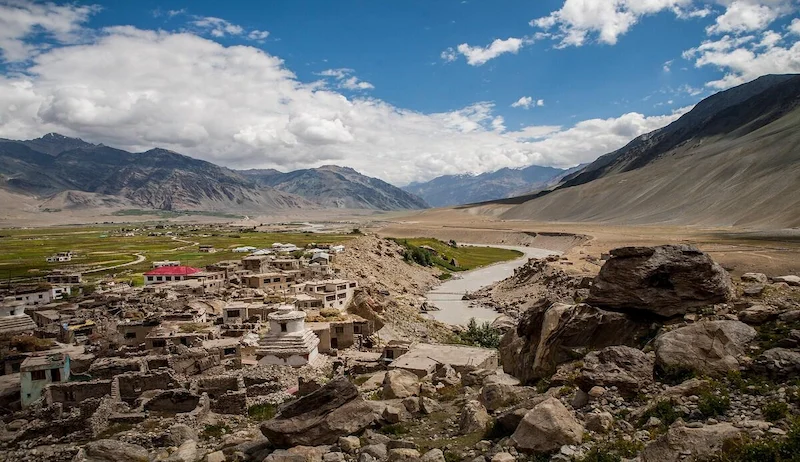
Zanskar — Monastery Silence at 3,500m
The deepest meditation environment we offer. Century-old Buddhist monasteries, no phone signal, reduced oxygen that naturally quiets the thinking mind.
Best for: Deep practitioners, radical disconnection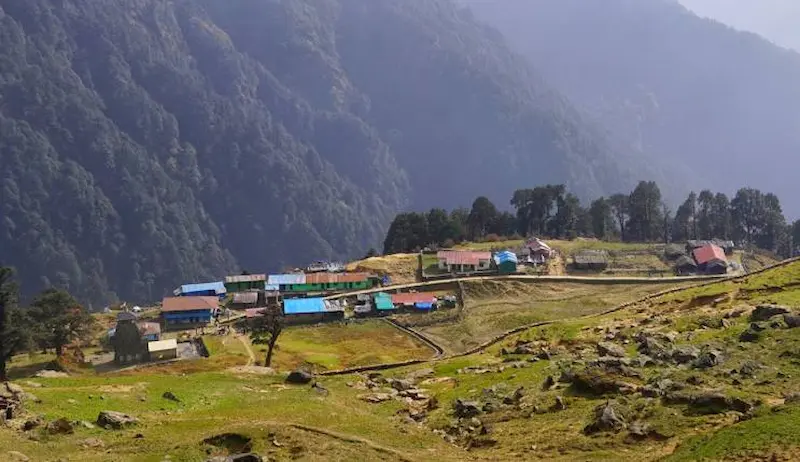
Chakrata — Forest Silence at 2,000m
Dense Himalayan forest with no tourist noise. Accessible from Dehradun yet genuinely remote. The most gentle entry point for first-time retreatants.
Best for: Beginners, accessible depth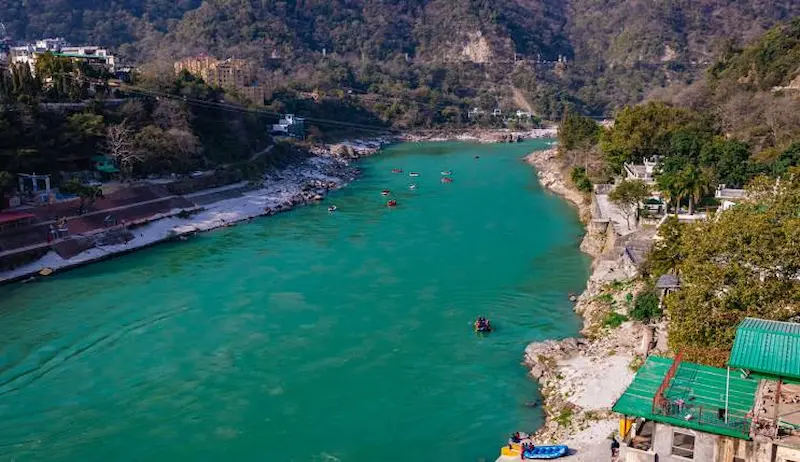
Rishikesh — Ganges Tradition
India's yoga capital. Living lineage of meditation practice, the energy of the Ganges, and accumulated spiritual weight of centuries.
Best for: Spiritual lineage, teacher accessThree ways to find your retreat
Choose the path that feels right for where you are right now.
Get Matched
Tell us about yourself — we'll recommend the right retreat, location, and duration. Free, no pressure.
Talk to a planner →Compare Options
Read our detailed comparison guide — formats, locations, durations side by side. Decide at your own pace.
Read the guide →First Retreat?
Never done a retreat? Start here. Our beginner's guide removes objections and recommends the gentlest entry point.
Beginner's guide →What a day looks like
Wake
No alarm needed — the rhythm establishes itself within two days.
Morning Sitting
45 minutes of seated meditation. The mind is fresh, the forest is waking.
Walking Meditation
Slow, deliberate movement — often outdoors among trees or along a mountain path.
Breakfast
Simple food, eaten in silence, with attention.
Guided Practice
Instruction or dharma talk suited to participants' experience levels. 60 minutes.
Lunch & Rest
The main meal. Followed by free time — sleep, journal, walk.
Afternoon Sitting
45 minutes. The afternoon mind is softer, more spacious.
Evening Sitting
45 minutes. The day settles into its final descent.
Dinner & Rest
Light dinner. Optional evening reflection or early rest.
Benefits of a meditation retreat
Neurological Changes
Reduced default mode network activity — less mind-wandering, rumination, and self-referential thinking. Measurably lower cortisol after 7 days.
Stress Physiology
Breaks chronic stress cycles by removing environmental triggers. Nervous system shifts from sympathetic to parasympathetic.
Attention & Clarity
Enhanced focused attention, reduced reactivity to distractions, and clearer relationship with thought patterns.
Emotional Regulation
Sitting with difficult emotions without acting on them builds capacity that transfers directly to daily life.
Perspective
Distance from daily urgencies reveals which concerns are real and which are habitual.
Sleep Quality
Extended meditation normalises circadian rhythm. Retreatants consistently report deeper, more restorative sleep.
Real retreat experiences
“Seven days of silence in Zanskar changed something fundamental in me. The monastery setting, the altitude, the structured sessions — everything conspired to strip away the noise I had been carrying for years. I went in skeptical of silence retreats. I left understanding why people keep coming back.”
“The Chakrata silent retreat was the hardest and most rewarding thing I have done. Day two was brutal — restlessness, boredom, frustration. By day four, something shifted. The teachers held space without pressure. The forest did the rest. I sleep better now. I think more clearly. Worth every rupee.”
“Well-structured program with genuine depth. The morning meditation sessions at dawn were the highlight. I would have appreciated slightly more guidance during the self-practice blocks, but the teachers were available when asked. The Munsiyari setting is extraordinary — Panchachuli views from the meditation hall.”
Choose the retreat that matches you
The right retreat depends on where you are. Use these decision paths to find your match.
I've Never Done a Retreat
Start with 3–5 days in Chakrata. Gentle forest setting, guided instruction, no extreme conditions. Our most accessible entry point.
I Want to Go Deeper
5–7 days in Chakrata or Zanskar. Extended silence, structured practice, experienced teachers. For practitioners ready for sustained immersion.
I Need Radical Disconnection
7–10 days in Zanskar. Monastery setting, 3,500m, no phone signal. The most immersive meditation environment we offer.
First-person accounts from people who have done this retreat.
What makes our retreats different
Not a meditation factory. Personal attention from experienced teachers. Your questions get answered. Your practice gets seen.
No tourist traffic, no spa menus, no upsells. Non-commercial Himalayan locations chosen for silence and depth.
Every retreat is designed — not packaged. Schedule, location, teacher, season — all chosen deliberately to serve the practice.
Frequently asked questions
Do I need prior meditation experience for a Himalayan retreat?
No. Our Chakrata and Rishikesh retreats are designed for all experience levels, with guided instruction from the first session. Zanskar retreats are recommended for those with some prior practice due to the altitude and remoteness.
How long should a meditation retreat be?
Three days is a meaningful reset — enough to experience genuine silence. Five to seven days allows the mind to settle beneath habitual patterns. Ten days is standard for Vipassana-style retreats and where the deepest shifts occur. If in doubt, five days is the best balance.
What if I can't sit still for long periods?
Retreats include walking meditation, gentle movement, and rest periods alongside seated practice. The schedule accommodates the body's needs. Many people who cannot sit still in daily life find that the retreat environment changes this completely.
Is a meditation retreat religious?
No. While some of our locations carry Buddhist or Hindu heritage, the retreats themselves are non-denominational. The practices are rooted in contemplative tradition but do not require any religious affiliation or belief.
What is the difference between a meditation retreat and a Vipassana course?
Vipassana courses follow a fixed 10-day format with a single technique. Our Himalayan meditation retreats offer more flexibility — multiple techniques, smaller groups (max 12 vs 50–100), nature-integrated practice, and personalised guidance. Both are powerful; the choice depends on whether you prefer structure or adaptability.
What should I bring to a meditation retreat?
Comfortable clothing for meditation, warm layers (temperatures drop at altitude), a journal, and any personal medication. Specific packing lists are provided after booking. Leave devices at home or expect them to be stored during the retreat.
Begin Your Meditation Retreat
The right retreat depends on where you are — your experience, your intention, your schedule. Tell us and we'll recommend the right location and format.
Plan My Meditation Retreat →