Why Digital Detox Actually Works in the Himalayas
You've tried digital detox before. You turned off notifications for a weekend, left your phone in the drawer for a few hours, maybe even deleted Instagram. It lasted until Monday morning.
The problem wasn't willpower. The problem was environment. When everything around you — the apartment, the coffee shop, the routine — is optimised for connectivity, removing the phone removes one tool while leaving the system intact.
The Himalayas change the system.
The Environment Does the Work
At 6,000–8,000 feet in the Uttarakhand hills, connectivity isn't a choice you make — it's a constraint the geography imposes. Cell towers thin out. Wi-Fi, where it exists, is unreliable. The feedback loop that keeps you checking your phone — notification, dopamine hit, repeat — breaks because the infrastructure can't sustain it.
This isn't a limitation. It's the entire point.
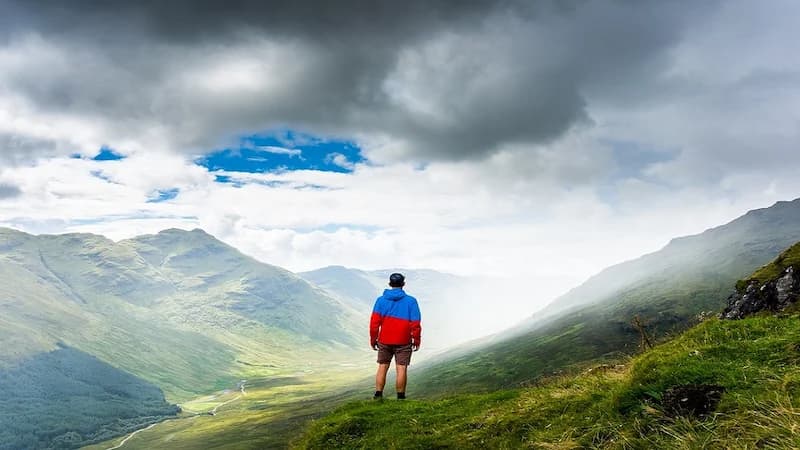
In places like Chakrata or Sankri, the terrain absorbs you. Forest canopy, birdsong, moving water, cold air. Your nervous system recalibrates toward these inputs instead. You don't have to discipline yourself into presence — the mountains do it for you.
Why Altitude Changes Your Brain
There's a physiological dimension that most "digital detox" articles ignore.
At moderate altitude (5,000–8,000 feet), your body subtly shifts into a different operating mode. Breathing deepens. Heart rate adjusts. The air carries less oxygen, which slows your default mode network — the part of the brain responsible for rumination, planning, and the constant background chatter that makes you reach for your phone.
This isn't pseudoscience. Altitude-related cognitive shifts are well-documented in mountain medicine. At moderate elevations, the effect is gentle — you don't feel impaired, you feel quieter. The mental noise that drives compulsive scrolling becomes less urgent.
Combine this with physical movement (even a simple forest walk in Chakrata or a meadow trek near Munsiyari) and the effect compounds. Your body is engaged. Your senses are engaged. The phone becomes irrelevant — not forbidden.
Silence Is Not Empty
City silence is the absence of noise. Mountain silence is the presence of something else.
When you sit on a ridge above the Tons Valley at dawn, you hear: wind through deodar, a stream 200 metres below, a bird you can't name, your own breathing. This isn't silence in the urban sense. It's a full sensory environment — just one your nervous system isn't accustomed to.
The first 24 hours feel strange. You might feel restless, anxious, or bored. That's withdrawal. Not from the phone specifically, but from the constant input stream your brain has been trained to expect.
By day two, something shifts. The restlessness fades. You start noticing textures — bark patterns, cloud movement, temperature changes between shade and sun. Your attention span lengthens. You can sit with a single thought for ten minutes without the urge to check something.
This is the detox working.
The 72-Hour Threshold
Research on nature exposure and cognitive recovery converges on a consistent finding: meaningful cognitive reset requires approximately 72 hours of immersion. Not 72 hours of "trying to relax" in your living room — 72 hours in a genuinely different environment with reduced stimulation.
This is why a weekend retreat works and a Saturday afternoon in the park doesn't. Duration matters. Continuity matters. You need enough time for your default patterns to break down before new patterns can emerge.
A 3-day retreat in Chakrata or a 5-day programme that includes both stillness and movement hits this threshold naturally. You don't have to track your screen time or set rules. The structure does it for you.
Why It Lasts After You Leave
The lasting value of a mountain digital detox isn't that you'll never use your phone again. You will. The value is that you'll remember what it felt like to not need it.
That memory becomes a reference point. When you're back in the city, scrolling at midnight, some part of your nervous system remembers the ridge at dawn. Remembers that quiet was not boring — it was restorative. That reference point creates a pull toward less consumption, even in an environment optimised for more.
People who've done retreat programmes in the Himalayas consistently report a 2–4 week carryover effect: lower screen time, better sleep, more intentional media consumption. Not because they made rules — because they experienced an alternative.
Who This Is Actually For
Digital detox in the mountains isn't for everyone. It's specifically valuable if:
- You work in high-stimulus environments (tech, media, consulting, healthcare)
- Your screen time regularly exceeds 8 hours per day
- You feel anxious without your phone nearby
- You haven't had a genuinely unconnected day in months
- You notice your attention span has shortened
If you're already balanced with technology, a mountain retreat offers other benefits — but the detox component won't be the transformative part.
If you recognise yourself in the list above, however, the Himalayas aren't just a nice holiday. They're a functional intervention. The geography, the altitude, the silence, and the structure of a retreat programme work together in ways that an app or a set of screen time rules never will.
The Practical Starting Point
If you're considering this, start with what's accessible:
- Weekend option: A 2–3 day rest retreat in Chakrata — close to Delhi/Dehradun, forested environment, structured rest
- Mid-week option: A 5-day programme that includes yoga, walking, and intentional downtime
- Adventure option: A guided trek from Sankri — 4–6 days of physical immersion with zero connectivity
For all scheduled retreat dates with pricing, see the retreat calendar. If you are experiencing burnout, our burnout recovery retreats and digital detox retreats in Chakrata are designed specifically for this.
The format matters less than the commitment: go somewhere the infrastructure supports disconnection, stay long enough for the reset to take hold, and let the environment do the heavy lifting.
Your phone will be there when you get back. The Himalayas are offering something it can't.