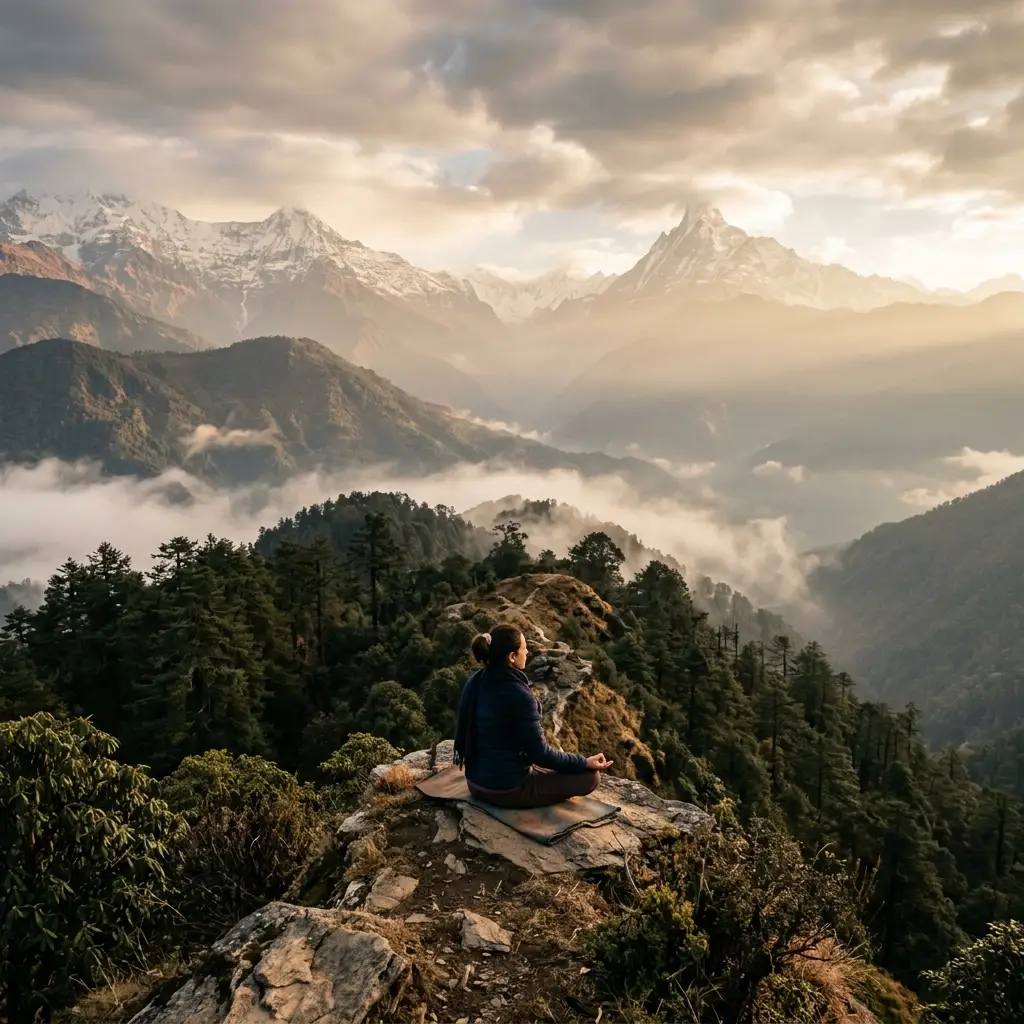
Your First Day at a Meditation Retreat: Hour by Hour
Day one is the strangest day. You are not yet in the retreat and no longer in your ordinary life. Here is exactly what happens — arrival, phone handover, orientation, first sit, first silent meal, and the moment you realise you are alone with your own mind.
What happens on the first day
The first day is a threshold. It moves you from travel, conversation, and phone-checking into silence, structure, and the first honest encounter with your own mind.
Arrival and the last conversation
You arrive with your bag, complete registration, receive your room assignment, and meet other participants. Everyone is a little nervous, a little excited, and making the slightly forced small talk of people who know speech is about to be taken away.
The phone goes away
On most silent retreats — and on all of ours — you surrender your phone. Not powered down in your room. Physically handed over. There may be a jolt of anxiety, then a strange lightness. Read more about what a week without your phone actually feels like. what a week without your phone actually feels like.
Orientation
The facilitator introduces the programme: schedule, guidelines, where to sit, when meals are served, where walking paths go, and what to do if you need help. The tone should feel calm, practical, and reassuring.
Your first sit
The first meditation session is usually 20–30 minutes. It is guided, gentle, and focused on arriving in the body. Most people's minds race during the first sit. This is normal. You are not failing — you are seeing how fast the mind moves.
First meal in silence
Eating without conversation can feel disorienting. You hear chewing, cutlery, and the small sounds of the room. Many people realise here that silence is no longer an idea — it has become concrete.
Evening session and lights
A short evening sit or talk closes the day. By 9pm, the centre is quiet — no screen, no book, no music. This is when many first-timers think, "What have I done?" If you want to know what happens next, read about how hard a silent retreat actually is and what happens to your mind in prolonged silence. how hard a silent retreat actually is and what happens to your mind in prolonged silence.
Planning your first retreat? Start with a short, guided programme where the first day is clearly structured and beginner-friendly. View 3-day meditation retreat →
What you should know before you arrive
The first day feels easier when your body, travel, expectations, and emergency contact plan are already settled before you reach the retreat centre.
Pack light
Bring only what supports practice. See our complete packing list.
Arrive rested
Do not fly in the same day or travel overnight. Give yourself a buffer before silence begins.
Eat normally
Do not fast or change your diet dramatically before arrival. Keep the body steady.
Tell someone where you are
Share the retreat centre contact details with a trusted person before you hand over your phone.
Lower your expectations
The retreat will not match what you imagine. That is the point.
For the complete guide, read how to prepare for a retreat and first meditation retreat tips.
Start with a short, guided meditation retreat
A 3-day meditation retreat gives you the full first-day experience without asking you to commit to a long silent programme. Meals, accommodation, guidance, and structure are included.
Questions people ask before day one
These are the practical doubts that usually appear before arrival: timing, the first meditation session, late arrival, movement rules, and sitting posture.
What time does a meditation retreat usually start?
Most residential retreats ask you to arrive between 2pm and 4pm on the first day. This allows time for settling in, orientation, and a first session before dinner. Some retreats start with an evening meal and an introductory talk rather than a formal meditation. Check your specific programme — our retreats send a detailed arrival guide one week before the start date.
Do you meditate on the first day?
Yes, but gently. The first sit is usually shorter — 20 to 30 minutes — with clear guidance. The purpose is orientation, not depth. You are learning the posture, the schedule, and the space. The intensive practice begins on day two.
What if I arrive late to a meditation retreat?
Contact the retreat centre before your arrival day. Most programmes can accommodate late arrivals but need to know in advance. Arriving after orientation means you miss the group introduction and initial guidelines, which makes the transition harder. Plan your travel to arrive within the stated window.
Can I leave the retreat centre on the first day?
Technically yes, but it is discouraged. The first day is about crossing a threshold — physically and mentally. Leaving the grounds, even briefly, disrupts the transition. Bring everything you need before arrival so there is no reason to leave.
What happens if I cannot sit cross-legged?
You can meditate in a chair, on a bench, or with a backrest. There is no required posture. The only requirement is that your spine is upright and unsupported (if possible). Our facilitators will help you find a position that works for your body during the first session. Flexibility is not a prerequisite.