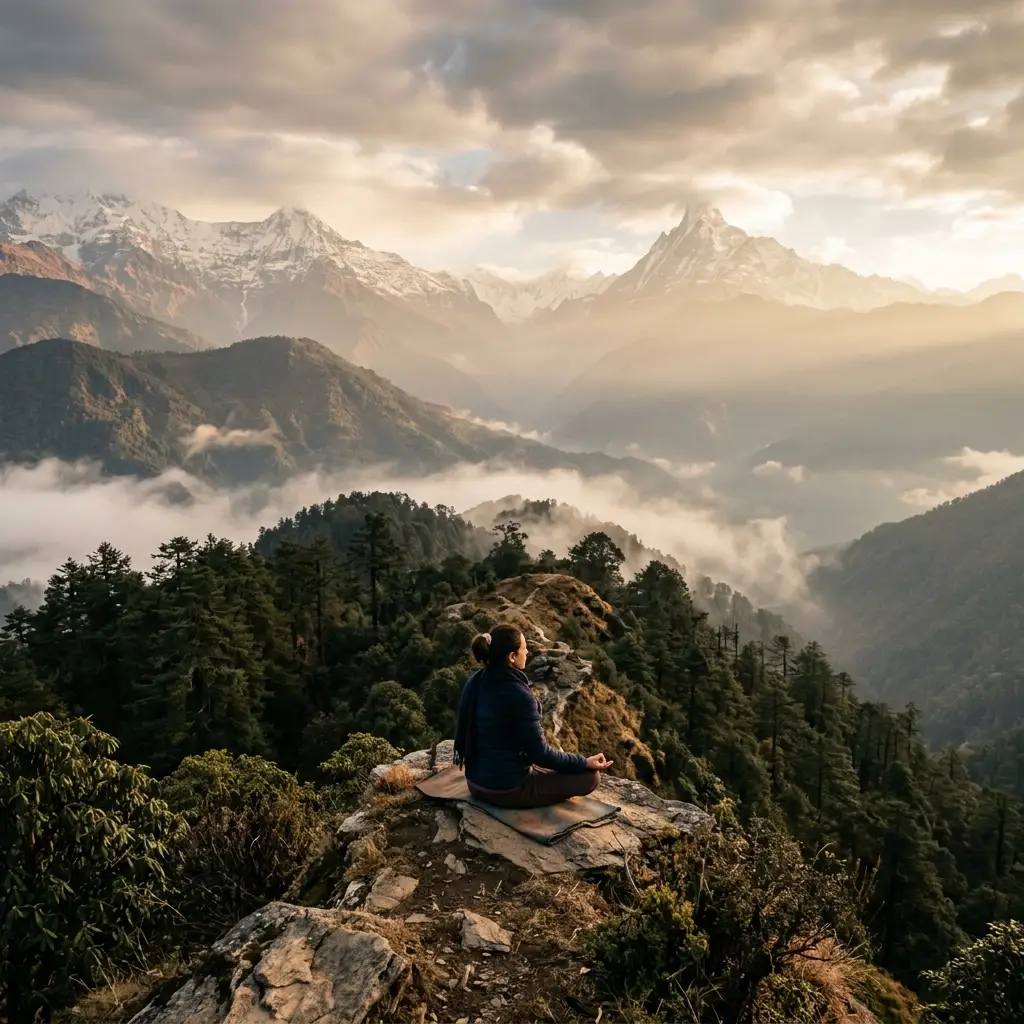
How Hard Is a Silent Retreat, Really?
The honest answer: it is one of the hardest things most people will voluntarily do. It is also, overwhelmingly, one of the most worthwhile. Here is what actually makes it difficult — and why nearly everyone who finishes says they would do it again.
The Five Things That Make It Hard
These five difficulties are universal. Everyone faces them. The difference is whether you see them as obstacles or as the practice itself.
Boredom
Not the casual boredom of a slow afternoon. This is existential boredom — the kind that arrives when every distraction you rely on has been removed. No phone, no conversation, no books, no music. Just you and the passage of time.
Why it's valuable: Learning that you can exist without external stimulation is freedom.
Emotional Surfacing
When external noise stops, internal noise gets louder. Unprocessed emotions — grief, anger, regret, longing — rise to the surface with a force that surprises nearly everyone. People cry. People feel rage they did not know they were carrying.
Why it's valuable: Emotions that have been stuck for years finally get to move.
Physical Discomfort
Sitting for multiple hours a day is physically demanding. Knees ache, backs stiffen, shoulders tighten. Even with cushions, chairs, and walking meditation breaks, your body will protest — especially on days two and three.
Why it's valuable: Physical resilience built through stillness translates to resilience in all areas of life.
The Urge to Leave
Almost everyone thinks about leaving — usually between day two and day four. The mind generates convincing reasons: an emergency at home, a forgotten obligation, the certainty that this is not working.
Why it's valuable: Learning to sit with the urge to escape is how you stop running from yourself.
Not Knowing If You're "Doing It Right"
Without conversation, you cannot compare your experience to others. Without feedback, you question yourself constantly. Am I meditating correctly? Should I feel something by now? Is this just a waste of time? This uncertainty is the practice.
Why it's valuable: Learning to sit with not-knowing, without reaching for reassurance, is one of the most valuable skills a silent retreat teaches. Read more about the psychology of what happens in silence.
How Difficulty Changes by Duration
Silent retreats are not linearly harder with length. The difficulty curve has a peak — usually around days two to four — and then settles.
- 3-day retreat — You experience the hard part (day 2) but may not reach the resolution. Shorter total discomfort but less payoff
- 7-day retreat — The sweet spot. Days 2–4 are difficult, days 5–7 are where most people report clarity, calm, and genuine insight. You move through the hard part and experience what is on the other side
- 10-day retreat — The gold standard. The extra days deepen the experience beyond what shorter retreats can reach. But they also mean more total time in difficulty. Not recommended for first-timers
Who Finds It Hardest?
Difficulty is not about fitness or discipline. It tracks more closely with how accustomed you are to constant stimulation and external validation.
- High-stimulus lifestyles — people who are constantly connected, busy, and externally focused experience the sharpest withdrawal
- Extroverts — the inability to process experience through conversation is genuinely harder for people who think by talking
- Control-oriented people — those who manage discomfort through planning and action struggle when the only instruction is "sit and observe"
- People avoiding something — silence removes the ability to outrun whatever you have been avoiding
Interestingly, complete beginners sometimes have an easier time than experienced meditators, because they arrive without expectations about what should happen. Read about what one person learned from their first silent retreat.
Why People Do It Anyway
If it is this hard, why do people keep going? Because the difficulty is inseparable from the value. The boredom teaches you that you can exist without stimulation. The emotional surfacing moves grief and anger that may have been stuck for years. The physical discomfort builds resilience. The uncertainty builds tolerance for not-knowing.
After a silent retreat, the world sounds different. Conversations become more intentional. Reactions slow down. The gap between stimulus and response — the space where choice lives — grows wider. This is not metaphor. It is the consistent, measurable outcome of prolonged silence.
Read more about why people go to meditation retreats and whether a retreat is worth it.
How to Make It Easier
- Start with a shorter retreat — a 3-day silent retreat gives you the experience without 10 days of commitment
- Choose a retreat with facilitation — having a guide who checks in daily makes a significant difference, especially for first-timers
- Prepare physically — practice sitting for 20–30 minutes daily for 2 weeks before your retreat
- Arrive without expectations — the hardest part is the gap between what you expect and what happens
- Trust the structure — good retreat schedules are designed to carry you through the difficult parts
See our full preparation guide and first retreat tips.
3-Day Silent Retreat — Chakrata Forest
The gentlest possible entry to silence. Facilitated, forest setting, all meals included.
Frequently Asked Questions
Is a silent retreat harder than a regular meditation retreat?
Generally yes. Removing speech removes your primary coping mechanism — the ability to process experience by talking about it. This forces you to sit with thoughts and emotions directly, which many people find more intense than guided meditation with talking breaks. However, many participants report that the difficulty is also what makes it more transformative.
What is the hardest day of a silent retreat?
Day two or three for most people. The novelty of day one has worn off, the end is nowhere in sight, and accumulated mental patterns start surfacing. Boredom, restlessness, and intense emotions are common. By day four or five, most participants report a settling — the mind starts to find its own rhythm.
Can I leave a silent retreat early if it gets too hard?
Yes, you can always leave. No ethical retreat will force you to stay. However, facilitators will typically ask you to sit with the urge to leave before acting on it, because the desire to escape is often the practice itself. The discomfort that makes you want to leave is usually temporary and precedes a significant shift.
Is a 3-day silent retreat easier than a 10-day one?
A 3-day retreat is shorter but not necessarily easier. Shorter retreats can feel more intense because you hit the difficult middle section without the resolution that comes on days 5–7 of a longer retreat. Longer retreats give you time to move through the hard part and experience the calm on the other side. For beginners, a 3-day retreat is still recommended because the total difficulty exposure is lower.
What if I have anxiety — will a silent retreat make it worse?
It depends. Silence can initially heighten awareness of anxious thoughts, which may feel like increased anxiety. For mild to moderate anxiety, this heightened awareness often leads to improved understanding of your patterns, which is therapeutic. For severe clinical anxiety, panic disorder, or PTSD, consult a mental health professional before booking. Our facilitators can discuss your situation — contact us for a confidential conversation before committing.