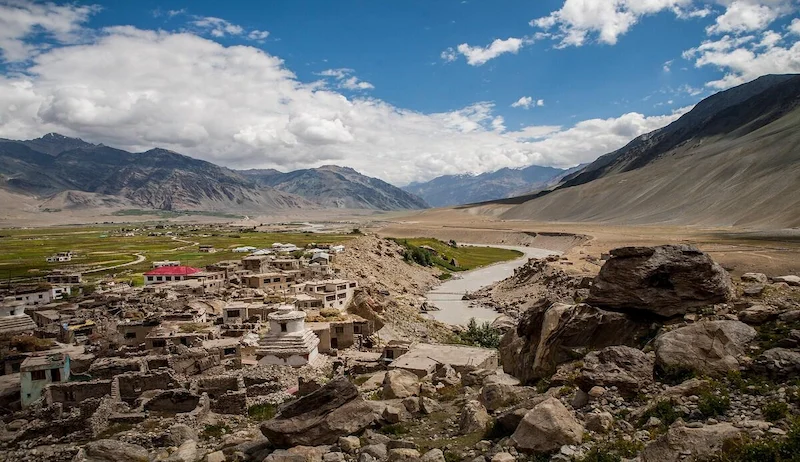
How to Reach Zanskar for a Meditation Retreat
Getting to Zanskar is itself part of the retreat. The journey strips away convenience, forces patience, and delivers you to a place where the ordinary world feels genuinely far away. Here is the practical guide — routes, transport, timing, and what to prepare for.
How to Reach Zanskar
Three routes, three different experiences. Choose based on your time, comfort with altitude, and appetite for mountain roads.
Delhi → Leh → Zanskar
Duration: 2–3 days including acclimatisation
- Day 1: Fly Delhi to Leh (1.5 hrs). Rest — acclimatisation day
- Day 2: Optional second acclimatisation day in Leh
- Day 3: Drive Leh → Kargil (4–5 hrs)
- Day 4: Drive Kargil → Padum/Zanskar (7–9 hrs)
Note: Flying to Leh means rapid altitude gain. Acclimatisation is not optional. Do not skip the rest day.
Srinagar → Kargil → Zanskar
Duration: 3 days from Srinagar
- Day 1: Drive Srinagar → Kargil (7–8 hrs via NH1). Crosses Zoji La (3,528m)
- Day 2: Rest in Kargil or continue to Rangdum
- Day 3: Drive to Padum/Zanskar (5–7 hrs from Rangdum)
Advantage: Gradual altitude gain from 1,600m (Srinagar) over two days — easier on the body than flying.
Manali → Leh → Zanskar
Duration: 4–5 days from Manali
- Days 1–2: Drive Manali → Leh via Manali–Leh Highway (2 days, overnight in Sarchu or Keylong)
- Day 3: Rest in Leh
- Days 4–5: Drive Leh → Kargil → Zanskar
Note: The Manali–Leh Highway crosses five passes above 4,000m. Extraordinary but physically demanding.
Acclimatisation: The Non-Negotiable Step
Zanskar sits at 3,500–4,000 metres. At this altitude, your blood absorbs less oxygen. The effects are predictable: headache, fatigue, mild nausea, disrupted sleep. These are normal and resolve within 24–48 hours for most people.
Do's
- Minimum 1 day of rest at altitude before the retreat begins
- Drink 3–4 litres of water per day during acclimatisation
- Walk gently — do not hike, run, or exert yourself on arrival day
Don'ts
- No alcohol for 48 hours before and after altitude gain
- Do not skip meals — eat lightly but regularly
- Do not ignore symptoms — communicate with your guide
Medication: Consult your doctor about Diamox (acetazolamide) if you are prone to altitude sickness. Our Zanskar retreat itineraries build acclimatisation into the schedule — you will not begin intensive meditation practice until your body has adjusted.
For International Participants
Visa & Permits
- Indian tourist visa (e-visa available for most nationalities)
- Inner Line Permit (ILP) required for Ladakh — we process this for you
Logistics
- Fly international to Delhi, then domestic to Leh
- Insurance covering high-altitude (some policies exclude above 3,000m)
- Bring cash (INR) — no ATMs in Zanskar. Leh ATMs can run dry in peak season
The Journey Is the First Practice
Getting to Zanskar takes effort. The roads are long, the landscape is immense, and the pace is controlled by the mountain, not by you. This is not a flaw in the travel logistics — it is a feature. By the time you arrive at the monastery, you have already begun slowing down. The world you left behind feels far away because it is.
Read about what makes Zanskar exceptional for retreats and the best time to visit.
Zanskar Meditation Retreat — All Logistics Included
Airport pickup, acclimatisation planning, local transport, monastery accommodation, all meals, and facilitation.
Frequently Asked Questions
How long does it take to reach Zanskar from Delhi?
The fastest route takes approximately 2–3 days: fly Delhi to Leh (1.5 hours), rest in Leh for acclimatisation (1 day minimum), then drive Leh to Kargil to Zanskar (2 days, or 1 long day if conditions are good). We recommend allowing 3 days for travel each way to account for acclimatisation and road conditions.
Can I drive to Zanskar from Manali or Srinagar?
From Srinagar: Drive via Kargil (2 days) then Kargil to Padum (1 day). This route is scenic and avoids the altitude shock of flying directly to Leh. From Manali: The Manali–Leh highway is open June–September. Drive to Leh (2 days) then continue to Zanskar. Both routes are long but the gradual altitude gain is easier on the body than flying.
Do I need a permit to visit Zanskar?
Indian citizens do not need a special permit. Foreign nationals need an Inner Line Permit (ILP) for Ladakh, which can be obtained online or at the Leh airport/DC office. The process is straightforward — you need a passport copy and basic travel details. Our retreat team handles the permit process for international participants.
Is the road to Zanskar dangerous?
The road is challenging, not dangerous, when driven by experienced local drivers. It is a mountain road with some unpaved sections, river crossings, and narrow passes. Our retreats use experienced local drivers who know the route intimately. The road is not suitable for self-driving unless you have extensive mountain driving experience.
What happens if the road is blocked?
Landslides and road blockages are rare but possible, especially during the monsoon months (July–August). Blockages are usually cleared within 4–12 hours by the Border Roads Organisation. Our itineraries include buffer days specifically for this. In our operating history, no retreat has been cancelled due to road blockage — only delayed by hours.