Why Zanskar Is Perfect for Meditation Retreats
There are comfortable places to meditate. And then there is Zanskar — a valley at 3,500 metres where monasteries have held silence for over a thousand years, where the landscape is so vast it makes your inner noise feel small, and where the conditions for deep practice are not manufactured but natural.
The Landscape Does the Work
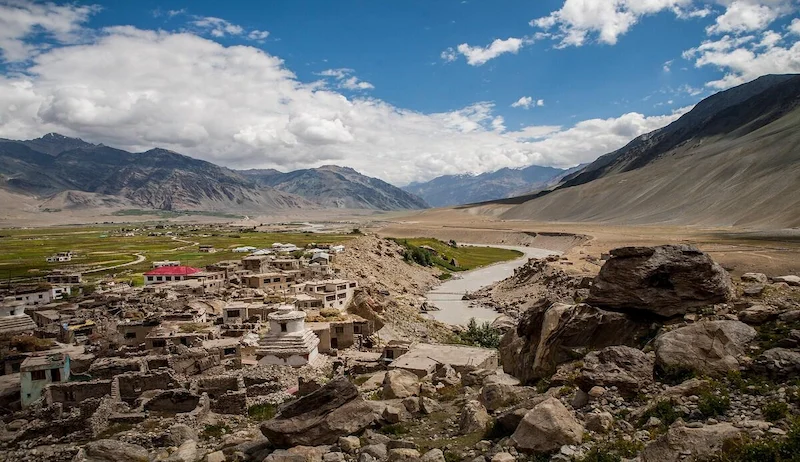
Zanskar is a high-altitude desert valley surrounded by peaks above 6,000 metres. The sky is a shade of blue that does not exist at lower elevations. The air is thin, dry, and clear. Sound carries differently — a river two kilometres away is audible from a monastery courtyard. At night, the absence of light pollution reveals a sky so dense with stars that silence becomes visual.
This is not decoration. The vastness of the landscape creates a perceptual shift that supports meditation directly. When you sit in a valley where the horizon is 50 kilometres away, the tight focus of daily anxiety loosens. The mind expands to match the space.
A Living Contemplative Tradition
Zanskar is not a tourist destination that happens to have old temples. It is a functioning Buddhist community where monks and nuns have practised meditation continuously for over a millennium. Monasteries like Phuktal, Karsha, and Stongde are not museums — they are active centres of contemplative life.
When you meditate in Zanskar, you are sitting in a place where sitting has been the primary activity for centuries. The walls of these monasteries have absorbed thousands of hours of practice. Whether or not you believe in the literal energy of a place, there is a quality of attention in spaces that have been used for contemplation that is difficult to replicate in a converted hotel or wellness centre.
Read about one person’s experience of a 7-day retreat in Zanskar.
The Altitude Effect
At 3,500 metres, everything slows down. Walking is slower. Breathing is more deliberate. Physical exertion is limited. The body, without being asked, enters a gentler pace. This is exactly what meditation requires — a deceleration that at sea level must be consciously cultivated but at altitude happens automatically.
The reduced oxygen also affects sleep patterns and energy levels, which can initially feel challenging but ultimately supports the retreat process. When you cannot rush, you stop trying to. When you cannot sustain your usual pace, you discover what exists beneath it.
Genuine Isolation
Most retreat centres create artificial isolation — a quiet property within reach of a town. Zanskar does not need to manufacture remoteness. The nearest city (Leh) is a day’s drive away. Mobile signal is intermittent or absent. There is no decision to make about being connected because connection is not available.
This changes the retreat fundamentally. The digital detox is not voluntary — it is geographical. Read about what a week without your phone actually feels like.
Zanskar Is Not for Everyone
Honesty matters here. Zanskar is rugged, remote, and physically demanding to reach. Accommodation in monasteries is basic. Temperatures can drop below freezing even in summer mornings. The food is simple and vegetarian. There is no spa, no luxury, no comfort beyond what is genuinely needed.
If you want a comfortable first retreat, start with Chakrata. If you want comfort plus mountains, look at our best Himalayan retreats page. Zanskar is for people who are ready to strip away comfort entirely and see what remains.
Planning a Zanskar Retreat
- The retreat: Meditation retreat in Zanskar — what the programme includes and who it’s for
- Day by day: 7-day Zanskar itinerary
- Next departure: June 2026 Zanskar programme — dates, pricing, availability
- When to go: Best time for a retreat in Zanskar
- How to get there: How to reach Zanskar
- What to bring: Complete packing list (includes Zanskar-specific altitude gear)
7-Day Meditation Retreat in Zanskar
Monastery-based practice at 3,500m. All logistics, meals, acclimatisation, and facilitation included.
Frequently asked questions
Where exactly is Zanskar?
Zanskar is a remote valley in the Ladakh region of northern India, at an altitude of 3,500–4,000 metres. It is part of the Trans-Himalayan range, separated from the Kashmir Valley by the Great Himalayan Range and from Ladakh by the Zanskar Range. The valley is accessible by road from Kargil (7–9 hours) or by air via Leh followed by road travel.
Is Zanskar safe for international visitors?
Yes. Zanskar is a peaceful, predominantly Buddhist region with a welcoming local culture. It is part of the Ladakh Union Territory. The main safety considerations are altitude (requires acclimatisation), road conditions (mountain roads require experienced drivers), and weather (limited access in winter). Our retreats handle all logistics, transport, and safety planning.
Do I need to be Buddhist to attend a retreat in Zanskar?
No. Our retreats are secular and welcome people of all backgrounds and beliefs. Zanskar's monasteries have a long tradition of hosting contemplative visitors regardless of faith. The meditation techniques taught are evidence-based mindfulness practices, not religious instruction.
How does altitude affect meditation?
At 3,500 metres, the reduced oxygen naturally slows the body and mind. Breathing becomes more deliberate, physical activity requires more effort, and the body enters a state of heightened awareness. Many practitioners report that altitude creates a built-in stillness that supports meditation. Proper acclimatisation (1–2 days) is essential before intensive practice begins.
Is Zanskar appropriate for beginners?
Zanskar is best suited for people with some retreat experience or a strong adventurous spirit. The travel is challenging, the environment is rugged, and the isolation is genuine — no nearby towns, no easy exits. For beginners, we recommend starting with our Chakrata forest retreat, which offers the same facilitation in a more accessible setting.