The Short Answer
Best
July and August
Stable weather, open roads, warm days, clear skies.
Good
Mid-June & September
Beautiful but with more risk — roads opening/closing.
Not Possible
October–May
Roads closed, extreme cold, no retreat operations.
Month-by-Month Breakdown
June (Mid-Month Onward)
The road from Kargil to Padum typically opens in early to mid-June, though this varies by year. Mid-June onwards is generally reliable. Temperatures are pleasant — 15–22°C during the day — and the valley is especially green. Snowmelt fills the rivers, and the landscape has a freshness that does not last into later summer.
For retreats: June works well but book with flexibility. Road delays are common. Our June programmes include buffer days for exactly this reason. See our summer retreat guide.
July
Peak accessibility. All roads open, weather warm and stable (20–28°C daytime), and the days are long. This is the most popular month for Zanskar travel, which means you may encounter other visitors on the road — but once at the monastery, the isolation is total.
For retreats: Ideal. The warm days make outdoor walking meditation and courtyard practice comfortable. Mornings are cool (5–10°C) which actually supports early sitting — the crisp air sharpens attention.
August
Slightly warmer than July, with occasional afternoon clouds. The monsoon, while it does not rain in Zanskar directly, can cause landslides on the approach roads from the Kargil side. Travel delays of 2–6 hours are possible but rarely longer.
For retreats: Excellent. Many of our best Zanskar retreats run in August. The valley is quiet as the initial wave of summer tourists has passed. Monastery schedules are settled and monks are available for interaction.
September
Early September is beautiful — golden light, quiet valleys, and the beginning of autumn colour. Temperatures drop noticeably: 12–20°C during the day, near freezing at night. By late September, road closures become a real possibility.
For retreats: Early September only. Our last Zanskar retreat each year typically ends by mid-September. The autumn atmosphere adds something — the approaching closure of the valley creates a sense of finality that deepens the retreat experience.
How the Season Affects Your Practice
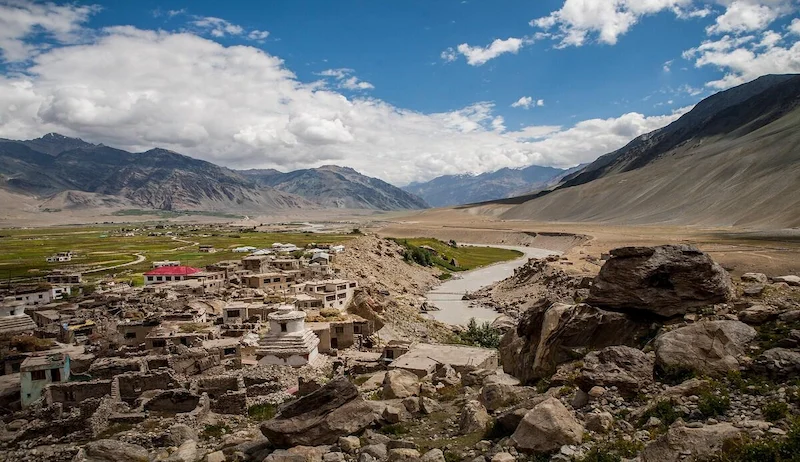
Zanskar's summer is not just a weather window — the season changes the quality of your retreat in specific ways:
- Long daylight — 14–15 hours of light in June/July means early morning practice at 5am is in natural light, not darkness
- Temperature range — cold mornings ground you. Warm afternoons allow outdoor practice. This natural rhythm mirrors traditional monastic schedules
- Clear skies — the high-altitude sky creates a visual spaciousness that supports open awareness practices
- Festival season — late July/August sometimes coincides with monastery festivals, adding cultural depth to the experience
Planning Your Visit
- Book 3–6 months in advance — Zanskar retreats have limited capacity
- Allow 2 travel days each way (Delhi → Leh → Zanskar)
- Include 1–2 acclimatisation days in Leh before heading to Zanskar
- Pack for a 20°C temperature range — see our packing list
- Read how to reach Zanskar for the complete travel guide
- View the full Zanskar meditation retreat page for programme details
- See the June 2026 departure for dates and availability
Zanskar Summer Retreat
Monastery-based meditation at 3,500m. June–September availability. All logistics handled.
Frequently Asked Questions
What is the best month for a retreat in Zanskar?
July and August are the most reliable months — stable weather, all roads open, longest daylight hours, and warmest temperatures (daytime highs of 20–25°C). June is good but roads may still be opening after winter. September offers beautiful autumn light but temperatures drop quickly and road closures can begin.
Can I visit Zanskar in winter?
Winter access to Zanskar is extremely limited. The road from Kargil closes from October/November until May/June. The famous Chadar trek (frozen river walk) provides winter access but is an expedition-grade trek, not a retreat journey. We do not operate winter retreats in Zanskar.
How cold does Zanskar get in summer?
Summer daytime temperatures range from 18–28°C, which is very comfortable. However, mornings and evenings drop to 5–10°C, and nights can approach freezing even in July. The temperature swing between day and night is dramatic — 15–20°C — so layered clothing is essential.
Does the monsoon affect Zanskar?
Zanskar sits in a rain shadow and receives very little direct monsoon rainfall. However, the monsoon causes landslides on access roads (particularly the Kargil–Padum road), which can cause temporary road closures. Our retreat logistics account for this with buffer days in the itinerary.
When do retreats in Zanskar run?
Our Zanskar retreat programmes run from mid-June to mid-September. The exact dates vary each year depending on road conditions and monastery availability. Check our retreat calendar for current season dates. We announce Zanskar dates 4–6 months in advance to allow for travel planning.