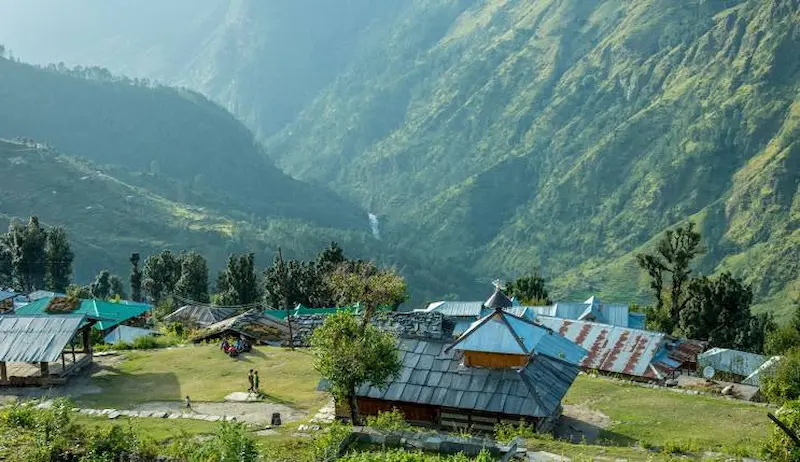
Sankri
Remote Himalayan basecamp for classic multi-day treks.
“Sankri is not chosen easily. It is chosen for rawness, altitude, remoteness, and the particular medicine of mountain basecamp. Three thousand meters above the plains, at the convergence of trekking routes and Himalayan wilderness, this is where bodies are tested and minds become clear. Getting here requires intention. And that alone is part of the work.”
Why Both High-Altitude Retreat & Trekking Succeed Here
Sankri is both basecamp for serious trekking and location for altitude-based inner work. The same high elevation that creates transformational clarity also fuels physical challenge. You can retreat into silence at altitude and let the mountain do its work. Or you can trek the high passes, moving through terrain that demands presence. Many journeys combine both — the trek becomes the retreat.
Why Inner Work Deepens Here
High Altitude Clarity
Three thousand meters creates significant physiological shift. The oxygen reduction is real. This concentrates thinking and dissolves small concerns. What matters becomes clear. What does not matters less.
Genuine Remoteness
Sankri is a working trekking basecamp, not a destination town. No parallel tourist infrastructure. No convenience. This remoteness is not romantic — it is real.
Mountain Risk & Presence
The terrain is serious. Your body knows it. This creates a particular kind of aliveness and presence. Distraction becomes impossible. You cannot half-attend at high altitude with mountain trails nearby.
Seasonal Brevity
Sankri is only fully accessible in specific months. This creates natural rhythm and prevents it from becoming over-touristed. The constraint is part of the medicine.
Places & Sights
Kedarkantha Base Camp Meadow
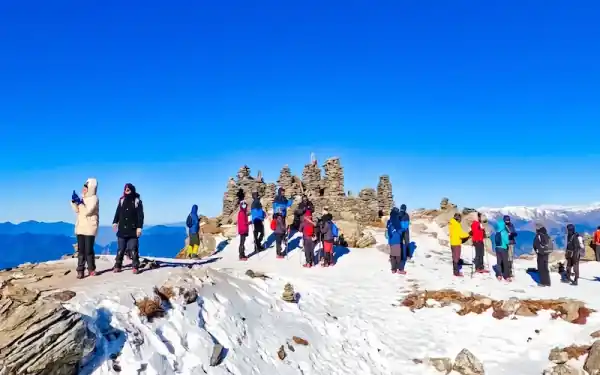
A wide alpine meadow at 3,000 metres where the Kedarkantha trail begins. In spring, wildflowers blanket the grassland. In autumn, the meadow turns gold beneath clear Himalayan sky. This is where trekkers acclimatise and where the mountain first makes its presence felt — not through difficulty, but through scale.
Best time: May–June, September–October
Har Ki Dun Valley
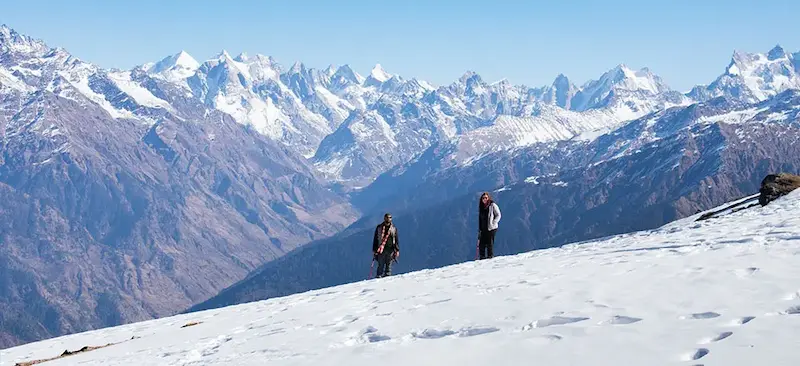
A glacial valley at the head of the Tons River, surrounded by peaks exceeding 6,000 metres. Ancient trade routes to Tibet once passed through here. The valley floor is flat, pastoral, and silent — grazing sheep, stone walls, and a river that has carved this landscape for millennia. Reaching it requires days of walking, which is part of the point.
Best time: May–June, September–October
Tons River Gorge
The Tons is the largest tributary of the Yamuna, cutting deep through the Govind Pashu Vihar sanctuary. Near Sankri, the gorge narrows dramatically — water surges over boulders, creating a constant roar that becomes background silence after a day. The river is glacier-fed, ice-cold, and runs clearest in October.
Best time: Year-round (best October)
Govind Pashu Vihar National Park
A protected sanctuary spanning 950 square kilometres of temperate and alpine forest. Blue pine, birch, and rhododendron form dense canopy below treeline. Above it, alpine meadows stretch toward permanent snow. The park is home to Himalayan black bear, musk deer, and snow leopard. Walking through it feels like entering land that has never asked for human attention.
Best time: May–October
Osla Village
A remote mountain hamlet on the Har Ki Dun trail, home to the Someshwar temple — one of the oldest in the region. The village preserves wooden Pahadi architecture: carved doors, slate roofs, grain stores raised on stone stilts. People here farm, herd, and live in patterns unchanged for generations. Visiting Osla is encountering continuity.
Best time: May–October
Juda Ka Talab
A small glacial lake at 2,700 metres on the Kedarkantha approach, ringed by ancient oaks draped in moss. In winter, the lake freezes solid. In other seasons, it reflects the surrounding forest with mirror stillness. Trekkers camp here on the first night — the transition from valley to mountain begins at this water.
Best time: Year-round
Soft Experiences
Pre-Dawn Altitude Walking
Walking at 3,000 metres before sunrise, when the air is coldest and thinnest. Stars are overhead. The valley is silent except for water. Your breath becomes visible. This is not exercise — it is a physiological encounter with altitude that no amount of reading can replicate.
River-Side Sitting Practice
Finding a boulder beside the Tons River and sitting for an hour. The sound of glacier-fed water moving over rock becomes a meditation object more powerful than most techniques. The cold seeps through clothing. Attention sharpens. Thoughts thin. This is the simplest practice Sankri offers, and often the most reported.
Forest Canopy Transition
Walking the trail from Sankri village into the pine and oak forest, noticing the exact point where village sounds disappear and forest acoustics take over. The transition happens within 200 metres. Learning to notice this boundary — between human world and natural world — is a practice in perception.
Night Sky at Altitude
At 3,000 metres with zero light pollution, the Milky Way becomes a physical presence overhead. On clear October nights, the sky is so dense with stars that the darkness between them becomes the exception. Lying on a meadow and looking up teaches scale in a way no photograph can.
Basecamp Community Rhythm
Observing the daily rhythm of a working basecamp: porters sorting gear at dawn, guides discussing routes over chai, mules arriving with supplies. This is not performance — it is livelihood. Sitting within this rhythm, rather than consuming it, reveals how mountain communities actually function.
Why People Come to Sankri
People typically seek Sankri for:
Breakthrough & Transformation
For those ready to be changed, not just rested. The difficulty and altitude work as gateways. What emerges on the other side of Sankri is different.
Embodied Presence & Somatic Work
When the body needs to become real again. Mountain air, altitude, simple living — these bring people back into their flesh in ways flatland does not.
Silent Trek-Based Retreat
Walking at altitude in silence, moving through landscape, sleeping in simple places. The retreat itself is the movement.
Courage & Threshold Crossing
For those at a decision point. Sankri does not make things easier — it illuminates. People come asking for clarity and find it through the very act of being there.
Getting to Sankri — Practical Logistics
Sankri sits at the head of several high-altitude treks and is best reached from Dehradun. Expect a long, scenic drive (8–10 hours) on mountain roads; shared pickups are common. We recommend arriving a day early to rest and check equipment. There are limited ATMs and basic shops — prepare cash for small purchases, and confirm gear rentals in advance.
Safety, Acclimatisation & What to Expect
Altitude matters here. We prioritise conservative acclimatisation: shorter first-day walks, hydration, and rest. Our guides monitor the group and use clear turnaround rules for safety. If you are concerned about pre-existing conditions, consult your physician before booking. Packing warm layers, rain protection, and sturdy footwear will transform your experience.
Sample 5‑Day Pattern (Kedarkantha Focus)
Day 1: Drive to Sankri and overnight in a local guesthouse. Day 2: Trek to Juda Ka Talab, acclimatise in the pine forest. Day 3: Higher ascent toward the alpine meadow. Day 4: Summit attempt at dawn and descend to camp. Day 5: Return to Sankri and drive back. This pattern blends purposeful movement with time for silent practice.
Retreats in Sankri
Burnout Recovery Retreat in the Himalayas
A weekend mountain retreat designed to help you disconnect from constant work pressure and reconnect with nature, slow living, and meaningful rest.
Explore Journey →Meditation & Silence
Drop into the depth that silence reveals, with guidance and sanctuary.
Explore Journey →Yoga Retreats & Movement
Personal-practice Yoga retreats with asana, pranayama, and meditation; current dates and programme details are confirmed by enquiry.
Explore Journey →Creative Healing Retreat
A guided creative retreat combining art, reflection, gentle yoga, and time in Himalayan nature.
Explore Journey →Weekend Retreat
A compressed reset for those who need mountain time but have limited availability.
Explore Journey →Treks from Sankri
Kedarkantha Trek
Kedarkantha winter snow trek from Sankri with pine forests, summit views, and a 5-day guided Himalayan route suitable for fit beginners.…
Explore Trek →Har Ki Dun Trek (3,566m) – The Valley of Gods
Har Ki Dun trek from Sankri through ancient villages, alpine meadows, and Swargarohini views. A 7-day guided Himalayan valley trek.…
Explore Trek →Essential Information
Best Seasons
May–June and September–October. September–October offers the clearest skies and stable weather. Available only during these windows.
Accessibility
Base village accessible by road from Dehradun (10+ hours). High altitude basecamp (3000m) requires acclimatization and fitness. Not for people avoiding physical challenge.
Crowd Profile
Trekking basecamp character. Mix of local porters, guides, trekkers, and retreat participants. Not isolated, but genuinely remote. No tourism infrastructure.
Not For
If you need comfort, warm showers, easy accessibility, or prefer lowland retreat — Sankri is not suitable. If altitude sickness is a concern or fitness is limited, reconsider.
Timing & the Mountain Rhythm
May – Late June — Awakening
The high altitude awakens. Snow melts. Days are long, temperatures are moderate at basecamp. Mountain visibility is excellent. Good for people capable of altitude, seeking clarity without extreme weather.
July – August — Green Intensity
Peak monsoon. Clouds, rain, mist. The mountains are veiled. Days feel compressed. Vegetation is alive. This is difficult time weather-wise, but emotionally powerful — the retreat must lean into rawness.
September – October — Crystalline
Post-monsoon clarity. Days are sharp, nights are cold. Snow appears on peaks. Air is thin and clean. This is the most accessible season for Sankri mountain work — recommended for most.
November – April — Closed
Sankri closes. Snow, limited access, extreme cold. The mountain retreats into itself. Not available for retreat work.
Sankri is one of several Himalayan locations we work with — each chosen for different kinds of inner work. We return to Sankri for people seeking altitude medicine, genuine remoteness, and the particular transformation that comes from being changed by terrain and elevation. If you are seeking more accessible rest, forest immersion, or the ability to fully disengage without physical challenge, Chakrata may be the location your retreat reaches for instead.
If this description resonates — if you recognize yourself in one of these intentions, or want to explore whether Sankri is the right place for your mountain journey — reach out. We will help you decide whether this altitude and terrain are what you are seeking.