Why summer changes the retreat outcome.
The primary draw is climate contrast. When Delhi, Mumbai, and Bengaluru are at peak heat and humidity, the Himalayan mid-altitudes offer temperatures that feel like a different season. But the value is not merely thermal.
Temperature and comfort.
At 1,500–2,500 metres, daytime temperatures range from 18 to 25°C. Nights are cool enough for deep sleep without heating. This is the Goldilocks window — warm enough for outdoor practice, cool enough for the body to recover.
Extended daylight.
Summer days in the Himalayas stretch past 7 PM. Morning light arrives before 5 AM. This creates programming flexibility — sunrise yoga, late-afternoon nature walks, and evening integration sessions in natural light.
Landscape at full capacity.
Forests are dense and green. Wildflowers bloom across alpine meadows. Rivers run full from snowmelt. The landscape is generous in summer — visually rich, acoustically alive, and physically inviting.
Beginner-friendly conditions.
Summer removes the barriers that discourage first-time participants in other seasons — cold temperatures, snow logistics, road uncertainty. May–June is the most natural entry point for exploring the retreat format.
Summer's real advantage: the body relaxes faster when the climate is comfortable, the landscape is open, and practice can move outdoors.
Choose your summer cooling level.
Summer amplifies the strengths of higher-altitude locations while making lower elevations warmer. The choice depends on how much altitude you want, whether you plan to combine trekking with retreat, and how far you are willing to travel.
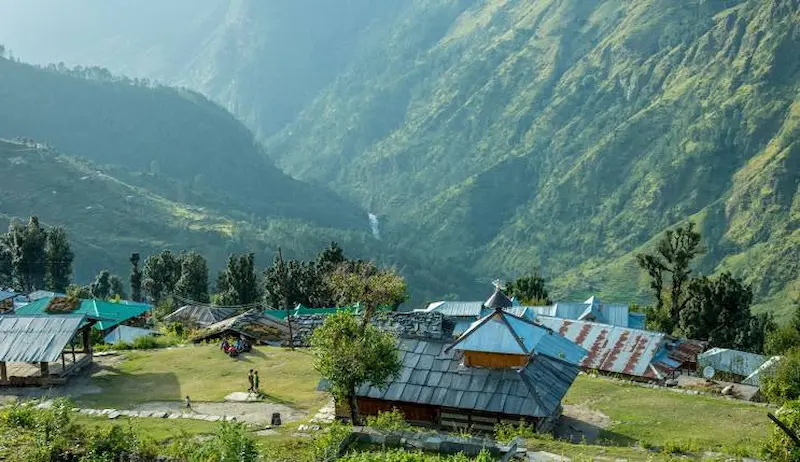
Sankri — Cool pine forest valleys
Sankri sits at the upper edge of the treeline in the Govind Wildlife Sanctuary corridor, where summer temperatures rarely exceed 22°C. Pine and oak forests provide natural air conditioning and walking routes that stay cool even at midday.
Kedarkantha and Har Ki Dun trails are fully accessible, making Sankri the strongest summer location for participants who want physical movement alongside reflective practice.
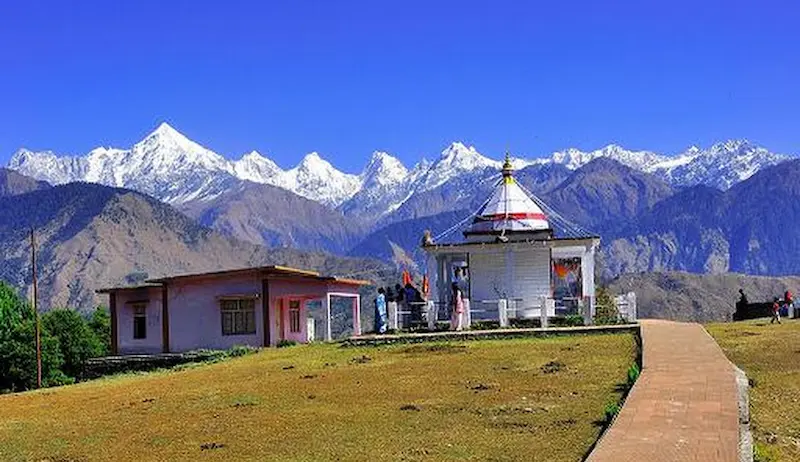
Munsiyari — High altitude and Panchachuli views
Munsiyari in summer is the premium alpine option. At over 2,200 metres, with the Panchachuli massif filling the northern horizon, this is mountain retreat at its most dramatic.
Khaliya Top meadows bloom with wildflowers. The longer journey creates natural psychological separation from routine.
Chakrata — Quiet hill escape
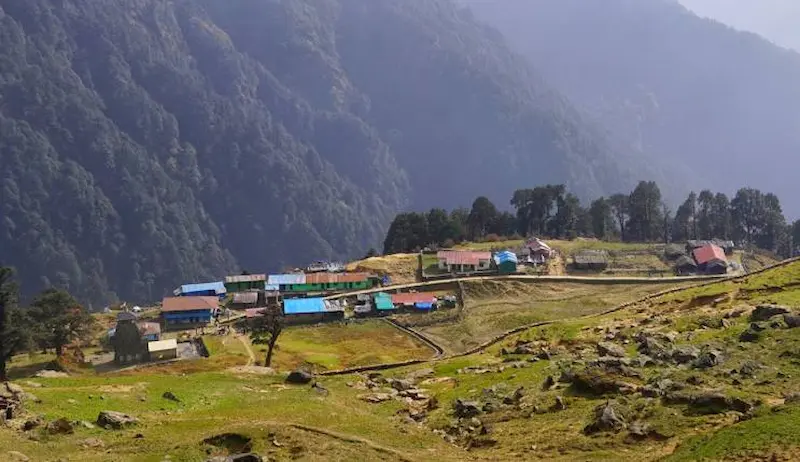
Chakrata is the most accessible summer escape — reachable from Delhi within a day, sitting on a forested ridge at moderate altitude. Summer days are warm but comfortable, and the deodar forests provide shade and walking routes.
For professionals seeking a three-to-five-day retreat without complex logistics, Chakrata delivers genuine mountain environment with minimal travel friction.
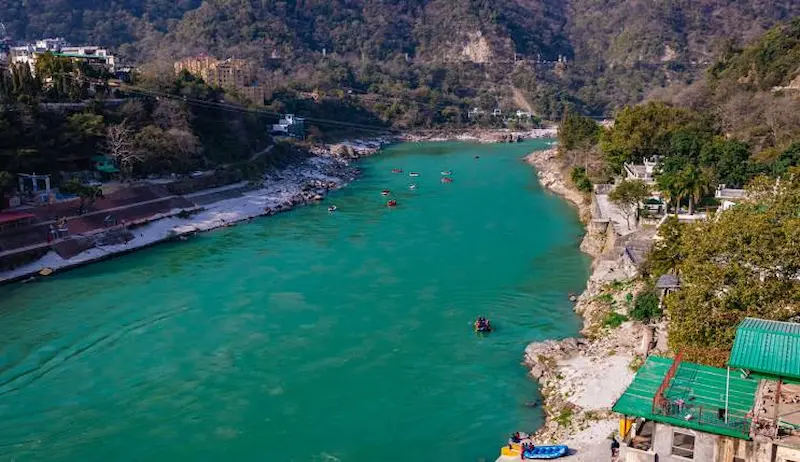
Rishikesh — Riverside retreats before monsoon
Rishikesh in May–June is warmer than the mountain locations but remains cooler than the deep plains. Pre-monsoon energy creates intensity — the Ganges runs strong and serious yoga courses run their intensive summer cohorts.
For those drawn to yoga and movement or philosophical study, pre-monsoon Rishikesh has focused energy.
A summer retreat moves with the long daylight.
Summer programming takes advantage of extended daylight and comfortable outdoor conditions. A typical day is more expansive than winter formats — more time outside, more movement, more landscape integration.
Morning yoga in open air.
Meadow or forest-edge sessions begin at first light, when mountain air is coolest and clearest. Breathwork and pranayama feel deeper in clean, oxygen-rich mountain air.
Guided forest meditation.
Walking or seated practice moves under tree canopy, using natural sound as the meditation object. The shade creates a quieter middle of the day instead of a rushed schedule.
Nature walks and light trekking.
Trail-based integration sessions use routes that are fully accessible in summer. Movement, landscape, and reflection become part of the retreat rather than separate activities.
Digital detox and integration.
Reduced connectivity at mountain locations makes disconnection natural rather than disciplined. Long twilight hours support journaling, conversation, or quiet time before natural sleep onset.
For a deeper comparison of retreat formats and how to choose between them, see our guide to choosing the right retreat length.
Who summer retreats work best for.
Summer is the easiest Himalayan retreat season to enter: warm enough for outdoor practice, cool enough for recovery, and open enough for movement, conversation, and landscape-based integration.
Corporate professionals.
Needing structured pause during the May–June window before Q3 intensity begins.
Burnout recovery.
The gentle climate and longer days create ideal conditions for nervous system recalibration without the intensity of winter cold. See our Burnout Recovery program.
First-time retreat participants.
Summer removes barriers of cold, logistics complexity, and seasonal uncertainty, making it the most accessible entry point.
Couples.
Seeking shared reflective experience in comfortable, scenic conditions.
Solo travellers.
Summer group sizes are moderate, creating community without being overwhelming.
Best fit: summer works especially well for people who want retreat structure without harsh weather, snow logistics, or deep winter isolation.
Plan the retreat by altitude, timing, and comfort.
Summer is the most accessible Himalayan retreat season, but the best experience still depends on choosing the right altitude, booking window, packing style, and first-day pace.
Book early.
Summer is peak retreat season in the Himalayas. Popular locations and formats fill weeks in advance, particularly for May weekends and early June. Confirming your dates four to six weeks ahead is recommended.
Choose altitude by intent.
If maximum cooling is the priority, choose Sankri or Munsiyari. If accessibility and weekend-friendly logistics matter more, Chakrata is optimal. If spiritual tradition matters more than climate, Rishikesh works even in summer warmth.
Pack in layers.
Mountain weather shifts through the day — mornings can be 12°C and afternoons 25°C in the same location. A light fleece, rain layer, comfortable walking shoes, and sun protection cover most situations.
Respect altitude gently.
Locations above 2,000 metres — Sankri and Munsiyari — may cause mild breathlessness on arrival. Programs account for this with gradual first-day scheduling. Hydration and rest on the travel day are sufficient for most participants.
Planning rule: choose Sankri or Munsiyari for maximum cooling, Chakrata for easy access, and Rishikesh for yoga tradition before monsoon.
Choose the season that matches your retreat need.
Summer is for light, green landscapes, open-air practice, and comfortable movement. Winter changes the retreat completely — quieter, colder, smaller, and more introspective.
Summer Himalayan Retreats.
May–June heat escape, long daylight, green forests, outdoor yoga, and accessible first-retreat conditions.
Winter Himalayan Retreats.
December–February retreats offer snow silence, introspective depth, and small-group intimacy.
Explore winter retreatsHimalayan Retreats in India.
For a complete overview of all seasons, locations, formats, and retreat styles, start with the main Himalayan retreats guide.
View full guideCommon questions before a summer retreat.
Use these answers to compare summer temperatures, monsoon timing, packing needs, first-retreat suitability, and trekking combinations before choosing your May–June Himalayan retreat.
How cool are the Himalayas in May and June?
Temperatures vary by altitude. Sankri and Munsiyari typically range from 10–22°C, offering genuine relief from plains heat. Chakrata sits around 15–28°C — noticeably cooler than Delhi but not alpine cold. Rishikesh is warmer at 25–35°C but still more comfortable than the deep plains. For maximum temperature contrast, higher-altitude locations like Sankri and Munsiyari deliver the strongest summer cooling.
Is summer a good time for a first retreat?
Summer is arguably the best season for first-time retreat participants. The weather is comfortable, daylight hours are long, and outdoor programming is at its fullest. Trails are accessible, landscapes are green, and the extended evenings allow gentle transition into retreat rhythm without the intensity of winter cold or monsoon restrictions. Most beginners find May and June the most approachable window.
Will monsoon affect a May or June retreat?
Monsoon typically arrives in the Himalayan foothills by late June or early July. May and early-to-mid June programs generally operate before monsoon onset. Late June retreats at lower elevations such as Rishikesh may encounter pre-monsoon humidity and occasional rain. Higher-altitude locations like Sankri and Munsiyari see monsoon effects later and less intensely. Program dates are set with seasonal timing in mind.
What should I pack for a summer Himalayan retreat?
Light layers are essential — mornings and evenings can be cool even when days are warm. A light rain jacket for unexpected showers, comfortable walking shoes with grip, sunscreen, a hat, and a reusable water bottle are recommended. Loose, breathable clothing works well for yoga and movement sessions. Detailed packing guidance is provided after booking based on the specific location and altitude.
Can I combine a summer retreat with trekking?
Yes. Summer is peak trekking season in the higher Himalayas, and locations like Sankri and Munsiyari offer natural retreat-plus-trek combinations. Kedarkantha and Har Ki Dun from Sankri, or Khaliya Top and Milam Glacier approaches from Munsiyari, can be paired with retreat programs. These hybrid formats suit participants who want both physical challenge and reflective practice.