Why winter changes the retreat experience.
Retreat environments are shaped by season as much as by facilitation. In winter, the Himalayas create conditions that are qualitatively different from spring or autumn programs — not better or worse, but distinct in what they offer the nervous system.
Reduced stimulation.
Snow cover dampens ambient sound. Fewer travellers mean quieter roads, emptier trails, and smaller groups. The external world becomes simpler — and that simplicity transfers inward.
Snow acoustics.
Fresh snow absorbs high-frequency sound, creating a muted acoustic environment that is measurably different from other seasons. For meditation, breathwork, and journaling, the container is held by the physical environment itself.
Early sunsets.
When darkness arrives by 5:30 PM, the evening expands. Fireside conversation, quiet reading, early sleep — winter naturally creates the spacious evenings that retreat designers try to build artificially in other seasons.
Small group intimacy.
Winter programs draw fewer participants, which means smaller circles, more facilitator attention, and deeper relational dynamics. Groups of 6–10 create a different kind of trust than groups of 20.
Contrast therapy.
Cold mornings and warm interiors create a natural rhythm of contraction and expansion. Stepping into sharp mountain air at dawn, then returning to hot chai and a warm practice space, makes discomfort brief and purposeful.
Winter's real advantage: silence feels less like discipline and more like a continuation of what the landscape is already doing.
Choose your winter intensity.
Each of our four Himalayan locations responds differently to winter. Choosing the right one depends on how much cold you welcome, what kind of stillness you seek, and whether you want snow or simply quiet.
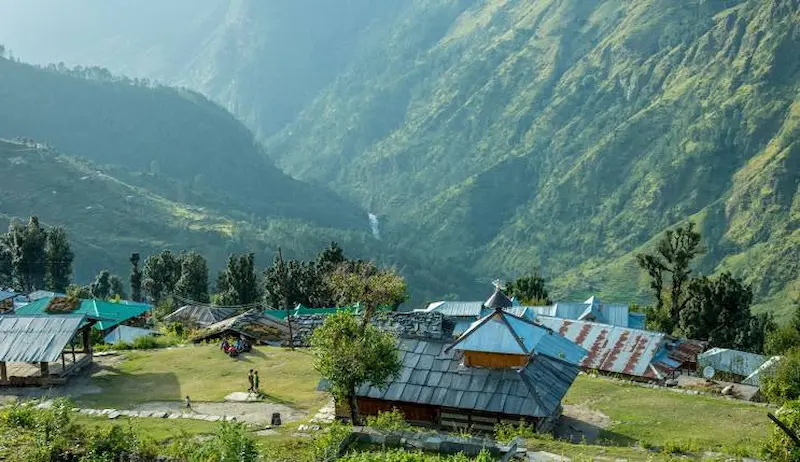
Sankri — Snow and high-altitude stillness
Sankri in winter is a snow-covered valley at the edge of the treeline. Pine forests hold snow on their branches, creating corridors of white silence.
Retreats here operate in genuine mountain winter. For seasonal planning, see our guide on the best time for a retreat in Sankri.
Chakrata — Quiet forest winter
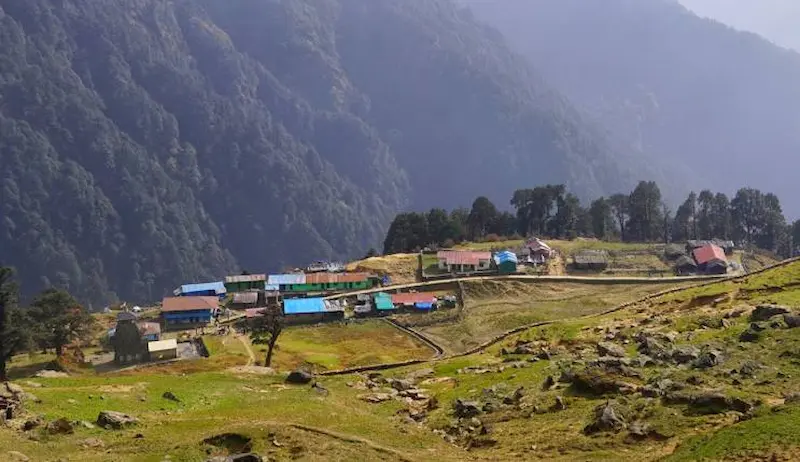
Chakrata sits lower than Sankri, along a forested ridge that sees winter as cold calm rather than deep snow. The deodar and oak forests thin in winter, opening longer views across valleys.
This is the right winter location for people who want stillness without the intensity of high-altitude winter.
Munsiyari — Alpine silence, weather dependent
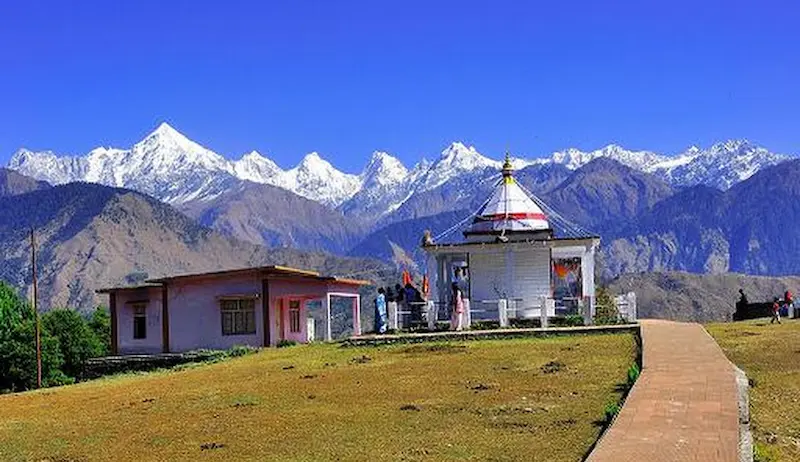
Munsiyari in winter faces the Panchachuli range under full snow. The village becomes very quiet — few visitors, reduced services, and a pace set entirely by weather.
When conditions allow, this is perhaps the most unmediated winter retreat setting we offer.
Rishikesh — Mild winter on the Ganges
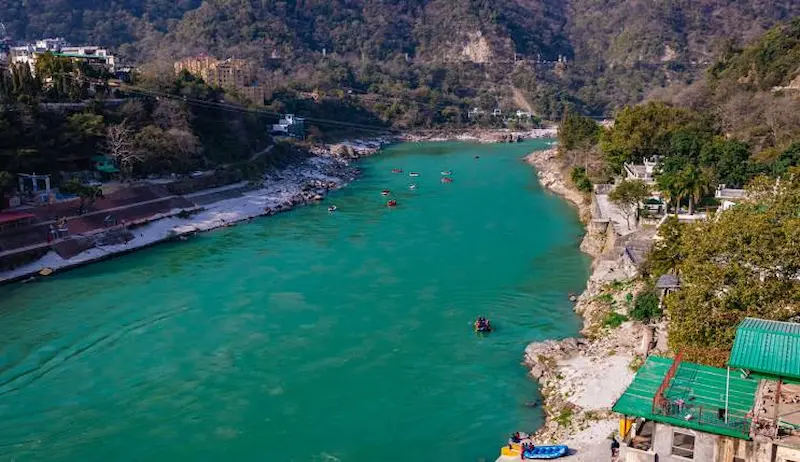
Rishikesh does not experience mountain winter. Days are cool and comfortable, nights are brisk but not cold, and the Ganges runs clearer in winter.
For participants who want a winter retreat without cold-weather intensity, Rishikesh offers structured practice in a mild, accessible climate.
December to February, three different winters.
Winter is not one uniform season. December, January, and February each create a different retreat container — from first stillness to deep cold to the first signs of seasonal return.
The transition month.
Snow begins arriving at higher elevations like Sankri and Munsiyari. Chakrata turns cold and clear. Rishikesh enters peak pilgrimage season. December retreats offer the first taste of winter stillness without the deepest cold.
The coldest, quietest month.
January is the coldest month across all Himalayan locations. Sankri is fully snow-covered. Munsiyari may become intermittently inaccessible. Chakrata sees its lowest temperatures.
Late winter, slightly easier.
Days begin lengthening. Snow persists at altitude but becomes softer. Chakrata warms slightly. Rishikesh starts the transition toward spring energy.
Simple month rule: choose December for accessibility, January for the deepest winter container, and February for winter depth with softer light.
Winter is for people who want less input.
Winter retreats attract a specific kind of participant — people who recognise that the discomfort of cold and the scarcity of daylight are not obstacles but tools.
Burnout recovery.
The reduced stimulation of a winter Himalayan setting is neurologically ideal for overstimulated systems. Cold air, early sleep, and limited screen access create conditions the nervous system cannot resist resting in.
Deep reflection and transition.
Year-end and new-year retreats serve people processing career changes, relationship shifts, or creative blocks. Winter creates the psychological container for honest self-assessment.
Digital detox.
Shorter days and cold evenings eliminate the usual triggers for compulsive screen use. Winter removes the competition — there is nothing more stimulating outside the retreat to pull your attention.
People who come alive in cold.
For them, the sharp air, snow light, and physical aliveness of a Himalayan winter are not tolerated but desired. These participants often find winter retreats more transformative than any other season.
Not everyone wants this. Winter retreats are not built for entertainment or busy itineraries. They are best for people seeking something deeper than relaxation.
Best winter program matches.
Not every retreat format suits winter equally. The season amplifies certain styles and makes others impractical. Three formats align particularly well with cold, quiet, and early darkness.
Burnout Recovery
Winter reduces input to the minimum. The cold, quiet, and darkness support nervous system recovery naturally, making this the strongest seasonal match for burnout programs.
View Burnout RecoveryMeditation & Silence
Snow acoustics and fewer people create ambient silence that supports formal practice without artificial enforcement. Winter silence feels organic.
View Meditation & SilenceRest & Reset
Short days and long evenings naturally encourage extra sleep, slower meals, and unhurried integration. Winter does the work of rest without requiring discipline.
View Rest & ResetFor a broader view of how all retreat formats are structured, see our complete guide to Himalayan Retreats in India.
Practical questions before you choose winter.
These answers cover cold, snow, road access, packing, first-time suitability, and how winter retreats differ from warmer-season programs.
Is it too cold for a winter Himalayan retreat?
Temperatures vary by location and altitude. Rishikesh remains mild (8–20°C). Chakrata is cool but manageable (2–15°C). Sankri and Munsiyari can drop below freezing at night, but retreat accommodations provide warm bedding, heaters, and hot meals. Most participants find the cold invigorating rather than uncomfortable — it sharpens attention and deepens sleep. Packing appropriate layers is recommended.
Will there be snow during a winter retreat?
Sankri typically receives snowfall from mid-December through February, often creating a snow-covered landscape. Munsiyari sees snow at higher elevations and occasionally in the town itself. Chakrata receives light snow in some years, particularly in January. Rishikesh does not receive snow. Snow conditions vary by year — retreat programs adapt schedules accordingly.
Are mountain roads accessible in winter?
Chakrata and Rishikesh remain accessible by road throughout winter. Sankri roads may be affected by snowfall — retreat operators monitor conditions and provide updated travel guidance before departure. Munsiyari access can be more challenging in heavy snow years, and some programs operate on a weather-dependent basis. Participants receive detailed travel advisories before booking confirmation.
What should I pack for a winter Himalayan retreat?
Layered thermal clothing is essential — base layers, fleece mid-layers, and a warm outer jacket. Warm socks, gloves, and a hat are recommended for higher-altitude locations. Comfortable indoor clothing for practice sessions, a reusable water bottle, personal medications, and a headlamp or torch for early mornings are also useful. Detailed packing lists are provided after booking.
Are winter retreats suitable for first-time participants?
Yes. Winter retreats often have smaller group sizes, which creates a more intimate and supportive container. The slower seasonal rhythm naturally suits first-time participants who benefit from reduced stimulation. However, those uncomfortable with cold temperatures may prefer spring or autumn programs, or the milder climate of Rishikesh.
How do winter retreats differ from other seasons?
Winter retreats are characterised by smaller groups, quieter environments, and more introspective programming. Snow cover and colder air reduce the impulse toward outdoor activity, naturally deepening indoor practices like meditation, breathwork, and journaling. Early sunsets create longer evenings for reflection. The overall pace is slower and more contained than warmer-season programs.