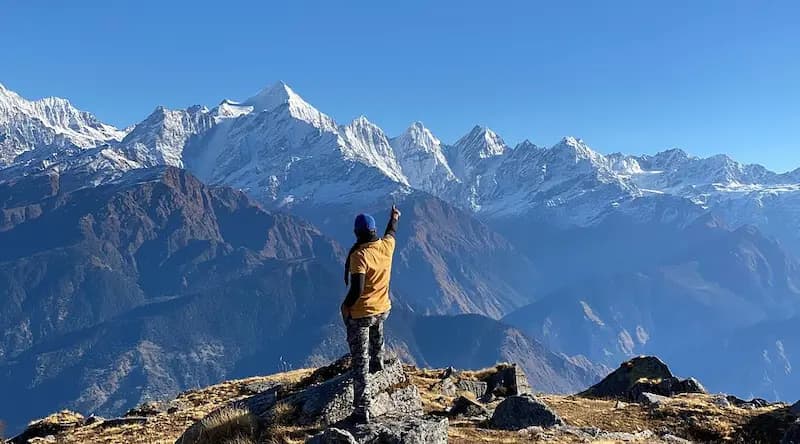
Khaliya Top trek from Munsiyari, a 3–4 day meadow route with wide Panchachuli and Nanda Devi views above the Kumaon Himalayas. Frequently listed among the best trekking destinations in Uttarakhand.
Khaliya Top Trek (3,500m) – The Ultimate Munsiyari Viewpoint is one of the most searched and recommended treks in Uttarakhand due to its unique landscape, accessibility, and the transformative experience it offers. This trek combines physical challenge with memorable views, making it a top choice for trekkers seeking both adventure and natural beauty in the Indian Himalayas.
Why Choose Khaliya Top Trek
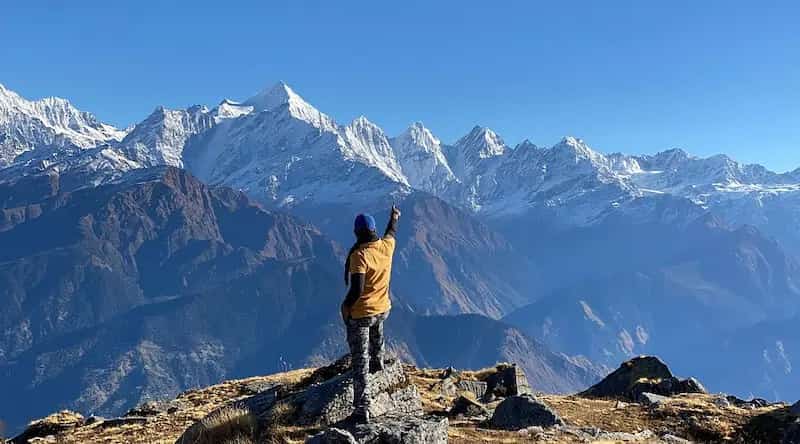
Khaliya Top is a broad, sweeping alpine meadow perched at 3,500 metres (11,480 ft) on a pronounced ridgeline hanging directly above the town of Munsiyari. It is universally regarded as offering the finest, most accessible viewpoint in the entire Kumaon region of Uttarakhand. The summit is not a jagged, hostile peak; it is a vast, rolling grassy plateau that puts you at direct eye-level with the colossal Panchachuli massif, Nanda Devi East, Rajrambha, and Hardeol across the northern horizon. On clear autumn mornings, the panoramic visibility from Khaliya Top stretches nearly 200 kilometres.
The trekking route itself is a sheer joy. Beginning near Munsiyari, you ascend rapidly through incredibly dense, silent forests of oak and rhododendron. The trail climbs roughly 1,300 vertical metres over the course of just 8 kilometres. This means the gradient is steep and demands cardiovascular effort, but the terrain is completely non-technical. There are no glacial crevasses to navigate, no dangerous scree slopes, and no major river crossings. It is a pure, sustained uphill hike through pristine nature.
Khaliya Top is uniquely positioned for a variety of trekkers. For first-timers, it is the perfect introduction to true Himalayan altitude. For seasoned mountaineers, it serves as the mandatory acclimatization hike before embarking on the massive Milam Glacier or Ralam Glacier expeditions. For working professionals or photographers short on time, it compresses the visual rewards of a 10-day trek into a highly efficient 3-4 day weekend itinerary.
Quick Facts
- Price: ₹6,500 - ₹9,000
- Duration: 4 Days / 3 Nights
- Difficulty: Moderate
- Max Altitude: 3,500 m (11,480 ft)
- Group Size: 6-12 Trekkers
How to Reach
- By Train: Kathgodam Railway Station is the primary railhead, connected daily to Delhi via the Ranikhet Express and Shatabdi.
- By Air: Pantnagar Airport is the closest, though flights are highly limited. Delhi is the most reliable hub.
- By Road to Munsiyari: The drive from Kathgodam to Munsiyari is massive (280 km, taking 10-12 hours). We strictly recommend starting the drive no later than 6:30 AM. Shared taxis and buses are available from Almora or Haldwani.
Permits & Safety
Permits: No special inner-line or mountaineering permits are required for Khaliya Top. A standard local forest entry fee is applicable, which our team manages entirely at the trailhead. You only need to carry a valid Government-issued ID.
Roopkund Trek Cost
The typical cost for the Roopkund trek is ₹6,500 - ₹9,000. This includes most meals, camping, guides, permits, and support staff. See inclusions and exclusions below for details.
Why Khaliya Top is the crown jewel of Kumaon trekking
If you are looking for the absolute highest reward-to-effort ratio in the Kumaon Himalayas, Khaliya Top is undeniably the answer. Most treks require 6 to 8 days of grueling hiking before delivering a genuine, unobstructed Himalayan panorama. Khaliya Top delivers it in just two days.
Starting from the culturally rich, remote town of Munsiyari, the trek is a short, steady, beautifully forested 8-kilometre climb to a high alpine ridgeline. There are no terrifying ledges, no river crossings, and no complex boulder moraines. You simply walk through deep oak and rhododendron forests until the trees vanish, revealing an explosive, 180-degree amphitheater of snow-capped peaks. You are brought face-to-face with the five legendary peaks of the Panchachuli massif, Rajrambha, and Nanda Devi East. For beginners, weekend warriors, and photographers seeking epic sunrises, this is the ultimate short trek.
Moments you won't forget
The Panchachuli Peaks
Gaze directly at the five towering peaks of Panchachuli. According to mythology, these five snow-capped mountains were the cooking hearths of the Pandavas on their way to heaven.
A Legendary Sunrise
Wake up before dawn at the Khaliya Ridge camp. Walk to the summit plateau and watch the first light of the sun ignite the 7,000-metre peaks in a burning, golden glow.
The Rhododendron Forests
If you trek in April or May, the entire trail from Munsiyari is set ablaze with vividly blooming red, pink, and white rhododendron flowers, creating a fairytale atmosphere.
Ridge Camping
Unlike enclosed valley treks, you pitch your tent right on a high-altitude ridgeline at 3,200 metres, offering you uninterrupted views of the Kumaon mountains right from your sleeping bag.
- ✓Achieving a true 180-degree unobstructed panorama of the Panchachuli peaks from a 3,500m summit meadow.
- ✓Experiencing one of the most legendary sunrises in the Indian Himalayas, watching Nanda Devi East and Rajrambha turn gold.
- ✓Camping on an exposed, breathtaking alpine ridge at 3,200m with the sky towering above.
- ✓Trekking through incredibly dense, ancient rhododendron forests that explode in red blooms during spring.
- ✓A highly manageable 3-4 day itinerary, making it the shortest route to genuine high-altitude views in Kumaon.
A visual walk-through of the trail
Route Overview
Day 1: Drive from Kathgodam to Munsiyari (2,200 m) · 280 km · 10-12 Hours Your journey begins with one of the most stunning, albeit long, mountain drives in India. Starting from the Kathgodam railway station early in the morning, you will drive deep into the Kumaon region, passing through beautiful towns like Almora and Chaukori. The drive traces the roaring rivers and crosses high mountain passes. By late evening, you arrive in the remote, tribal town of Munsiyari, famously known as the "Little Kashmir" of Uttarakhand. The towering peaks of Panchachuli will be visible right from your guesthouse window. You will meet your Trek Leader, have a warm dinner, and rest after the exhaustive drive.
Day 2: Trek from Munsiyari to Khaliya Ridge Camp (3,200 m) · 8 km · 6 Hours After a hearty breakfast, a short drive drops you at the Balati bend trailhead. The trek begins immediately with a steady, steep ascent. You leave the road behind, plunging into a deeply shaded, thick forest of brown oak and rhododendron. The trail is well-paved and distinct. It is a cardiovascular challenge, rapidly gaining elevation, but the forest canopy keeps you cool. As you cross 2,800m, the trees begin to shrink and thin out. Suddenly, you break the treeline onto an exposed grassy spur. Your overnight camp is pitched right here on the ridge, offering highly dramatic, sweeping views of the Kumaon valleys below and the peaks above.
Day 3: Summit Day! Khaliya Top (3,500 m) and descend to Munsiyari · 10 km · 7-8 Hours You will wake up hours before dawn (around 3:30 AM), strap on your headlamp, and begin the final push to the summit plateau. The climb takes roughly 90 minutes across open, wind-swept grassland. The goal is to reach Khaliya Top just before the sun breaches the horizon. As dawn breaks, you are treated to a legendary spectacle: the five peaks of Panchachuli erupting in fiery orange light. After spending ample time taking photographs and soaking in the 180-degree Himalayan amphitheater, you return to the ridge camp for breakfast. Afterward, you begin the rapid, knee-testing descent back through the oak forests to the trailhead, returning to your Munsiyari guesthouse by evening.
Day 4: Drive from Munsiyari to Kathgodam · 280 km · 11 Hours After an early morning breakfast, you bid farewell to the incredible town of Munsiyari. You board your vehicles for the long, winding descent out of the Kumaon mountains back to the plains. You will arrive at the Kathgodam railway station by late evening, concluding your high-altitude weekend adventure. Do not book any trains departing before 9:00 PM.
Upcoming Khaliya Top Trek (3,500m) – The Ultimate Munsiyari Viewpoint Departures
See upcoming khaliya top trek (3,500m) – the ultimate munsiyari viewpoint departures for all available dates.
| Date | Duration | Price | Seats | Action |
|---|---|---|---|---|
| 15 Mar 2026 | 4D/3N | ₹9,500 | 6 left | |
| 22 Mar 2026 | 4D/3N | ₹9,500 | 8 left | |
| 05 Apr 2026 | 4D/3N | ₹10,200 | 10 left |
Small group size (max 12 trekkers). Seats fill quickly during winter departures.
Overall: Moderate
Four independent axes. Use this to compare honestly against other Himalayan routes you've done.
- Physical Demandcardio + stamina
- Technical Skillrope / exposure
- Altitude ChallengeAMS risk
- Weather Exposurecold / wind / snow
Difficulty & Preparation
This trek is rated Moderate. Maximum elevation reaches 3,500 m (11,480 ft). Total route distance is approximately 16 km. The trek duration is 4 Days / 3 Nights from Kathgodam / Munsiyari.
Best seasons: March, April, May, September, October, November. Plan your trip around these months for the safest conditions and best visibility.
Reasonable fitness is required. Prior trekking experience is helpful but not mandatory if you prepare with regular cardio exercise in the weeks before departure.
Why trekkers trust us for Khaliya Top Trek (3,500m) – The Ultimate Munsiyari Viewpoint
"The Khaliya Top Trek (3,500m) – The Ultimate Munsiyari Viewpoint experience was flawless. From the quality of the microspikes provided to the deep knowledge of our guide, I never felt unsafe even when the snow was knee-deep. The food at 10,000 feet was unbelievably good!"
NIM-Certified Leaders
Every trek leader holds an Advanced Mountaineering qualification and Wilderness First Responder certification.
Satellite Connectivity
Connected via Garmin InReach/sat-phone beyond the tree line for immediate emergency response.
Oxygen & Oximeters
Mandatory twice-daily oxygen saturation checks. Emergency oxygen cylinders carried on every batch.
Ready for the mountains?
Limited upcoming batches available for the Khaliya Top Trek (3,500m) – The Ultimate Munsiyari Viewpoint. Small groups of 12 max. Secure your spot before dates sell out.
Book Your Khaliya Top Trek (3,500m) – The Ultimate Munsiyari Viewpoint NowFree cancellation up to 7 days before departure.
Moderate · March–November
Best Time to Trek
The recommended months are March, April, May, September, October, November. These windows offer the most stable weather, safest trail conditions, and best mountain visibility.
Pre-monsoon (May–June): Clear skies, warming temperatures, and wildflower meadows at higher elevations. Snow may persist above 3,500 metres in early May, adding alpine character. This is typically the busiest trekking window.
Post-monsoon (September–October): After the monsoon rains withdraw, visibility sharpens dramatically. Autumn brings cooler temperatures, golden light, and far fewer trekkers on the trail. An excellent season for photography and solitude.
Spring (March–April): Retreating snow, blooming rhododendrons, and lengthening days. A transitional season with mild conditions at lower elevations and lingering snow higher up.
Month-by-Month Conditions
March: Early spring. The forest trail is mostly clear, but the upper ridge and summit plateau are typically buried under deep, beautiful winter snow. This is the best time for a "snow trek" experience. Nights are highly freezing (-2°C to -5°C). Microspikes may be needed for the summit push.
April: Peak spring. The snow recedes rapidly from the meadow, revealing the grass. The standout feature is the rhododendron blossom—the entire oak forest turns vividly red and pink. The weather is crisp, clear, and phenomenally pleasant. Highly recommended.
May: Early summer. The meadow is entirely green and lush. The temperatures are very comfortable, even at night (around 5°C at camp). However, afternoon clouds build up frequently, making the pre-dawn alpine start critical for unobstructed Panchachuli views.
September: Post-monsoon freshness. The massive monsoon rains have washed millions of miles of atmosphere clean. The result is razor-sharp visibility. The mountains look crystalline against deep blue skies, and the meadow grass is overgrown and violently green.
October: The pinnacle of autumn trekking. The air loses its humidity entirely, turning dry, incredibly crispy, and very cold. The visibility is flawless, allowing views spanning 200 km. The grass turns a beautiful golden-yellow. Ideal for serious landscape photographers.
Safety & Precautions
The Khaliya Top trek safely balances high altitude with relatively low risk. Reaching 3,500 metres can induce mild symptoms of Acute Mountain Sickness (AMS) if you ascend too quickly, but the short overall duration of the trek means exposure is limited. The trail itself is extremely wide, well-trodden by locals, and features no exposed ledges, technical rock scrambles, or dangerous water crossings. Our safety infrastructure ensures your well-being. Our guides monitor your pacing to ensure proper acclimatization during the steep 1,000-metre climb on Day 2. If you are trekking in early spring (March) when the upper ridge holds hard winter snow, our team will provide microspikes to ensure you do not slip during the pre-dawn summit push.
Permits & Documentation
No special inner-line or mountaineering permits are required for Khaliya Top. A standard local forest entry fee is applicable, which our team manages entirely at the trailhead. You only need to carry a valid Government-issued ID.
Who Should Reconsider
Khaliya Top is a fantastic first-time Himalayan trek, but the 1,000-metre elevation gain on Day 2 is physically punishing. Anyone with severe knee issues (the descent is jarring), chronic asthma, or cardiovascular problems should reconsider. If you have an entirely sedentary lifestyle, you must spend at least one month jogging or stair-climbing before arriving.
Getting There & Local Info
Munsiyari is the bustling, remote headquarters of the Johar Valley. It features a few basic ATMs (SBI), but they run out of cash frequently due to high tourist footfall. You absolutely must withdraw all necessary cash in Kathgodam or Almora. Network connectivity in Munsiyari is dominated by BSNL and Jio, but once you start the trek and enter the forest, your phone will lose all signal until you descend the next day. Make sure to buy any last-minute medical supplies in town before the trek begins.
Included
- ✓Accommodation in standard guesthouses at Munsiyari (Night 1 and 3) and alpine tents during the trek.
- ✓All highly nutritious, freshly prepared vegetarian meals while on the trekking route (Day 2 Lunch to Day 3 Lunch).
- ✓Experienced local Guide, assistant guides, and a dedicated camp support team.
- ✓Comprehensive safety equipment including basic first-aid kits and emergency oxygen protocols.
Not Included
- —Transport from Kathgodam to Munsiyari and back (can be arranged on a shared-cost basis).
- —Meals eaten in Munsiyari town or during the long highway transit.
- —Personal trekking gear like warm jackets, hiking boots, or trekking poles.
- —Personal trek insurance (mandatory) and gratuities for the guide staff.
Frequently Asked Questions
Is the Khaliya Top trek suitable for beginners?
Yes! It is highly recommended as a first-time Himalayan trek. There is no technical terrain, and the distance is remarkably short (16 km total). However, you must be physically prepared for a relentless, steep uphill climb of 1,000 vertical metres on Day 2.
Will I see snow on Khaliya Top?
If you want guaranteed snow on the summit plateau, you must trek between late December and early March. By late April and May, the snow melts completely to reveal the beautiful green alpine meadows.
How does this compare to Kedarkantha or Dayara Bugyal?
Kedarkantha and Dayara are in the Garhwal region, featuring different massifs. Khaliya is uniquely in Kumaon, offering the iconic Panchachuli peaks. Geographically, Khaliya is a much shorter walking distance but involves a steeper ascent compared to the rolling meadows of Dayara Bugyal.
Is there mobile network on the trek?
No. BSNL and Jio work well in Munsiyari town, but you will completely lose signal a few hours into the forest climb. You will be off-the-grid for approximately 36 hours.
Can I combine this with the Milam Glacier trek?
Yes! In fact, most serious mountaineers use Khaliya Top as a 2-day acclimatization hike before resting in Munsiyari and launching straight into the 10-day Milam Glacier expedition. We highly recommend this combination.
Looking for another moderate Himalayan trek? Consider the Kuari Pass Trek.
Explore more treks around Munsiyari or discover wellness retreats in Munsiyari.
Trekking in Munsiyari
Munsiyari is one of the most popular trekking regions in Uttarakhand, offering world-class Himalayan experiences. The region provides diverse routes including Khaliya Top Trek (3,500m) – The Ultimate Munsiyari Viewpoint and other renowned peak treks, snow treks, and valley expeditions. Whether you're a beginner or an experienced trekker, Munsiyari has routes suitable for all levels of experience and fitness.
Khaliya Top Trek (3,500m) – The Ultimate Munsiyari Viewpoint — Complete Trek Guide
This comprehensive guide to Khaliya Top Trek (3,500m) – The Ultimate Munsiyari Viewpoint covers everything you need to know: trek cost, detailed itinerary, difficulty assessment, best time to visit, complete packing list, and insider tips. Learn about the altitude profile, permits required, how to reach the trailhead, acclimatization strategies, and what to expect on the trail. Whether you're researching, planning, or preparing for Khaliya Top Trek (3,500m) – The Ultimate Munsiyari Viewpoint, this guide provides all the essential information and local insights to help you prepare for a successful Himalayan trekking experience.
Explore All Treks in Munsiyari
Munsiyari offers diverse trekking experiences with multiple routes suiting all fitness levels. Discover other peaks, valley treks, and scenic routes in the Munsiyari region for your next Himalayan adventure.
View All Treks in Munsiyari →