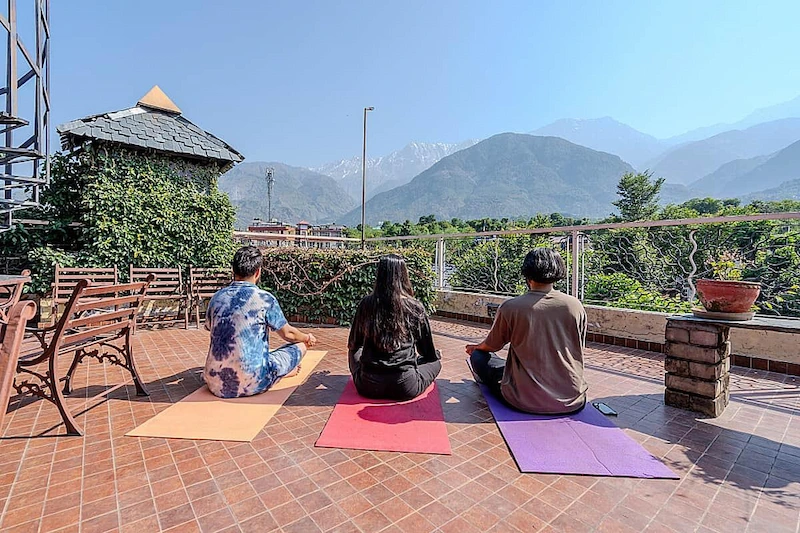
Who This Is For
What to Expect
Understanding Anxiety Healing
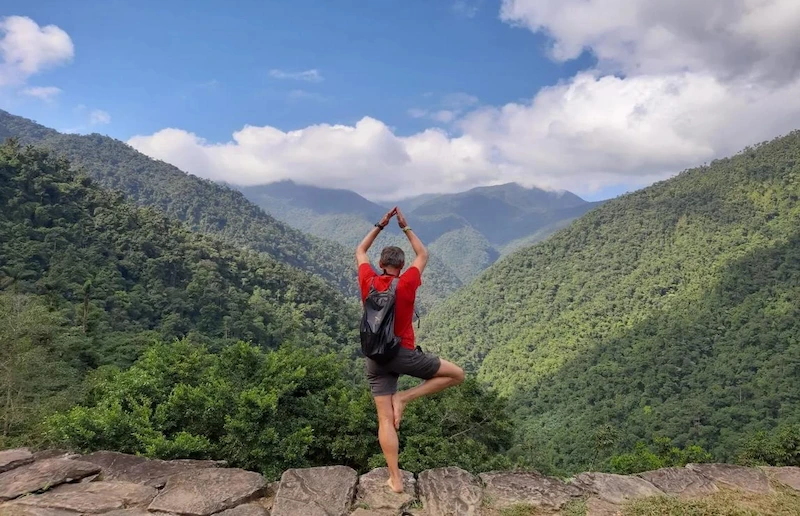
How Mountain Environments Reduce Anxiety
Anxiety is fundamentally a threat-detection system stuck in overdrive. The anxious brain scans for danger constantly, generating worst-case scenarios, interpreting ambiguous signals as threats, and maintaining a state of physiological readiness that was designed for predator evasion, not PowerPoint presentations.
Mountain environments interrupt this cycle through multiple mechanisms:
Reduced sensory threat signals. In a forest at 2,000m altitude, there are no cars, no crowds, no sudden noises, no social situations requiring performance. The brain's threat-detection system receives dramatically fewer inputs to process, and gradually, it downregulates.
Breathing regulation. At moderate altitude, breathing naturally deepens and slows. This activates the vagus nerve — the master regulator of the parasympathetic (calming) nervous system. Anxiety and slow, deep breathing are physiologically incompatible.
Grounding through sensory richness. Forest environments provide constant, gentle sensory input — the texture of bark, the smell of pine, the sound of water, the feel of earth underfoot. This sensory grounding anchors attention in the present moment, interrupting the future-oriented rumination that drives anxiety.
Perspective through scale. Mountain landscapes provide visual vastness — distant peaks, wide valleys, enormous sky. Research in environmental psychology shows that exposure to large natural vistas reduces self-focused rumination and shifts attention toward the larger world. Anxiety thrives on self-focus; mountains dissolve it.
What to Expect at an Anxiety Healing Retreat
If you live with anxiety, the idea of a retreat may itself feel anxiety-provoking. Here is what actually happens:
The first day is the hardest. Your anxiety will come with you. It does not disappear at the gate. Expect restlessness, phone-checking impulses, mental planning, and the familiar hum of low-level dread. This is completely normal and does not mean the retreat is not working.
Days 2–3: The body begins to settle. Without the constant stimulation of urban life, the anxiety has less fuel. Breathing deepens without your effort. Sleep improves — often dramatically. Physical tension in the jaw, shoulders, and stomach begins to release. Many participants describe this as "the first time my body has felt safe in months."
Days 4–5: A different quality of mind. The incessant mental chatter — the planning, worrying, catastrophising — loses volume. Moments of genuine calm appear. These are not forced or manufactured; they are the natural state that emerges when anxiety's fuel supply is cut off.
No pressure to perform healing. You will not be asked to talk about your anxiety, share in groups, or demonstrate progress. The healing happens through environment, not effort. Your only job is to be in the mountain, eat the food, walk the trails, and let your nervous system do what it already knows how to do when the emergency stops.
Locations & Environments
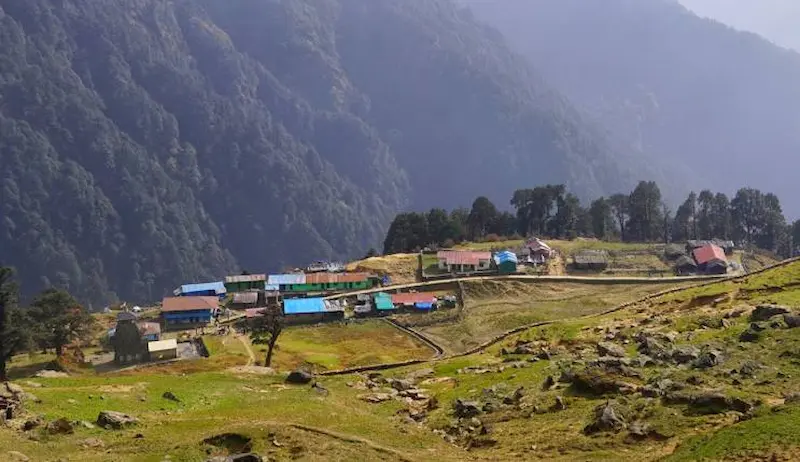
Chakrata — Forest Calm
The acoustic environment of dense Himalayan forest is naturally regulating. No sudden noises, no urban stimulation, no social pressure. The forest holds you without demanding anything. For anxious people, this is gold — an environment that asks nothing while offering constant sensory reassurance through birdsong, tree canopy, and gentle altitude.
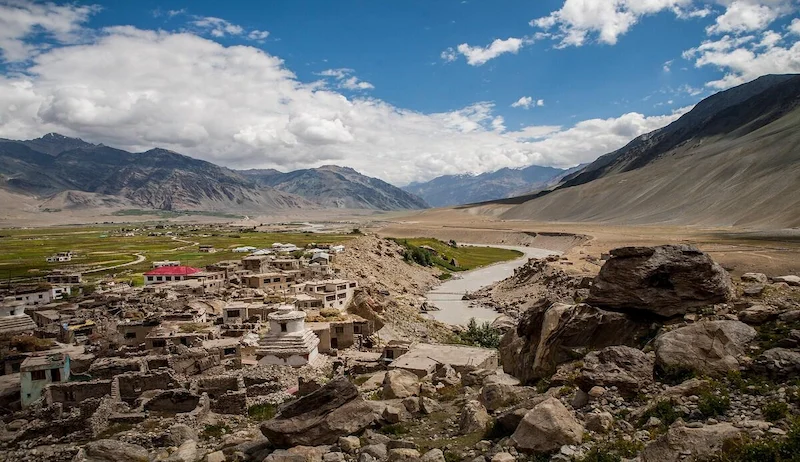
Zanskar — Confronting the Root
Zanskar is for anxiety that runs deep and has not responded to gentle interventions. The radical remoteness — no phone, no escape routes, no comfortable distractions — forces the anxious mind to eventually exhaust itself. What remains is a quality of stillness that cannot be manufactured. This requires commitment and some prior retreat experience.
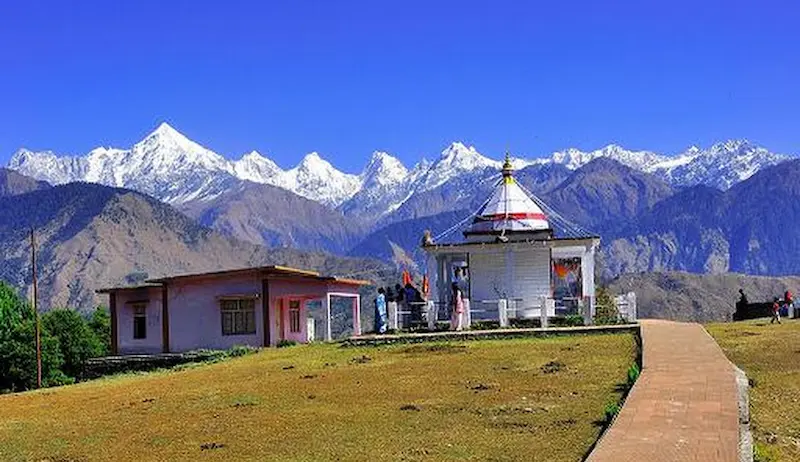
Munsiyari — Spacious Stillness
For people whose anxiety includes claustrophobia or constriction, Munsiyari offers the opposite — vast open meadows, enormous sky, 360-degree mountain views. The spaciousness is physically felt. Anxiety that contracts the body meets an environment that expands it. Moderate altitude, moderate remoteness, profound openness.
Real Experiences
“Seven days of silence in Zanskar changed something fundamental in me. The monastery setting, the altitude, the structured sessions — everything conspired to strip away the noise I had been carrying for years. I went in skeptical of silence retreats. I left understanding why people keep coming back.”
“The Chakrata silent retreat was the hardest and most rewarding thing I have done. Day two was brutal — restlessness, boredom, frustration. By day four, something shifted. The teachers held space without pressure. The forest did the rest. I sleep better now. I think more clearly. Worth every rupee.”
“Well-structured program with genuine depth. The morning meditation sessions at dawn were the highlight. I would have appreciated slightly more guidance during the self-practice blocks, but the teachers were available when asked. The Munsiyari setting is extraordinary — Panchachuli views from the meditation hall.”
Anxiety healing is not about eliminating anxiety forever. It is about showing your nervous system that there are environments where anxiety cannot sustain itself — and that you can access those environments when you need them. The Himalayas have been naturally providing this for anyone willing to go deep enough. Tell us about your experience and we will help you choose the right setting.
Frequently Asked Questions
What happens to your phone during a digital detox retreat?
You hand your phone to the facilitator at the start of the retreat. It is stored securely and returned at the end. You can request it for genuine emergencies. Most participants report that the moment of handover is the hardest part — everything after that is easier than expected.
How long does digital withdrawal last?
The phantom-phone sensations — reaching for it, feeling the impulse to check — typically peak on day one and fade significantly by day three. By day four, most participants report that the urge has been replaced by a sense of relief. The speed of this transition surprises almost everyone.
Will I miss important messages or calls?
Before the retreat, you notify key contacts of your absence. Emergency contact information is provided to your family or workplace. In the history of our retreats, the number of genuine emergencies requiring phone access has been very close to zero. What most people discover is that the world continues perfectly well without their constant availability.
Is a digital detox retreat just about phones?
Phones are the primary device, but the detox extends to all screens — laptops, tablets, e-readers. The goal is not anti-technology ideology; it is the removal of constant informational input so your nervous system can recalibrate. You can still use a watch, a headlamp, and a journal. The target is dopamine-driven distraction, not all technology.
What is the difference between a digital detox retreat and a silent retreat?
A silent retreat removes speech; a digital detox retreat removes screens and connectivity. They overlap significantly — most silent retreats are also phone-free. A dedicated digital detox retreat may include conversation, group activities, and nature-based experiences while maintaining the no-screen protocol. Both achieve nervous system downregulation through different pathways.
Start Your Anxiety Healing Journey
Find the calm that exists beneath your anxiety in the quiet of the Himalayas.