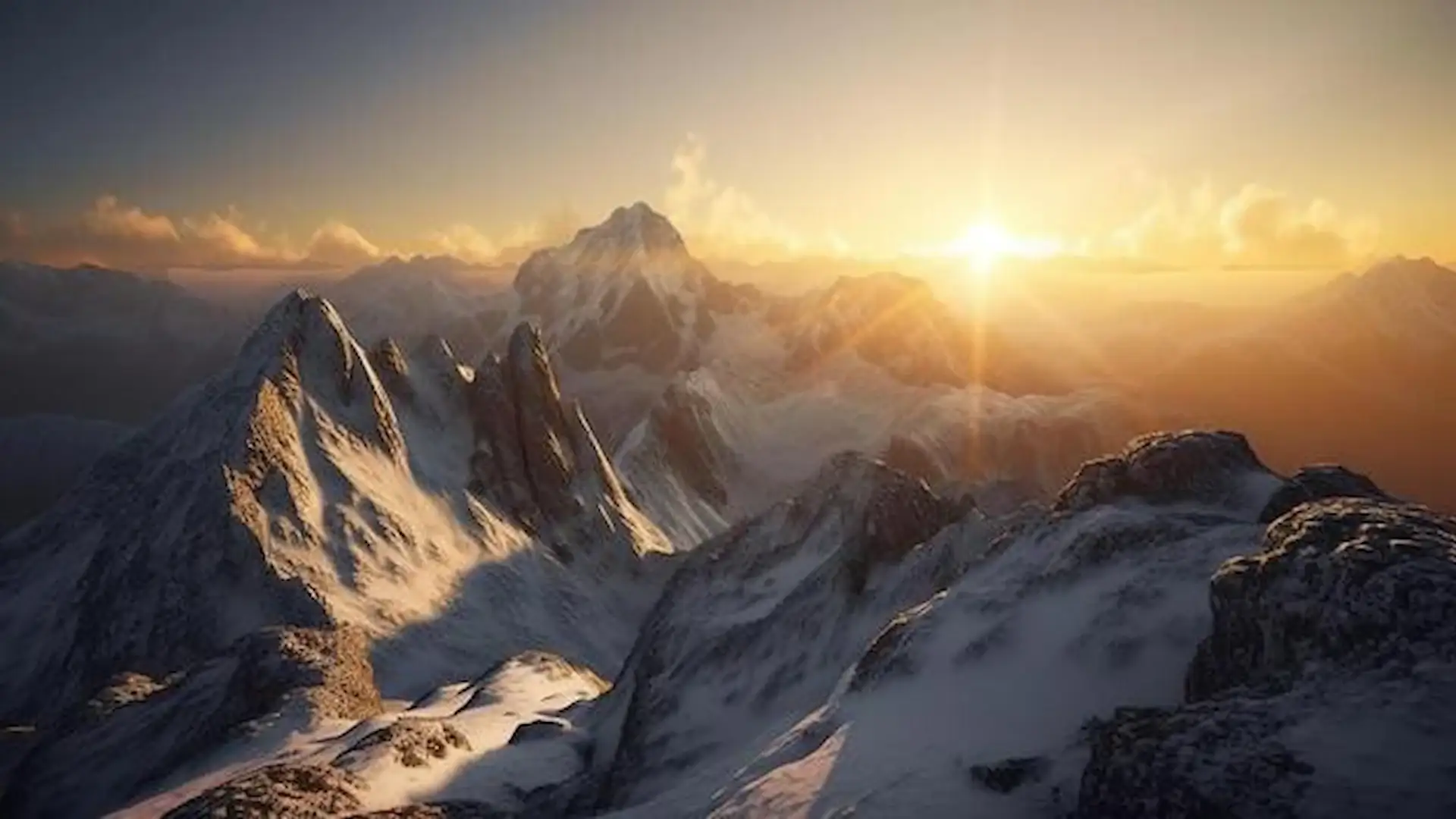
Himalayan Silent Retreats: Where the Mountains Hold the Quiet
Most silent retreats require you to create silence — to resist the urge to speak, to ignore ambient noise, to impose quiet onto an environment that is not naturally quiet. Himalayan silent retreats are different. The silence is already there. The forests absorb sound. The altitude slows the mind. The remoteness removes every habitual cue. You are not practising silence — you are entering it.
Three Types of Himalayan Silence
Not all silence is the same. In the Himalayas, the environment creates distinct qualities of quiet — each serving different intentions and temperaments.
Three Qualities of Silence
Chakrata — Forest Silence
The silence in Chakrata is enclosed. Dense deodar and oak forest creates an acoustic environment where human sound is absorbed by the trees, the earth, the canopy above. There is no traffic noise. No commercial activity. No tourist energy. When you walk through the forest, the only sounds are birdsong, wind in the canopy, and your own footsteps.
This quality of silence is nurturing rather than confrontational. It wraps around you. For first-time silent retreatants, this is the ideal environment — silence that supports rather than exposes.
Zanskar — Geological Silence
The silence in Zanskar is not enclosed — it is vast. A river valley carved through rock that is 500 million years old, sealed by peaks on every side, 230 km from the nearest city. The monasteries — Phugtal, Karsha, Stongde — have held this silence for a thousand years. When you sit in a gompa here, you feel the accumulated quiet of centuries of practice.
Zanskar's silence is confrontational in the best sense. With no phone signal, no comfortable distractions, and altitude that strips away mental autopilot, you meet yourself without buffers.
Munsiyari — Alpine Silence
Munsiyari's silence is spacious. High-altitude meadows facing the Panchachuli peaks — five summits above 6,000 metres. The sky is enormous. The views are endless. The silence here is not enclosed or weighted — it is expansive. You sit with open sky above and a vast Himalayan panorama ahead, and the silence enters through the eyes as much as the ears.
This environment is best for people who find enclosed silence claustrophobic, or whose silent practice benefits from physical spaciousness.
Choosing Your Himalayan Silent Retreat
- First time with silence? Start with Chakrata — 3 days of forest quiet, guided and accessible.
- Ready for depth? Zanskar — 7+ days of monastery silence at 3,500 metres.
- Need spaciousness? Munsiyari — open alpine silence with peak views.
- Want movement too? All three locations offer walking as part of the silent retreat pattern.
For a broader view of our meditation offerings, see meditation retreats or best meditation retreats in India. For all locations in our network, see locations.
Frequently Asked Questions
What does a silent retreat actually involve?
Noble silence means no speaking, no devices, no reading, and minimal eye contact. Days are structured with meditation sessions, meals, walking periods, and rest. The silence is supported by the environment — you are not fighting noise to stay quiet. The mountain landscape absorbs distraction and makes silence the natural state rather than an effort.
Is a silent retreat suitable for beginners?
Yes — Chakrata is specifically designed as an accessible entry point for first-time silent retreatants. Three days of guided silence in a Himalayan forest, with instruction and support available. You do not need prior meditation experience. What you need is willingness to stop talking and see what emerges. The forest does the rest.
How long should a Himalayan silent retreat be?
Three days gives you a taste of genuine silence — enough that your nervous system begins to settle. Five to seven days is where real depth opens — the mind runs out of its habitual loops and something quieter emerges. Ten days or longer is for those seeking transformative encounter with their own inner landscape. Choose based on how deep you want to go and how much time you have.
What is the difference between silent retreat in Chakrata vs Zanskar?
Chakrata offers forest silence — enclosed, acoustic, gentle. You walk among deodar trees and hear only birdsong. The silence is comforting, nurturing, and accessible. Zanskar offers geological silence — a high-altitude valley sealed by mountains, 230 km from the nearest city. The silence there has weight — it is ancient, vast, and confrontational. Chakrata is a warm blanket. Zanskar is a mirror.
Can I break the silence if I need to?
Our retreats use noble silence rather than enforced silence. If you have a genuine need — a question for the guide, a safety concern, practical logistics — speaking is permitted. The intention is to remove habitual social conversation, not to create a punitive environment. Most participants find that after the first day, they no longer want to speak.
What if I find silence uncomfortable or anxiety-inducing?
That discomfort is normal and expected. The first day of silence often surfaces anxiety, restlessness, or racing thoughts. This is not failure — it is the beginning of the process. By day two, most people find that the discomfort transforms into something more spacious. Guides are available to support you through difficult moments. If extended silence feels too challenging, a three-day retreat in Chakrata is the gentlest possible introduction.