How Long Should a Meditation Retreat Be?
The right retreat length depends on three things: your experience level, your goals, and how much time you can genuinely give. Here is a clear breakdown of what each duration offers and who each serves best.
Duration Comparison
A clear overview of what each retreat length offers, who it serves best, and what to expect.
| Duration | 3 days | 5 days | 7 days | 10 days |
|---|---|---|---|---|
| Best for | Beginners, busy schedules | Intermediate, specific focus | Deep practice, experienced + beginners | Advanced, serious practitioners |
| Difficulty peak | Day 2 (may not resolve) | Days 2–3 (partial resolve) | Days 2–4 (full resolution by day 5) | Days 2–4 (extended resolution) |
| Depth of experience | Introduction — taste of silence | Moderate — beginning of inner shift | Significant — sustained clarity | Profound — lasting behavioural change |
| Time off required | 4–5 days total | 6–7 days total | 9 days total | 12 days total |
| Post-retreat effect | 1–2 weeks | 2–3 weeks | 3–6 weeks | 1–3 months |
What Each Duration Offers
3-Day Retreat — The Gateway
A 3-day meditation retreat is the minimum effective dose. You get one day of transition, one full day of practice, and one day of integration. It teaches you whether retreat practice works for you without requiring a major time commitment.
Choose 3 days if: you have never done a retreat, you cannot take a full week off, or you want to test whether you can handle silence before committing to something longer.
Know this: you may hit the hard part (day 2) without experiencing the resolution that comes on days 4–5 of longer retreats.
5-Day Retreat — The Practical Middle
Five days gives you time to move through the difficult middle and begin to experience what is on the other side. You get one transition day, two or three hard days, and one or two days of settling.
Choose 5 days if: you have done a 3-day retreat before and want more depth, or the programme combines meditation with yoga, nature, or facilitated workshops that benefit from the extra days.
7-Day Retreat — The Sweet Spot
Seven days is what most experienced teachers recommend. The 7-day meditation retreat gives you time to arrive (day 1), struggle (days 2–4), settle (day 5), and experience genuine clarity (days 6–7). The arc is complete.
Choose 7 days if: you want depth without the significant time commitment of 10 days. Suitable for both beginners and experienced practitioners.
10-Day Retreat — The Deep Dive
A 10-day silent retreat is the traditional format. The extra three days beyond the 7-day structure allow for deeper integration, more sustained silence, and insights that only emerge after extended practice.
Choose 10 days if: you have completed at least one shorter retreat, your practice is established, and you can commit the time without creating stress in your life.
Read about the real difficulty of silent retreats to calibrate your expectations.
Simple Decision Framework
- Never done a retreat? Start with 3 days
- Done one retreat and want more? Try 7 days
- Regular practitioner seeking depth? Go for 10 days
- Limited time but experienced? A focused 3–5 day retreat can be remarkably effective for people who already have a sitting practice
- Unsure? Use our retreat finder for a personalised recommendation
Choose Your Duration
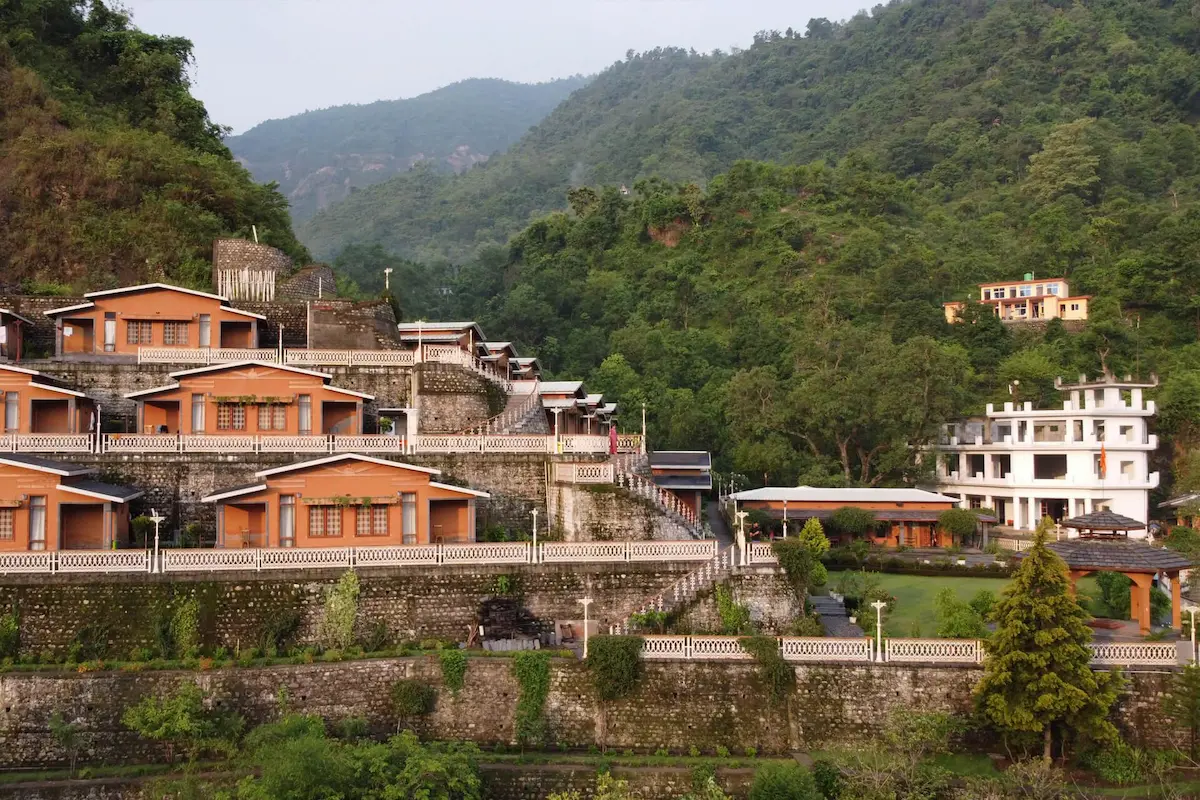
We run 3, 5, 7, and 10-day retreats across two Himalayan locations. All programmes include facilitation, meals, and accommodation.
Frequently Asked Questions
Is a 3-day meditation retreat long enough to be effective?
Yes. A 3-day retreat provides a genuine shift in awareness and a meaningful break from routine. You will experience the core elements — sitting practice, silence, simplified living — and most participants report noticeable calm and clarity by day three. It is not as deep as a 7 or 10-day retreat, but it is far more effective than no retreat at all. It is the ideal starting point for beginners.
What is the difference between a 7-day and 10-day retreat?
The main difference is resolution depth. Both retreats hit the same difficult middle section (days 2–4), but a 10-day retreat gives you 3 extra days on the other side of that difficulty. These final days are where deeper insight tends to emerge. A 7-day retreat still provides significant depth and is more accessible for people with work or family commitments.
Should beginners start with a weekend retreat or a 3-day retreat?
A 3-day retreat if possible. Weekend retreats (2 days) are sometimes too short to move through the adjustment period — you arrive on Saturday, settle on Sunday, and leave before the retreat truly begins. Three days gives you one full day of actual practice between the transition days.
How many days off work do I need for a 7-day retreat?
Plan for 9 days total — 7 retreat days plus one travel day on each end. Arriving rushed and leaving immediately diminishes the experience. If possible, add one quiet day at home after the retreat before returning to work. The transition back to normal life is part of the practice.
Can I do multiple short retreats instead of one long one?
Yes, and many experienced practitioners prefer this approach. Three 3-day retreats per year can be more sustainable and equally transformative as one 10-day retreat. The benefit of longer retreats is depth — the benefit of repeated shorter retreats is consistency. Both paths work.