Sankri vs Munsiyari for a Himalayan Retreat: Which Should You Choose?
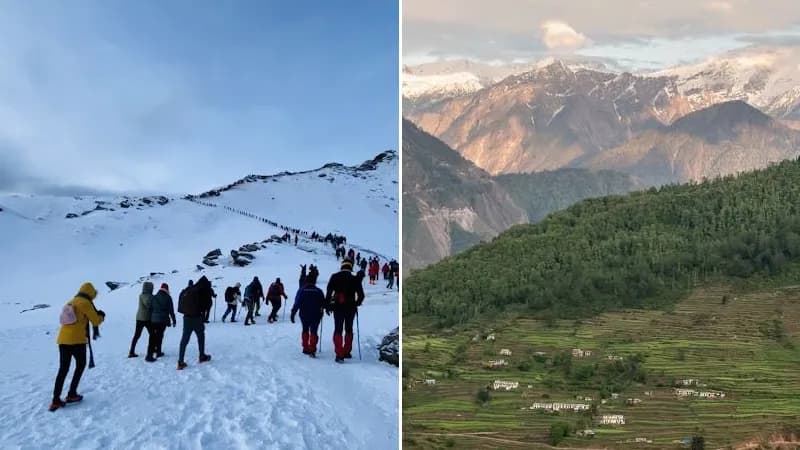
If you have decided on a Himalayan retreat and narrowed your options to Sankri and Munsiyari, you are choosing between two of the strongest mountain retreat locations in Uttarakhand — and two fundamentally different experiences. Both sit well above the tourist circuit. Both offer genuine solitude. But the landscape, the journey, and the retreat character at each location are distinct enough that choosing the wrong one would mean missing what you actually came for.
This comparison is specifically for retreat participants. If you are weighing trek options, the considerations are different. This is about which location delivers the stronger container for yoga, meditation, rest, and restoration.
Sankri vs Munsiyari Quick Comparison
| Factor | Sankri | Munsiyari |
|---|---|---|
| Altitude | ~1,900 m (Tons Valley) | ~2,200 m (Kumaon) |
| Travel from Delhi | 8–9 hours by road | ~12 hours (road or train + road) |
| Landscape | Pine and oak forest valley | Alpine meadows + Panchachuli range |
| Best for | Forest immersion, valley quiet | Premium solitude, mountain grandeur |
| Ideal duration | 3–5 days | 4–7 days |
| Group size | Under 8 typical | Under 6 typical |
| Trek integration | Strong (Kedarkantha, Har Ki Dun nearby) | Possible (Khaliya Top, Milam Glacier access) |
Landscape and Atmosphere
Sankri sits in the upper Tons Valley in Uttarkashi district. The retreat environment is defined by dense forest — pine and oak canopy, glacial river sound, trail access into the Govind Wildlife Sanctuary. The atmosphere is enclosed and intimate. Sound travels differently in a valley: bird calls, water, wind through trees. The sensory world is close and detailed. For participants who respond to forest immersion — the feeling of being held inside a green container — Sankri delivers this with genuine depth.
Munsiyari is wide open. At 2,200 metres in Pithoragarh district, it faces the Panchachuli massif — five peaks above 6,000 metres. The visual scale is dramatic and unrelenting. Where Sankri encloses, Munsiyari expands. Morning practice happens against a backdrop of snow-capped summits. The alpine meadows above the town provide walking space with Himalayan panorama in every direction. For participants who need spaciousness — physical and psychological — Munsiyari offers something closer locations cannot.
Accessibility and Travel Effort
Sankri is eight to nine hours from Delhi by road, via Dehradun and Purola. The drive is demanding but straightforward — no hairpin sections beyond what is normal for Uttarakhand hill roads. Participants driving from Delhi can depart by early morning and arrive by late afternoon, leaving the evening for settling in.
Munsiyari requires roughly twelve hours from Delhi. The most practical route combines the overnight train to Kathgodam with a six-to-seven-hour road transfer through Almora and Birthi. The journey is beautiful but long. Participants should plan for a full travel day in each direction, which is why four-to-seven-day retreat formats suit Munsiyari best — the travel investment needs to be justified by adequate time on site.
If travel time is your primary constraint, Sankri wins clearly. It demands commitment but not the full-day transit that Munsiyari requires. For participants adding a retreat to a broader Kumaon itinerary, Munsiyari becomes more practical because the journey serves double purpose.
Retreat Experience Differences
Group size. Both locations operate with small groups, but Munsiyari trends smaller — often four to six participants. Sankri programs typically cap at eight. Smaller groups mean deeper facilitator attention, less social negotiation, and a retreat container that feels personal rather than institutional.
Luxury positioning. Munsiyari is the stronger luxury Himalayan retreat destination. The remoteness, the Panchachuli backdrop, and the natural scarcity of visitors create a premium quality that does not need to be manufactured. Sankri offers boutique comfort in traditional Himalayan structures — stone and wood, heated rooms, forest-edge settings — but the positioning is intimate rather than grand.
Trek integration. Sankri has the edge for participants who want to combine retreat and trek. Kedarkantha and Har Ki Dun trails depart from the village itself. A five-day stay can split between three days of retreat programming and a two-day trek extension. Munsiyari offers Khaliya Top as a day-trek option and is a staging point for the Milam Glacier route, but trek infrastructure is less developed than Sankri's.
Weather feel. Both are cool by plains standards, but Munsiyari at higher altitude is noticeably colder, particularly in mornings and evenings during shoulder season. Sankri's valley position provides some thermal insulation — warmer nights, less wind exposure. Participants sensitive to cold may find Sankri more comfortable from October onward.
Which Is Better for You?
This is not a neutral comparison. Each location has a clear advantage for specific participant profiles. Here is the decisive breakdown.
Choose Sankri if:
- You are a first-time retreat participant — the shorter travel, forest-immersion setting, and strong trek-extension options make it the more forgiving entry point
- You want a corporate reset in 3–5 days — Sankri's travel time fits mid-week schedules without consuming your entire leave allocation
- You want to combine retreat and trek — Kedarkantha and Har Ki Dun depart from the village itself, making hybrid itineraries seamless
- You are sensitive to cold — the valley position provides thermal shelter that Munsiyari's exposed altitude does not
Choose Munsiyari if:
- You are an experienced retreat participant — the alpine grandeur and extreme quiet provide depth that more accessible locations cannot match
- You are a couple seeking premium shared experience — smaller groups, Panchachuli sunrises, and curated intimacy that Sankri cannot replicate at the same level
- You are an international traveller — if you have flown to India for Himalayan wellness, Munsiyari is the destination that justifies the journey
- You can commit to 4–7 days — the twelve-hour travel investment demands adequate time on site, and the longer format unlocks Munsiyari's full depth
- You prioritise visual grandeur over forest intimacy — the Panchachuli massif is the most dramatic retreat backdrop in Uttarakhand
The bottom line: Sankri is the practical choice. Munsiyari is the aspirational one. Both deliver genuine transformation — but the journey to Munsiyari demands more, and returns more for those who make it.
Seasonal Considerations
Both locations share the same broad seasonal pattern: best from April through November, with October and November being the premium window. Sankri is accessible slightly earlier in spring and slightly later into autumn. Munsiyari's higher exposure means its season margins are tighter.
Neither location suits a standard Friday-to-Sunday weekend — both require too much travel for a two-night format. Chakrata and Rishikesh serve short-duration stays better. Sankri and Munsiyari are destinations for participants who have committed to extended immersion.
For a broader view of retreat options across Uttarakhand, including seasonal guidance for all four locations, see our Uttarakhand retreats guide.
Explore specific experiences: stress-relief retreats in Sankri or healing retreats in Munsiyari. For all upcoming retreat dates, visit the retreat calendar.
Frequently Asked Questions
Is Munsiyari colder than Sankri?
Yes. Munsiyari sits at higher altitude with greater wind exposure, making mornings and evenings noticeably colder, especially from October onward. Sankri's valley position provides more thermal shelter. Both locations provide heated accommodation and warm bedding during cooler months.
Which location is better for beginners?
Sankri. The shorter travel time, accessible terrain, and strong forest-immersion format make it more forgiving for first-time retreat participants. Munsiyari suits those with some retreat experience or a strong preference for alpine environments.
Can I combine a retreat and trek at either location?
Yes, but Sankri is stronger for this. Kedarkantha and Har Ki Dun treks depart directly from the village. A five-to-seven-day stay can include both retreat and trek programming. Munsiyari offers Khaliya Top as a day option, but multi-day trek extensions require more planning.
Let us help you plan
Not sure which retreat fits your experience level? Speak with our experts and we'll craft the perfect journey for you.
Explore RetreatsWhich location feels more luxurious?
Munsiyari. The Panchachuli backdrop, extreme privacy, and natural scarcity of visitors create a quality of attention and environment that Sankri's forest setting does not replicate. For participants prioritising premium experience, Munsiyari is the clear choice.
How far in advance should I book for either location?
Four to six weeks for standard dates at both locations. For October and November — the peak retreat window — six to eight weeks is advisable. Both locations operate small-group formats with limited capacity, so availability narrows faster than at higher-volume destinations.