The river holds what the mind cannot
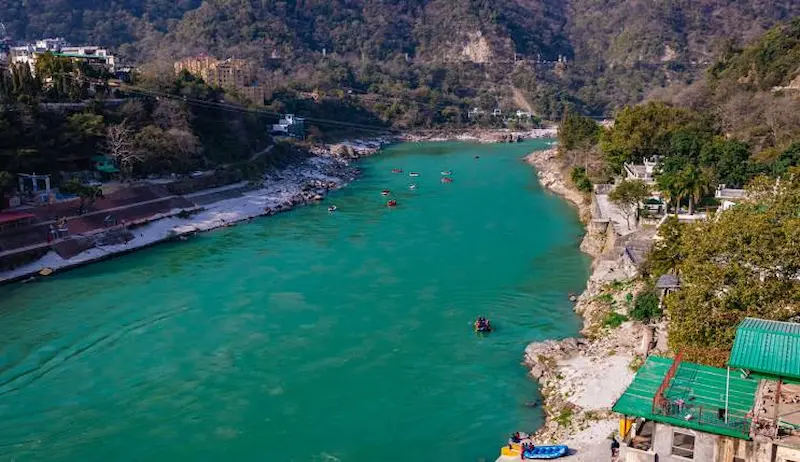
The Ganges moves through Rishikesh with a sound that does not demand attention but holds it effortlessly. That quality — presence without effort — is what defines meditation in this town. Where urban life fills every gap with notification, obligation, and decision, Rishikesh offers the opposite: a riverbank, mountain air, and structured silence. A meditation retreat here is not an add-on to a holiday. It is a residential programme built around sustained stillness — guided sittings, walking meditation along the river, breath awareness in the Himalayan foothills, and periods of noble silence that let the mind finally stop performing.
You arrive carrying months of accumulated input. The retreat does not ask you to process it. It asks you to stop. To sit. To breathe. To let the river sound replace the internal monologue. Two to seven days of this — in the place where contemplative traditions have been practised for centuries — produces a shift that no app, no book, and no weekend of sleep can replicate.
Why Rishikesh Is Ideal for Meditation Retreats
Rishikesh's reputation in yoga is well known. What is less discussed is its strength as a meditation destination — and the two are not the same. Meditation requires deeper quiet, longer stillness, and an environment that supports inwardness without stimulation. Rishikesh delivers on every count.
The ashram ecosystem is the foundation. Rishikesh holds retreat centres and ashrams that have hosted contemplative practice for decades — not as a supplement to yoga training but as a primary discipline. Vipassana traditions, mantra-based concentration practice, Zen-influenced sitting, and secular mindfulness programmes all operate within the town. The range of facilitation is unmatched in India. You can find a guide for nearly any meditation lineage within a few kilometres of the river.
The Ganges adds a dimension that built environments cannot replicate. River sound is not white noise — it is complex, layered, and continuously shifting. It holds attention without stimulating it, creating a natural anchor for practice that beginners find particularly helpful. Morning sittings on the riverbank, with mist rising and temple bells marking the hour, produce a meditative state that hours of effort in a quiet room may not reach.
Then there is the practical advantage. Rishikesh is five to six hours from Delhi by road, with Dehradun airport forty-five minutes away. For practitioners travelling from Delhi, other Indian cities, or internationally, it is the most accessible serious meditation destination in the Himalayas. No multi-day journey required. No remote mountain logistics. You arrive and begin. See all retreat programs in Rishikesh for the full range of formats available.
What a Meditation Retreat in Rishikesh Looks Like
This is not a yoga class with a meditation segment attached. It is a distinct programme format — structured around stillness, silence, and progressive deepening of awareness over multiple days.
- Silent periods. Noble silence begins after the evening orientation on day one and continues through early morning. Extended formats hold silence for twenty-four to forty-eight hours at a stretch. Speech is reduced to essential communication with facilitators. This is the structural core — removing verbal output allows the mind to settle in ways that talking environments never permit.
- Guided sittings (3–4 per day). Facilitated meditation sessions building from twenty minutes toward forty-five. Techniques include breath counting, open awareness, body scanning, loving-kindness, and mantra practice. Instruction is precise and verbal — you are guided through each session, not left alone to struggle. Rishikesh facilitators draw from multiple traditions and adapt to the group.
- Walking meditation. Slow, deliberate movement along the riverbank or through ashram gardens. Attention on the feet, the breath, the sensory field. Walking sessions between sittings prevent physical stiffness and teach awareness in motion — a skill that transfers directly into daily life after the retreat ends.
- Limited group size. Most Rishikesh meditation retreats cap at twelve to twenty participants. This is deliberate. Smaller groups create a more contained environment, allow for individual guidance, and reduce the social energy that larger groups generate. The intimacy of the container is part of the practice.
- Residential format. You live on-site for the full duration. Meals, sleep, practice, and rest happen within one environment. There is no commuting, no restaurant decisions, no logistical friction. The container is seamless — you step into it on arrival and step out on departure. Everything in between is held.
Meals are vegetarian, eaten in silence during extended silent periods, and deliberately simple. The food supports practice rather than competing for attention. Digital detox is enforced — devices are stored on arrival. This is not optional. The retreat begins when the screen goes dark. If physical practice is more what you seek, see yoga retreats in Rishikesh for movement-centred programmes at the same locations.
Who Should Choose a Meditation Retreat in Rishikesh
You do not need to be spiritual, experienced, or calm. You need to be willing to sit still and follow a structure.
- Professionals carrying chronic stress. If your mind races at 2 AM, if weekends no longer feel restorative, if you cannot remember the last time you felt genuinely present — a meditation retreat addresses the cause, not the symptom. Sustained silence and guided practice interrupt the overthinking loop that burnout recovery retreats are designed to break. Rishikesh is five to six hours from Delhi — accessible enough for a retreats near Delhi without extended leave.
- First-time silent retreat participants. The idea of sustained silence feels intimidating before you experience it. It should not. Rishikesh programmes are facilitated — you are held through the process. The schedule provides rhythm. The river provides ambient support. Most first-timers report that discomfort dissolves within the first half-day and is replaced by a quiet clarity they did not know was available.
- Experienced meditators seeking depth. A twenty-minute daily practice has a ceiling. Retreat immersion — six to eight hours of practice daily in a Ganges-side container — breaks through it. States and insights that are inaccessible in home practice emerge when the mind has been still long enough. Rishikesh holds facilitators experienced enough to guide advanced practitioners into new territory.
- International visitors. Rishikesh draws meditation practitioners from over fifty countries. Sessions are in English. The town is well-connected internationally via Dehradun airport. Retreat centres are accustomed to hosting global participants and accommodate dietary, language, and cultural needs as standard.
- Three-to-five-day seekers. Not everyone has a week. A three- to five-night meditation retreat in Rishikesh delivers meaningful depth — the mind typically settles into sustained stillness by day two. The concentrated facilitator infrastructure means every session is maximally effective. Short formats here achieve what longer formats in less structured settings may not.
Best Time for a Meditation Retreat in Rishikesh
Rishikesh operates year-round, and each season shapes the meditation experience differently. The climate is milder than higher-altitude locations, making it practical in every month.
October to November
Post-monsoon air is washed clean. Temperatures sit between 20 and 28°C. The Ganges runs clear. Morning riverbank sittings carry extraordinary clarity — sharp light, cool air, no humidity. This is our first recommendation for anyone new to meditation retreats.
February to April
Winter lifts gradually. Mornings are cool (12–18°C) and afternoons warm gently. The town is quieter than autumn — fewer visitors, more spaciousness, and a contemplative atmosphere that suits silent practice.
May to June
Summer Himalayan retreats are warm in Rishikesh. Daytime temperatures reach 35–40°C. Morning and evening sittings remain comfortable. Midday practice moves to shaded or air-cooled spaces. The heat itself can become a practice object — sustained attention in discomfort has a long contemplative lineage.
July to September
Rain deepens the river sound. Mist fills the valley. The enforced inwardness of rainy days amplifies the meditation container — fewer outdoor distractions, longer indoor sits, and an atmosphere of natural seclusion.
December to January
Winter Himalayan retreats bring cold mornings (8–14°C) and mild afternoons. Rishikesh never freezes. Cold-air breath practice has a distinctive sharpness. The low winter light — golden in the morning, soft in the afternoon — creates meditative visual conditions that other seasons do not offer.
How Long Should a Meditation Retreat Be?
Duration determines depth. The mind settles in layers, and each layer requires time.
3 days (2 nights) — the entry format
Friday arrival, full Saturday immersion, Sunday morning closing. The mind resists on day one and begins to settle on day two. By Sunday morning, you experience a taste of the quiet that longer formats deepen. This is enough for measurable benefit — reduced mental chatter, improved sleep quality, and restored capacity for presence. Ideal for working professionals testing the retreat format.
5 days (4 nights) — the recommended format
For genuine transformation. By day three, resistance dissolves and the practice becomes self-sustaining. Days four and five are where the work happens — layers of accumulated tension surface and release, sustained concentration stabilises, and the mind accesses a quality of stillness that shorter formats only glimpse. This is where most participants report the experience they came seeking.
7+ days — extended silent retreat
For committed practitioners. One week of residential meditation — multiple daily sittings, full noble silence, minimal external input — creates a before-and-after line in practice. Habitual thought patterns that seemed permanent begin to loosen. Emotional processing that has been deferred for months or years finds space. The Ganges-side container holds this work with a steadiness that less established settings cannot.
Weighing your options? Our guide to three-day versus five-day retreat formats breaks down the practical trade-offs.
Considering all Rishikesh retreat programs? Yoga, sound healing, and burnout recovery formats are also available at the same locations.
For meditation across all Himalayan locations, see meditation retreats in Uttarakhand. For the complete retreat directory, start at Himalayan retreats in India.
Frequently Asked Questions
Are meditation retreats in Rishikesh silent?
Most meditation retreats in Rishikesh include structured silent periods — typically from evening through the following morning. Some programmes offer extended noble silence lasting twenty-four to forty-eight hours. Full Vipassana-style ten-day silence is also available. However, not every retreat is entirely silent. Guided instruction, group check-ins, and meal conversations may occur at designated times. The level of silence is stated clearly before booking so you can choose the format that matches your comfort level.
Is prior meditation experience required for a retreat in Rishikesh?
No. Most retreat programmes in Rishikesh welcome beginners and include foundational instruction. Facilitators teach seated posture, breath awareness, body scanning, and concentration techniques from the ground up. The residential format makes it easier to learn — you practise multiple times daily with guidance and correction, which builds competence faster than weekly classes. If you can sit comfortably for fifteen to twenty minutes and follow a schedule, you are ready.
Are meditation retreats in Rishikesh residential?
Yes. Retreat programmes are residential — you stay on-site for the entire duration. This is a deliberate design choice. Living within the retreat container removes the transitions, decisions, and distractions that dilute the practice. You eat, sleep, practise, and rest in one environment. Accommodation ranges from simple ashram rooms to comfortable private rooms with river views, depending on the programme and price point.
What is included in a meditation retreat in Rishikesh?
A standard meditation retreat includes multiple daily guided sittings, walking meditation sessions, breath awareness instruction, vegetarian meals, accommodation, and facilitated group activities. Many programmes also include sound healing, journaling workshops, or one-on-one guidance with the facilitator. Digital detox is enforced — devices are stored on arrival. You bring comfortable clothing and personal items. All practice materials and spaces are provided.
Can beginners attend a meditation retreat in Rishikesh?
Absolutely. Rishikesh is one of the best places in the world for a first meditation retreat. The town holds experienced facilitators who specialise in guiding newcomers through the initial discomfort of sustained sitting. Sessions start with shorter durations — fifteen to twenty minutes — and build gradually. The Ganges-side setting makes stillness easier than it would be in an urban studio. Most beginners report that the retreat exceeded their expectations within the first full day.
How is a meditation retreat different from a yoga retreat?
A meditation retreat centres on stillness, silence, and inward attention. Daily structure revolves around seated practice, walking meditation, and breath awareness with minimal physical exertion. A yoga retreat centres on physical practice — asana, movement, and embodied awareness. Both include elements of the other, but the emphasis is distinct. Choose meditation if you want to quiet the mind. Choose yoga if you want to move the body. Both are available in Rishikesh, often at the same centres.