Vipassana vs Meditation Retreat: A Clear Comparison
"Should I do a Vipassana course or a meditation retreat?" This is one of the most common questions people ask before their first extended practice experience. The answer depends on what you are looking for, where you are in your practice, and how much structure you want. This guide covers the real differences.
What Vipassana Actually Is
Vipassana is a specific meditation technique — not a retreat format. The word means "insight" or "seeing things as they really are" in Pali. However, in common usage, "Vipassana retreat" almost always refers to the 10-day silent courses taught in the S.N. Goenka tradition, which have become the most widely known meditation retreat format globally.
These courses follow a standardised format: 10 days of noble silence (no speaking, no eye contact, no gestures), approximately 10.5 hours of sitting meditation daily, a fixed schedule from 4:00am to 9:30pm, no reading or writing materials, and a single technique progression from breath awareness to body scanning. The courses are offered on a donation basis at centres worldwide.
The strengths of this format are rigour, accessibility (no cost barrier), and depth. The limitations are inflexibility (one technique, one schedule, no individual adaptation) and intensity that may not suit all nervous systems.
What a General Meditation Retreat Offers
"Meditation retreat" is a broad category that includes everything from weekend mindfulness workshops to month-long silent intensives. The key differences from Vipassana are flexibility and variety:
- Multiple techniques: focused attention, open monitoring, loving-kindness, walking meditation, breathwork, body-based practices
- Adaptable structure: schedules can be adjusted for individual capacity; facilitators can modify practices if someone is struggling
- Varied duration: 3 days, 7 days, or 10 days
- Environmental diversity: forest retreats, mountain monasteries, riverside settings — each producing different effects on the nervous system
- Group size: often capped at 8–15, compared to Vipassana centres accommodating 50–200+
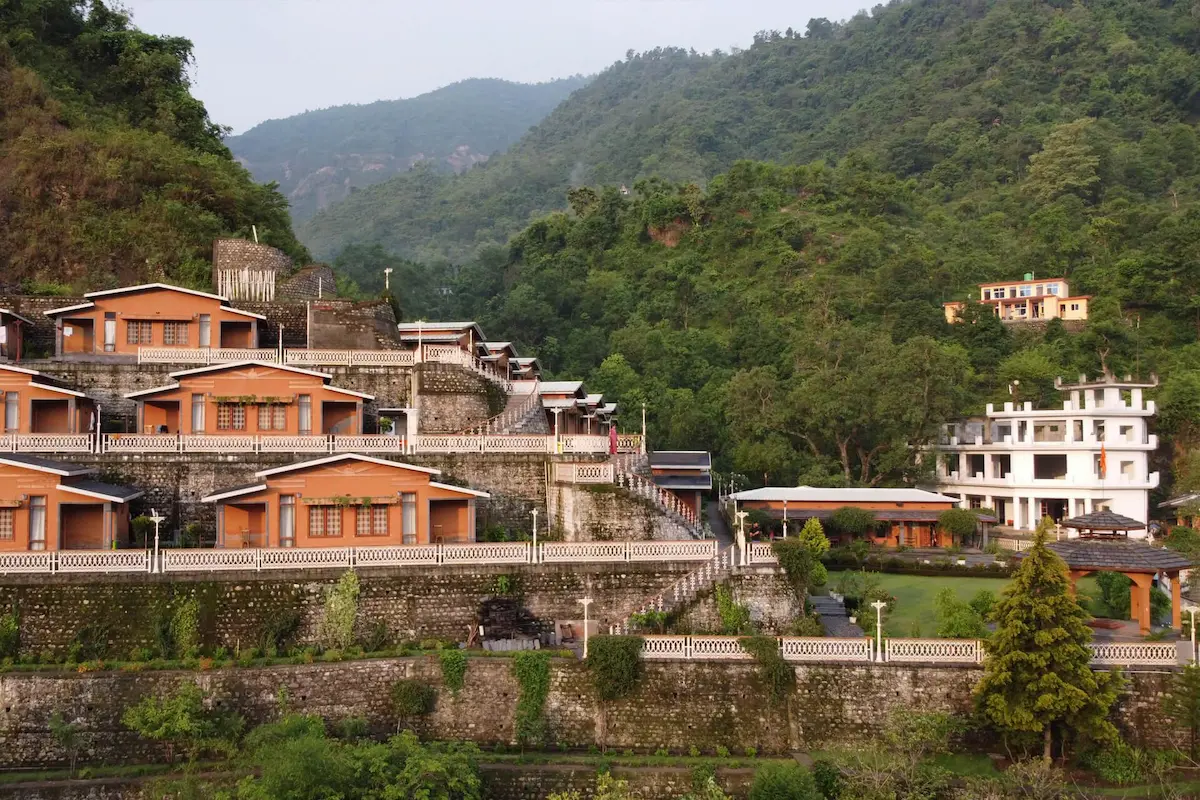
Our Himalayan retreats in Chakrata and Zanskar use the environment as an active component of the practice — altitude, forest acoustics, and isolation create conditions that complement meditation in ways that indoor centre environments cannot.
Side-by-Side Comparison
| Dimension | Vipassana (Goenka) | General Meditation Retreat |
|---|---|---|
| Duration | 10 days (fixed) | 3–10+ days (flexible) |
| Silence | Noble silence (no communication) | Varies — often silent, some with discussion periods |
| Technique | Body scanning only | Multiple techniques offered |
| Schedule | 4:00am–9:30pm, fixed | Structured but adaptable |
| Facilitation | Audio/video teachings, limited 1:1 | Direct, responsive facilitation |
| Group size | 50–200+ | 6–15 typically |
| Cost | Donation-based | Fixed fee (includes accommodation, meals) |
| Location | Dedicated centres, often suburban | Varied — forest, mountain, monastery |
| Movement | Minimal — primarily sitting | Often includes walking, yoga, nature immersion |
| Best for | Disciplined practitioners, first deep experience | Varied needs, burnout recovery, beginners wanting support |
When Vipassana Is the Better Choice
Choose Vipassana if you want maximum rigour with minimum cost. The 10-day Goenka course is the gold standard for a reason: it strips away all variables and forces you to sit with your own mind under conditions of complete simplicity. If you are disciplined, physically able to sit for extended periods, and seeking a structured introduction to insight meditation, it is an excellent format.
Vipassana is also the right choice if you specifically want to learn the body-scanning technique deeply. Ten days of sustained practice in one method produces a level of skill that multi-technique retreats cannot match. For practitioners who already have a daily Vipassana practice, the 10-day course provides the depth needed to break through plateaus.
When a General Meditation Retreat Is the Better Choice
Choose a meditation retreat if you need any of the following: adaptability, nature immersion, a small group, direct facilitation, or a shorter initial commitment.
For burnout recovery: Vipassana's intensive schedule can add stress to an already depleted system. A retreat with flexible pacing, movement, and nature immersion allows the nervous system to downregulate without pushing through endurance. See burnout recovery retreats.
For first-timers who want support: If the idea of 10 days of silence with 200 strangers feels overwhelming, a 3-day retreat with 8–12 participants provides a supported entry point. Read first retreat tips for practical preparation.
For people seeking environmental depth: The physical setting of a retreat is not decorative — it is neurologically active. Forest environments reduce cortisol. Altitude shifts awareness. Natural silence is qualitatively different from artificial silence. Read the psychology of silence for the neuroscience.
Can You Do Both?
Yes, and many serious practitioners do. A common progression: start with a shorter general meditation retreat to build comfort with extended practice, then attend a 10-day Vipassana once you know you can handle sustained silence. Some practitioners alternate between the two formats — Vipassana for technique depth, general retreats for environmental variety and restoration.
If you are unsure where to start, this honest assessment will help you decide whether any retreat is right for you right now. And why people actually go to retreats explores the real motivations behind the decision.
3-Day Meditation Retreat — Your Supported Entry
Small group, guided sessions, Himalayan forest. Enough to know if retreat practice is for you — without a 10-day commitment.
Frequently asked questions
Is Vipassana harder than a regular meditation retreat?
Generally yes. Vipassana retreats follow a strict schedule (often 4:30am–9pm), require complete silence, prohibit reading, writing, and eye contact, and use a single technique for the entire duration. General meditation retreats vary widely — some are equally intensive, others include movement, discussion, and gentler scheduling. The difficulty depends on the specific programme, not just the label.
Can I do Vipassana as my first retreat?
You can, and many people do. Goenka-tradition Vipassana courses are specifically designed for beginners with no prior meditation experience. However, 10 days of strict silence and 10+ hours of daily sitting is demanding. If you are uncertain, a 3-day guided retreat provides a gentler introduction to silent practice and helps you assess your readiness for longer formats.
What technique does Vipassana use?
Vipassana means "seeing things as they really are." The technique involves systematic scanning of bodily sensations with equanimity — observing each sensation without reacting. In the Goenka tradition, the first three days focus on breath awareness (anapana) before introducing body scanning. General meditation retreats may include multiple techniques: focused attention, open monitoring, loving-kindness, body scanning, walking meditation, and breathwork.
Are Vipassana retreats free?
Goenka-tradition Vipassana courses operate on a donation basis — there is no fixed fee. This makes them accessible but also means the experience is standardised. General meditation retreats charge fees that fund smaller groups, varied programming, specific locations, and individual facilitation. The cost difference reflects a difference in format, not quality.
Which type of retreat is better for burnout recovery?
For burnout recovery, a general meditation retreat with flexible structure is usually more appropriate. Vipassana's rigid schedule and intensive sitting can add stress to an already depleted nervous system. A retreat with movement, nature immersion, and gentler pacing allows the system to downregulate without pushing through additional endurance. See our burnout recovery retreats for programmes designed specifically for nervous system recovery.